On August 4, Missouri voters will vote on whether to increase taxes on the middle class and seniors to fund tax cuts for the richest households in the state. Amendment 5 would do away with the state’s individual income tax. This tax makes up about 64 percent of the state’s general fund and is the major funding source for state investments in infrastructure, schools, healthcare, public safety, and other services.
To make up for the lost revenue, Amendment 5 authorizes higher sales taxes. Low- and middle-income Missourians already pay a disproportionate share of the taxes to fund public services; this swap would shift even more of this responsibility from the state’s highest-income individuals to teachers, farmers, truck drivers, and other middle-income Missourians.
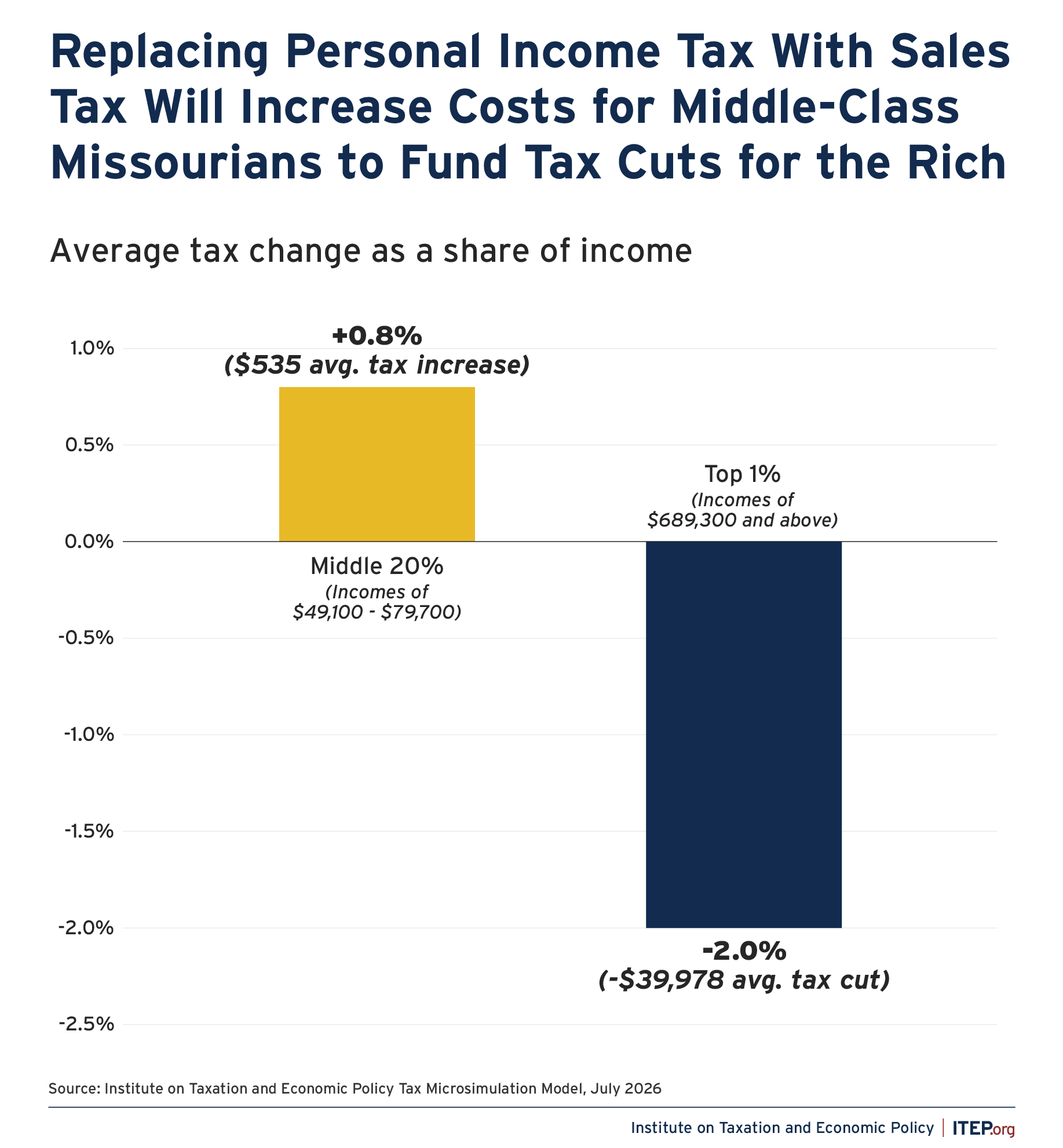
Middle-class Missourians with incomes of about $50,000 to $80,000 will pay $535 more in taxes if the personal income tax is eliminated and the sales tax expanded.
Figure 1
The reason for this shift is straightforward. As a percentage of their income, pay more in sales tax than their higher-income neighbors. Similarly, seniors spend more of their income than similarly situated younger neighbors. By contrast, Missouri’s income tax is distributed by ability to pay across most of the income spectrum. This remains true for the bottom 95 percent even though the legislature exempted capital gains income from this tax last year, reducing what the wealthiest Missourians—who own more assets and therefore have more capital gains—pay in income tax.
Neither the Missouri legislature nor governor has explained exactly how they will expand sales taxes if it passes. They might increase the sales tax rate, or they might expand the sales tax to include purchases of services that are not currently taxed, such as home repair and insurance, car repair and financing, personal care services such as hair or nail care, or medical services. Taxing these items will cost middle-income households a larger share of their incomes than higher-income households, but middle-income families will not get a commensurate benefit from the income tax elimination.
That means every dollar transferred from income tax to sales tax pushes more of the state’s revenue away from high earners and towards the middle class.
Figure 2
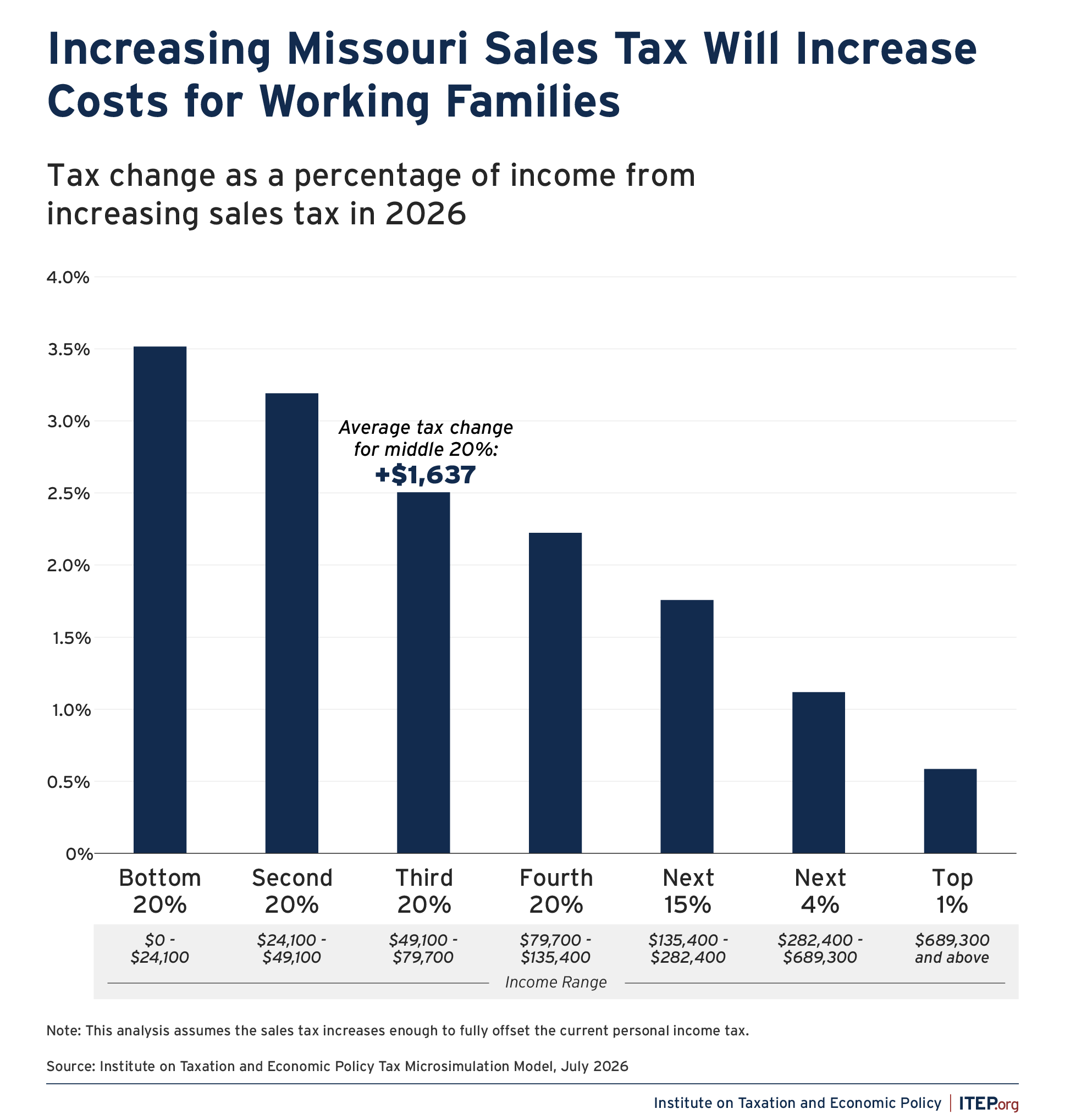
For senior citizens, active-duty military families, and military retirees, the impact would be even worse. That’s because Social Security benefits, active-duty military pay, and military pensions are already exempt from Missouri income tax, so households for whom those are the sole source of income would get no benefit from Amendment 5. For a middle-class Missourian earning between $49,100 and $79,700, this would mean an increase of $1,600 in taxes every year. Overall, seniors alone would see a net tax increase of about $335 million and each pay $365 more, on average, each year.
Figure 3
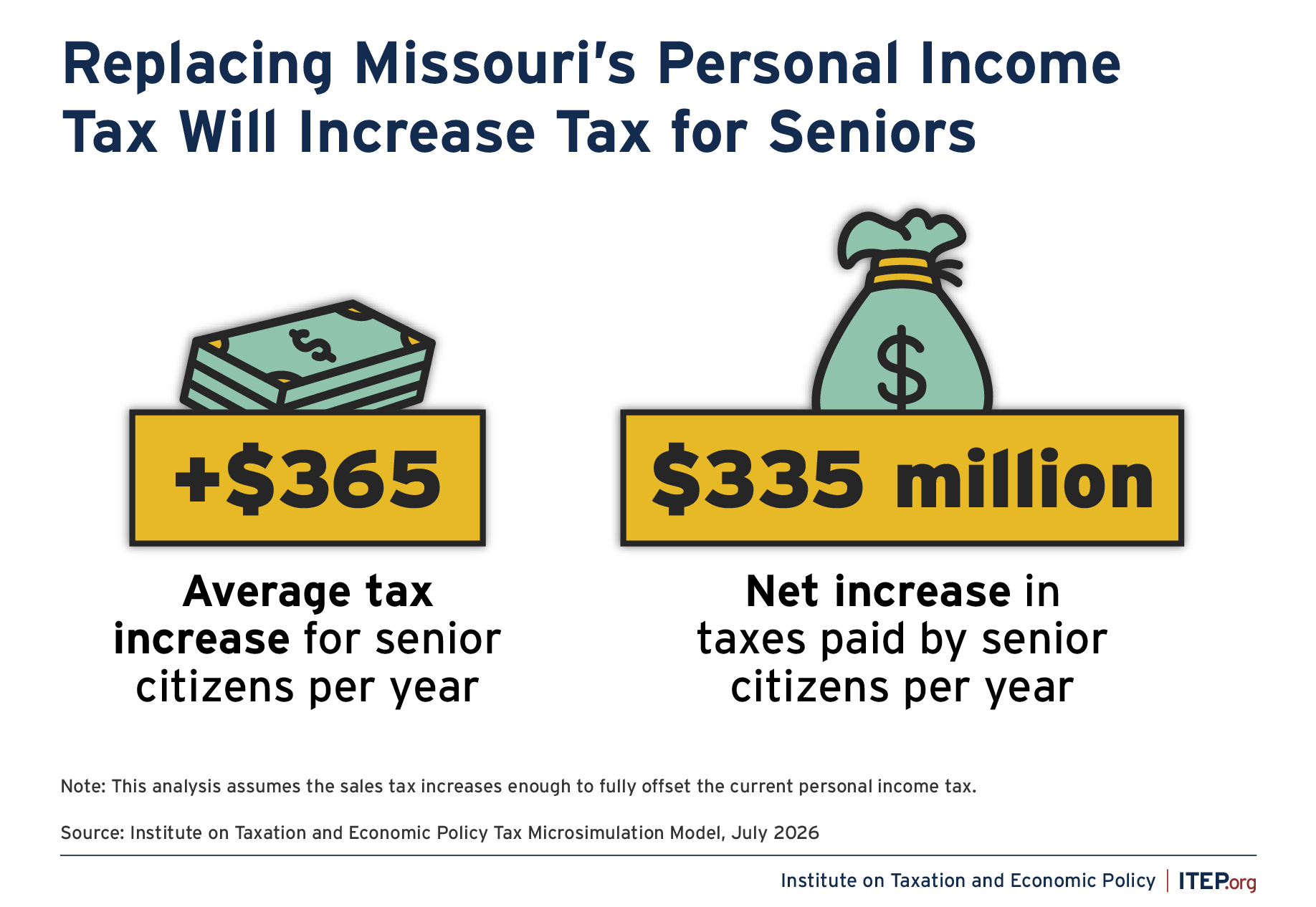
Eliminating Missouri’s income tax would mean raising money from seniors and service members instead of Missouri’s highest-income residents.
Missouri voters are being asked to sign a blank check for sales tax hikes. If Amendment 5 passes at the ballot this August, the rich will get their tax cut while the middle class, seniors, and other average Missourians will pay for it.