
The Institute on Taxation and Economic Policy
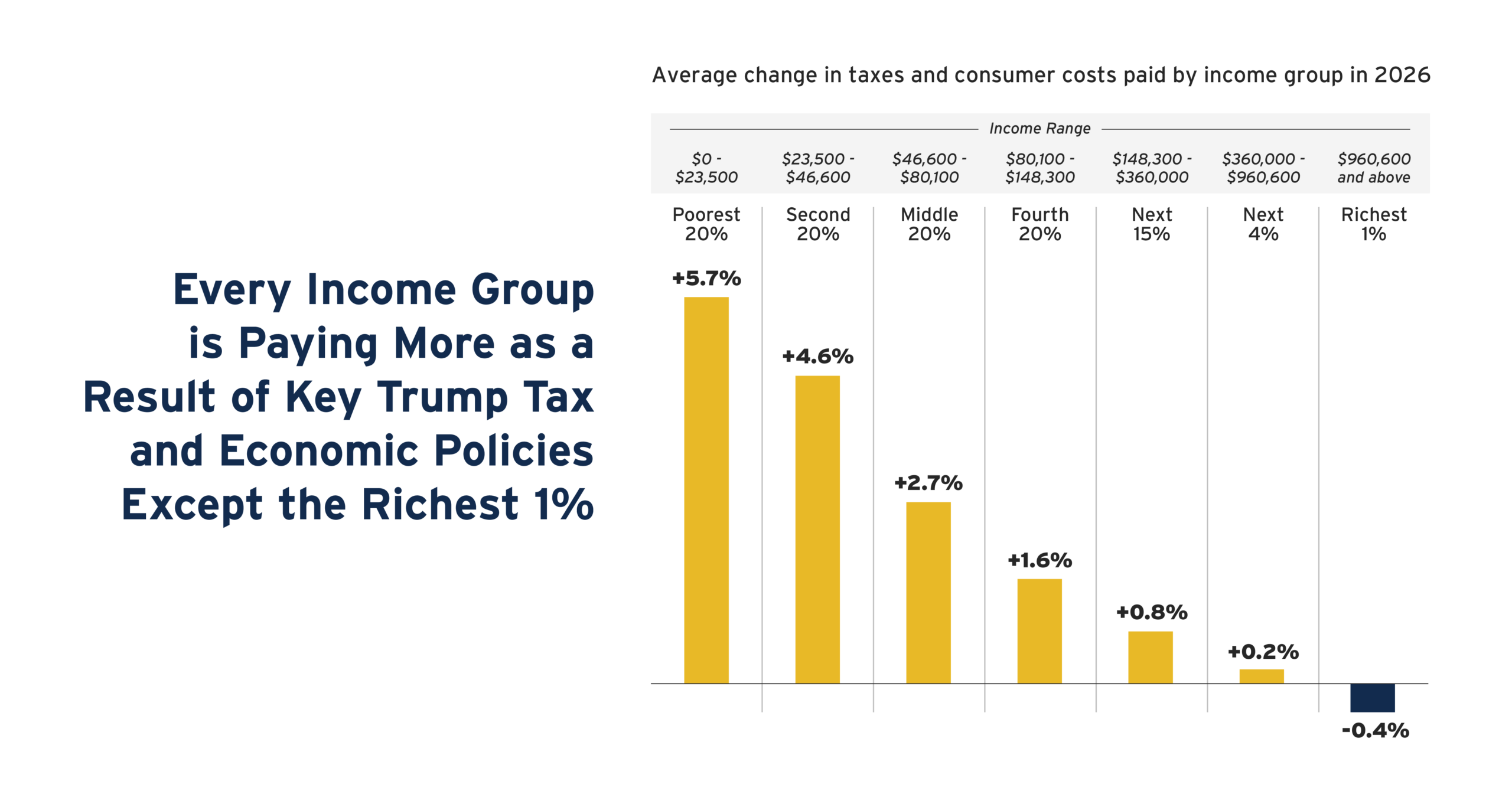
Impact of Key Trump Policies on Taxes and Costs: National and State Estimates
The major tax and economic policies of President Trump’s second term have increased taxes and household costs for most Americans except the richest 1%.



Featured Interactives

What's New
After Two Rounds of Trump Tax Cuts, Corporate America Paid Less Than Ever in 2025
• By Matthew Gardner, Steve Wamhoff, Joe Hughes, Spandan Marasini
In 2025, 706 major American corporations collectively paid a federal income tax rate of just 10.4% on $1.88 trillion in U.S. profits. This is the lowest effective rate that ITEP has uncovered in over 40 years of analyzing corporate income taxes.
State Rundown 10/22: Despite Obstacles, Progressive Taxes Define 2026
• By ITEP Staff
As more states move to raise revenue and tax the rich, anti-tax lobbyists and lawmakers are hard at work to undo that progress. Despite pushback, important conversations around needed revenue continue.
Testimony: ITEP’s Nick Johnson weighs in on revenue options for the District of Columbia
• By Nick Johnson
A D.C. Business Activity Tax, or BAT, meets commonly held standards for sound tax policy.
State Rundown 10/8: Ballot Debates and Gas Tax Promises Accelerate as Election Day Nears
• By ITEP Staff
As the Iran War continues to cause gas prices to rise across the country, lawmakers are stepping on the accelerator instead of pumping the brakes on costly and ineffective proposals to suspend the gas tax ahead of the November election.
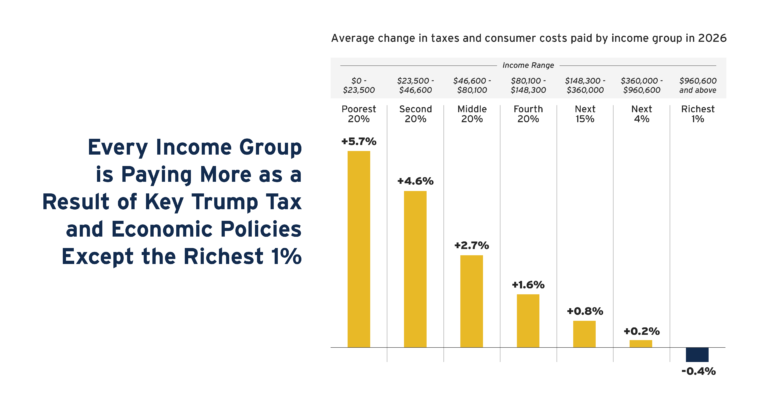
Impact of Key Trump Policies on Taxes and Costs: National and State Estimates
• By Steve Wamhoff
The major tax and economic policies of President Trump’s second term have increased taxes and household costs for most Americans except the richest 1%.
ITEP in the News
Barron’s: A Historic Income-Tax Battle Is Playing Out at the Ballot Box
Miami Herald: What Would Amendment 3’s Property Tax Cut Mean for Miami-Dade Homeowners?
HuffPost: Billionaires Have Tricks To Avoid Paying Their Fair Share Of Taxes. This Ballot Measure Would Change The Game.
MarketWatch: It’s Not Just California’s Billionaire Tax. Wealth Is on the Ballot in the Midterm Elections
BBC News: How is the US Economy Really Doing Under President Trump
ITEP Work in Action
Vanderbilt Policy Accelerator: 34 Ways to Tax AI
Economic Policy Institute: Voters in Colorado and Florida Face Major Tax Questions on the November Ballot
D.C. Fiscal Policy Institute: Raising Revenue Is Necessary for the District’s Finances and Future
Michigan Families for Fair Care: Middle-Income Families Are Paying $1,700 More This Year While Wealthiest Come Out on Top
Arizona Center for Economic Progress: Immigration Enforcement Comes at an Economic Cost for Arizona
Across the States
Who Pays? 7th Edition
Who Pays? is the only distributional analysis of tax systems in all 50 states and the District of Columbia. This comprehensive 7th edition of the report assesses the progressivity and regressivity of state tax systems by measuring effective state and local tax rates paid by all income groups.
State-by-State Map Effective tax rates where you live Download the Report Full 7th edition, PDFState Rundown & On the Map
On the Map
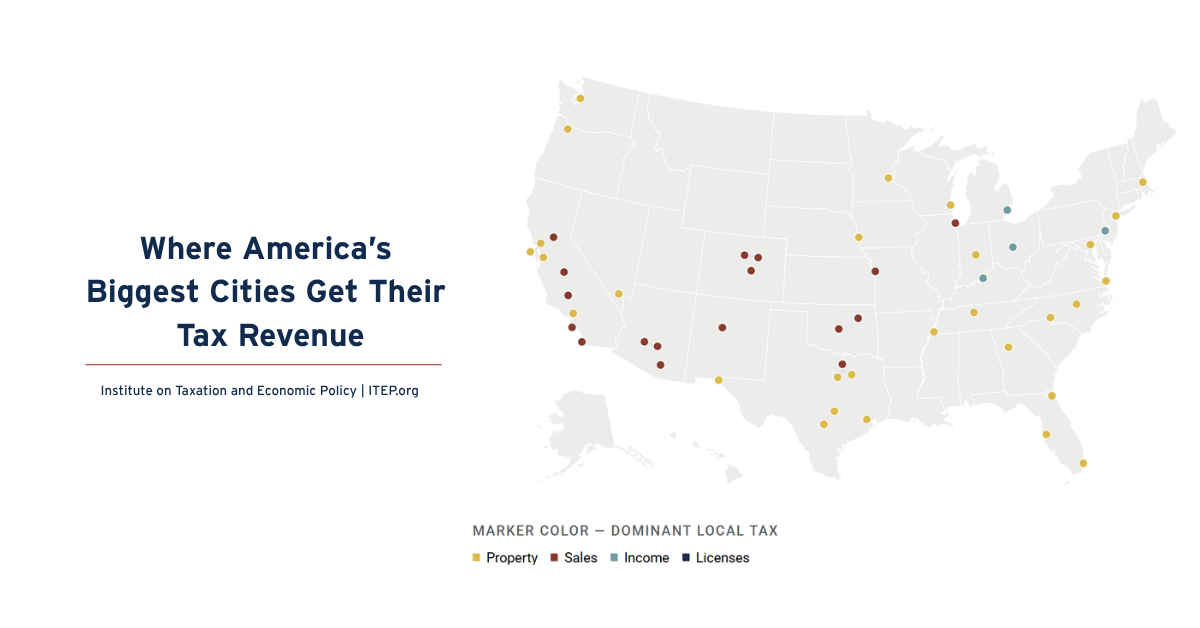

State & Local Tax Policy
Testimony: ITEP’s Nick Johnson weighs in on revenue options for the District of Columbia
• By Nick Johnson
New State Taxes on the Wealthy Raise Revenue and Rebalance Tax Codes, Advancing Racial Justice
• By Brakeyshia Samms
Tallying Up the Impact of Florida’s Property Tax Ballot Measure on Local Communities
• By Neva Butkus
California’s Prop 40: Responses to Common Objections
• By Brian Galle, Darien Shankse, David Gamage
The ITEP Guide to State & Local Taxes
A detailed primer on state and local tax policy for citizens, advocates, journalists, and policymakers. Learn about the three main sources of revenue (income, property, and sales) and the principles that shape tax codes.
Explore the Guide
Expert's View

Carl Davis
Research DirectorThe Geographic Distribution of Extreme Wealth in the U.S.
Excessive concentration of wealth runs counter to our national aspiration for genuine equality of opportunity, and it saps the vitality of our democracy through the consolidation of power and influence. Tax policy offers a powerful means of beginning to address our nation’s stark level of inequality, but current law is clearly falling short of its potential.

Steve Wamhoff
Federal Policy DirectorWashington Post: Trump’s tax law includes a $40,000 SALT cap. Here’s who qualifies.
SALT cap or no SALT cap, the mega bill overall is a bonanza for the rich in every state.

Miles Trinidad
State AnalystCT Mirror: Sales tax holidays under fire as CT launches its promotion
A two- to three-day sales-tax-free shopping spree for selected items does nothing to reduce taxes for low- and moderate-income taxpayers during the other 362 days of the year.

Institute on Taxation
and Economic Policy
ITEP is a non-profit, non-partisan tax policy organization. We conduct rigorous analyses of tax and economic proposals and provide data-driven recommendations to shape equitable and sustainable tax systems.
Subscribe to ITEP Emails
Tax research and policy news in your inbox.
Promote Fair Tax Policy
Your gift to ITEP promotes tax justice. With your help, we do research that supports taxing millionaires and billionaires, taxing big corporations and raising revenue for the things our people, our communities and our planet need.
Together, we can create a country with more economic justice, more racial justice, more climate justice… and more tax justice.