Publications

State Earned Income Tax Credits Will Support Families and Workers in 2027
• By Neva Butkus
Nearly two-thirds of states (plus the District of Columbia and Puerto Rico) have an Earned Income Tax Credit. These credits boost low-paid workers’ incomes and offset some of the taxes they pay, helping working class families achieve greater economic security.

Taxing Advertising Would Modernize State Sales Tax Bases for the Information Age
• By Nick Johnson
Most states questionably exempt advertising from sales taxes. States that extend their sales taxes to advertising and/or enact an excise tax stand to raise billions in revenue while correcting a structural bias in their tax codes that implicitly subsidizes some of the most profitable corporations in human history.

The Wealth Proceeds Tax: A Simple Way for States to Tax the Wealthy
• By Sarah Austin, Carl Davis
Taxing the proceeds generated by wealth through a new Wealth Proceeds Tax is a simple way for states to raise billions in new revenue and improve the fairness of their tax systems.

Shelter Skelter: How the Educational Choice for Children Act Would Use Tax Avoidance to Fuel School Privatization
• By Carl Davis
The Educational Choice for Children Act of 2025 would ostensibly provide a tax break on charitable donations to organizations that give out private K-12 school vouchers. Most of the so-called “contributions,” however, would be made by wealthy people solely for the tax savings, as those savings would typically be larger than their contributions.

State Income Tax Subsidies for Seniors
• By Carl Davis, Eli Byerly-Duke
State governments provide a wide array of tax subsidies to their older residents. But too many of these carveouts focus on predominately wealthy and white seniors, all while the cost climbs.

Tax Avoidance Continues to Fuel School Privatization Efforts
• By Carl Davis
Wealthy families are overwhelmingly the ones using school voucher tax credits to opt out of paying for public education and other public services and to redirect their tax dollars to private and religious institutions instead. Most of these credits are being claimed by families with incomes over $200,000.

Higher Stock Buyback Tax Would Raise Billions by Tightening Loophole for the Wealthy
• By Joe Hughes
A higher excise tax rate on buybacks is completely reasonable. Quadrupling the rate, as the President proposes, would raise more revenue and cut into the tax advantage buybacks have over dividends. When a company uses their cash holdings to repurchase their own stock, it is an admission that they have few productive investment opportunities. The public does have productive uses for the tax revenue like infrastructure and schools that create value for the entire economy.
State-by-State Estimates of Sen. Rick Scott’s “Skin in the Game” Proposal
• By Steve Wamhoff
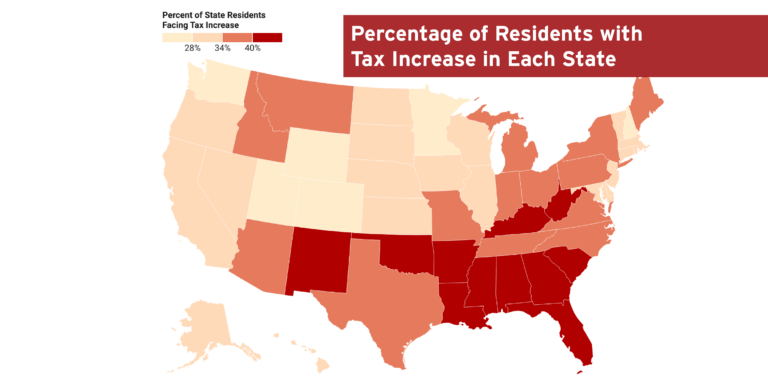
A proposal from Sen. Rick Scott would increase taxes for more than 35% of Americans, with the poorest fifth of Americans paying 34% of the tax increase.

Repealing the SALT Cap Would Wipe Out Revenue Raised by the House Ways and Means Bill’s Income Tax Provisions
• By Steve Wamhoff
There are several ways that the House leadership could avoid this problem. One approach is for lawmakers to replace the SALT cap with a different kind of limit on tax breaks for the rich that actually raises revenue and avoids disfavoring some states compared to others as the SALT cap does. ITEP has suggested a way to do this.

Testimony to Washington State Legislature House Finance Committee on HB 1496
• By Dylan Grundman O'Neill
Read as PDF Following is testimony of ITEP Senior State Tax Policy Analyst Dylan Grundman O’Neill submitted to Washington State Legislature House Finance Committee in support of HB 1496. “Hello and thank you for this opportunity to testify. My name is Dylan Grundman O’Neill, and I’m a Senior State Tax Policy Analyst with the Institute […]

Webinar: What’s Tax Got to Do With It?
• By ITEP Staff
Tax justice is necessary to achieve racial, social and economic justice. We need race-forward tax policies that create opportunity for everyone, demand corporations and the wealthy pay their fair share and raise enough revenue to respond to compounding climate, health and economic crises. Tax justice is justice. Sen. Sherrod Brown, joined by Dorian Warren (Community […]
ITEP Testimony In Support of H.B. 222 Income Tax Rates – Capital Gains Income & H.B. 256 Maryland Estate Tax – Unified Credit
• By Kamolika Das
Read as PDF Testimony of Kamolika Das, State Policy Analyst, Institute on Taxation and Economic Policy Submitted to: Ways and Means Committee, Maryland General Assembly Thank you for this opportunity to submit testimony. My name is Kamolika Das, and I represent the Institute on Taxation and Economic Policy (ITEP), a non-profit, non-partisan research organization that […]
How Congress Can Stop Corporations from Using Stock Options to Dodge Taxes
• By ITEP Staff
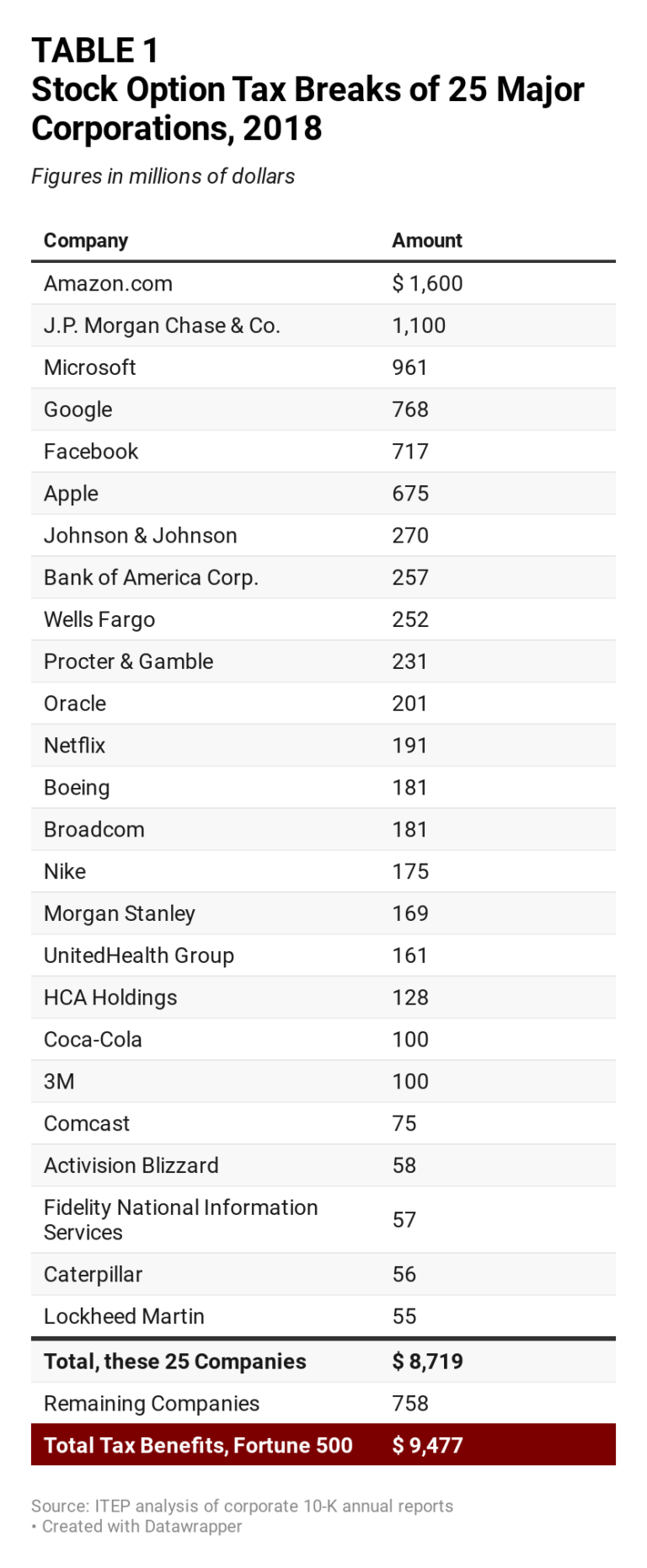
The stock option rules in effect today create a problem because they allow corporations to report a much larger expense for this compensation to the IRS than they report to investors. The result is that corporations can report larger profits to investors but smaller profits to the IRS, undermining the fundamental fairness of the tax system.

Benefits of a Financial Transaction Tax
• By Jessica Schieder, Lorena Roque, Steve Wamhoff
A financial transaction tax (FTT) has the potential to curb inequality, reduce market inefficiencies, and raise hundreds of billions of dollars in revenue over the next decade. Presidential candidates have proposed using an FTT to fund expanding Medicare, education, child care, and investments in children’s health. Any of these public investments would be progressive, narrowing resource gaps between the most vulnerable families and the most fortunate.
Who Pays and Why It Matters | MECEP Policy Insights Conference Keynote Address
• By Aidan Davis
States have broad discretion in how they secure the resources to fund education, health care, infrastructure, and other priorities important to communities and families. Aidan Davis with the Institute on Taxation and Economic Policy will offer a national perspective on state-level approaches to funding public investments and the implications of those approaches on tax fairness and revenue adequacy, and their economic outcomes. She’ll also provide insight on what’s in store for 2019 among the states.

The Federal Estate Tax: An Important Progressive Revenue Source
• By ITEP Staff
For years, wealth and income inequality have been widening at a troubling pace. One study estimated that the wealthiest 1 percent of Americans held 42 percent of the nation’s wealth in 2012, up from 28 percent in 1989. Lawmakers have exacerbated this trend by dramatically cutting federal taxes on inherited wealth, most recently by doubling the estate tax exemption as part of the 2017 Tax Cuts and Jobs Act. Further, lawmakers have done little to…

The Failure of Expensing and Other Depreciation Tax Breaks
• By Richard Phillips, Steve Wamhoff
Congress permitted full expensing only for five years, which will encourage businesses to speed up investments they would have made later. Republicans in Congress have discussed making the expensing provision permanent. This report argues that Congress should move in the other direction and repeal not just the full expensing provision but even some of the permanent accelerated depreciation breaks in the tax code, for several reasons.
Many Localities Are Unprepared to Collect Taxes on Online Purchases: Amazon.com and other E-Retailers Receive Tax Advantage Over Local Businesses
• By Carl Davis
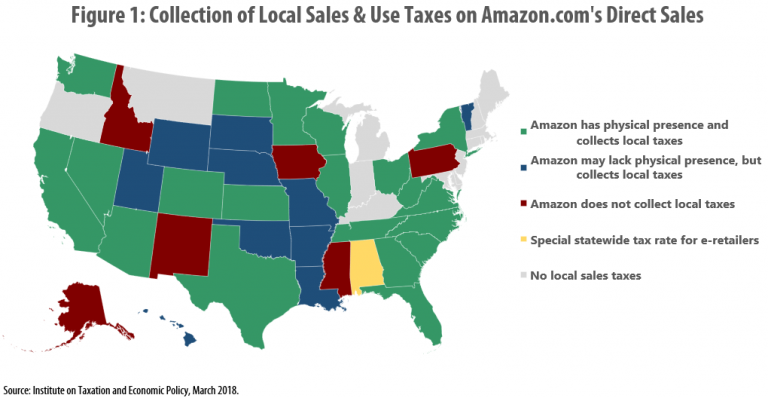
Online retailer Amazon.com made headlines last year when it began collecting every state-level sales tax on its direct sales. Savvy observers quickly noted that this change did not affect the company’s large and growing “marketplace” business, where it conducts sales in partnership with third-parties and rarely collects tax. But far fewer have noticed that even on its direct sales, Amazon is still not collecting some local-level taxes.
Trickle-Down Dries Up: States without personal income taxes lag behind states with the highest top tax rates
• By Carl Davis, Nick Buffie
Lawmakers who support reducing or eliminating state personal income taxes typically claim that doing so will spur economic growth. Often, this claim is accompanied by the assertion that states without income taxes are booming, and that their success could be replicated by any state that abandons its income tax. To help evaluate these arguments, this study compares the economic performance of the nine states without broad-based personal income taxes to their mirror opposites—the nine states…

Offshore Shell Games 2017
• By Matthew Gardner, Richard Phillips
This study explores how in 2016 Fortune 500 companies used tax haven subsidiaries to avoid paying taxes on much of their income. It reveals that tax haven use is now standard practice among the Fortune 500 and that a handful of the country’s biggest corporations benefit the most from offshore tax avoidance schemes.
Trump Budget Uses Unrealistic Economic Forecast to Tee Up Tax Cuts
• By Carl Davis
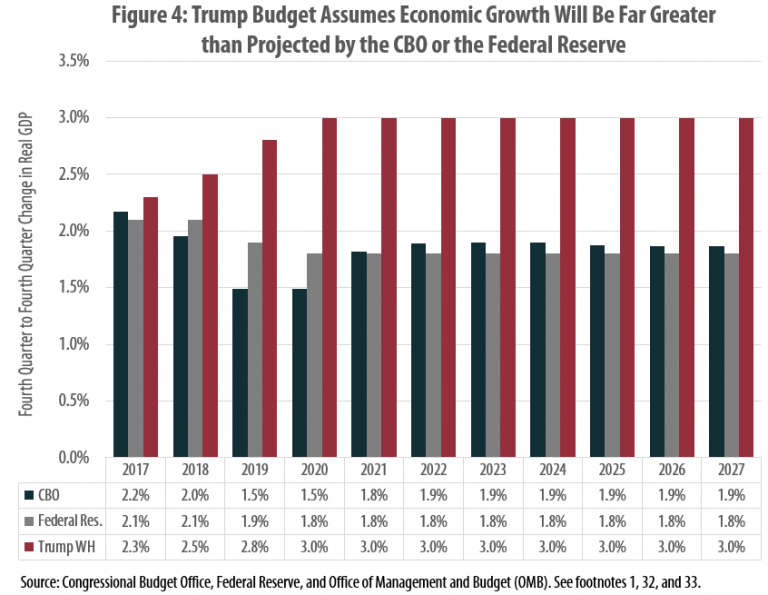
The Trump Administration recently released its proposed budget for Fiscal Year 2018. The administration claims that its proposals would reduce the deficit in nearly every year over the next decade before eventually achieving a balanced budget in 2027, but the assumptions it uses to reach this conclusion are deeply flawed. This report explains these flaws and their consequences for the debate over major federal tax changes.
What Real Tax Reform Should Look Like
• By ITEP Staff
If lawmakers truly want to create an environment in which economic mobility is possible for more working people, budget-busting tax cuts are the wrong way to achieve this goal. Dramatic tax giveaways would force cuts to programs that provide early education, health care, job training, affordable housing, nutrition assistance, and other vital services that promote economic mobility. Further, current tax proposals from Congress and the Trump Administration defy what most Americans would consider true reform…
The Federal Estate Tax: A Critical and Highly Progressive Revenue Source
• By Richard Phillips
For years, wealth and income inequality have been widening at a troubling pace. A recent study estimated that the wealthiest 1 percent of Americans held 42 percent of the nation's wealth in 2012, up from 28 percent in 1989. Public policies have exacerbated this trend by taxing income earned from investments at a lower rate than income from an ordinary job and by dramatically cutting taxes on inherited wealth. Further, lawmakers have done little to…
State Tax Subsidies for Private K-12 Education
• By Carl Davis
This report explains the workings, and problems, with state-level tax subsidies for private K-12 education. It also discusses how the Internal Revenue Service (IRS) has exacerbated some of these problems by allowing taxpayers to claim federal charitable deductions even on private school contributions that were not truly charitable in nature. Finally, an appendix to this report provides additional detail on the specific K-12 private school tax subsidies made available by each state.

Offshore Shell Games 2016
• By Matthew Gardner, Richard Phillips
This study explores how in 2015 Fortune 500 companies used tax haven subsidiaries to avoid paying taxes on much of their income. It reveals that tax haven use is now standard practice among the Fortune 500 and that a handful of the country's wealthiest corporations benefit the most from this tax avoidance scheme.

Institute on Taxation
and Economic Policy
ITEP is a non-profit, non-partisan tax policy organization. We conduct rigorous analyses of tax and economic proposals and provide data-driven recommendations to shape equitable and sustainable tax systems.
Subscribe to ITEP Emails
Tax research and policy news in your inbox.
Promote Fair Tax Policy
Your gift to ITEP promotes tax justice. With your help, we do research that supports taxing millionaires and billionaires, taxing big corporations and raising revenue for the things our people, our communities and our planet need.
Together, we can create a country with more economic justice, more racial justice, more climate justice… and more tax justice.