
Florida
State Rundown 11/24: Lawmakers and Families Thankful to Be Nearing End to 2020
November 24, 2020 • By ITEP Staff
Just as people will search their hearts to give thanks this week for the small and large things that got them through a difficult year, state lawmakers are also doing their best to count their blessings while keeping fingers crossed for badly needed federal relief to give them something to be truly grateful for.
Florida Policy Institute: 2021 Legislature Must Prioritize Revenue-Raising Solutions, Not Budget Cuts, To Bolster Post-Pandemic Recovery
November 18, 2020 • By ITEP Staff
Through smart investments, it is possible to make up billions of dollars without cuts. FPI proposes initiatives to close corporate loopholes such as “combined reporting”— already implemented by 28 states and D.C.— and the “throwback rule”— adopted by 22 states and D.C. — that would generate more than $500 million in general revenue. Read more […]
State Rundown 11/13: States Can Find Inspiration in Arizona Ballot Success; Must Look to Congress for More Immediate Help
November 13, 2020 • By ITEP Staff
Although progressive tax policy doesn’t always succeed in in statehouses or voting booths, Arizona voters showed once again that when offered a clear choice, most people resoundingly support requiring fairer tax contributions from rich individuals and highly profitable corporations over allowing their schools and other shared priorities to wither and decay. Still, a similar effort in Illinois and a more complicated measure in California were defeated, and anti-tax zealots in West Virginia and many other states will continue to push for tax cuts for the rich and defunding public investments, leaving much work to be done to advance tax justice.
Florida Policy Institute: Florida Would See an Extra $577 Million in Sales Tax Revenue Under Amendment 2
October 30, 2020 • By ITEP Staff
As Florida Policy Institute and many others have demonstrated, gradually increasing the minimum wage to $15 per hour by 2026 would help lift households out of poverty and reduce pay inequities long experienced by women, people of color, and immigrants. Additionally, a new analysis by the Institute on Taxation and Economic Policy (ITEP) shows that Amendment 2 […]
State Rundown 10/28: Anti-Tax Horror Stories Proving Less Spooky in 2020
October 28, 2020 • By ITEP Staff
Even with Halloween coming up this weekend, months of dealing with the horrors of the Covid-19 pandemic have made it hard to scare anyone in the closing months of 2020, which state lawmakers and residents are showing by voting in droves and supporting policies they had been more trepidatious about in recent years.
The biggest news for state and local fiscal debates this week was that federal fiscal relief to help with their pandemic-induced revenue crises is effectively off the table for at least another month. But if there is a silver lining to this federal inaction, it may be that it coincides with New Jersey’s success filling part of its own revenue shortfall through a millionaires tax, as well as with prominent wealth managers admitting that their rich clients don’t flee to other states in response to such taxes (see “What We’re Reading”). Combined, these three developments could encourage state leaders elsewhere…
State Rundown 9/11: Benefits of Progressive Taxation Getting Well-Deserved Attention
September 11, 2020 • By ITEP Staff
Readers may want to start with our “What We’re Reading” section this week, which is full of good reading on how progressive taxation is needed to fund vital public services, helpful for state and local economic growth, and popular among voters as well. In that spirit, leaders in both New Jersey and New York are looking at small taxes on stock trades to help improve their budgets and tax codes. These last couple of weeks have also featured more state fiscal action than is typical this time of year, for example in North Carolina, where lawmakers decided to use federal…
State Rundown 8/26: Progressive Revenue Ideas Featured in Many States’ Fiscal Debates
August 26, 2020 • By ITEP Staff
Voters could significantly change the tax landscape through ballot measures this November regarding oil taxes in Alaska and a high-income surcharge for education funding in Arizona. Legislators are doing their part to bring progressive tax ideas to the fore as well, including a possible wealth tax in California, a millionaires tax in New Jersey, and a pied-a-terre proposal in New York. And Nebraska lawmakers reached a property tax and business tax subsidy compromise before closing out their session, but did not identify progressive revenue sources to fund it and will likely be back at the bargaining table before long.
South Strong: Racial Equity and Taxes in Southern States
August 26, 2020 • By Amy Hanauer, Meg Wiehe
Southern states have a particularly egregious record on tax equity, rooted partly in racism. Lawmakers baked some of the most egregious and anti-democratic tax policies into southern state constitutions, such as supermajority requirements to raise taxes in Florida, Mississippi and Louisiana, income tax rate caps in North Carolina and Georgia, and the recent elimination of […]
Miami Herald: If Florida Modernized Its Tax Code, It would bring Millions In Revenue
August 20, 2020
The Institute on Taxation and Economic Policy estimated that closing this loophole would bring in $477 million in revenue. Read more
State Rundown 8/12: States Find Themselves in New Unemployment Pickle
August 12, 2020 • By ITEP Staff
Even in statehouses, many eyes remained on Congress and President Trump this week as state lawmakers advocated for needed federal fiscal relief and debated whether they can afford to join in on the president’s executive order requiring states to partially fund a new version of enhanced unemployment benefits that have otherwise expired.
As many of the country’s major professional sports leagues attempt to return to action amid concerns that the pandemic will find a way to ruin even the best-laid plans, state legislatures find themselves in a similar boat. Lawmakers would normally be enjoying their summer breaks at this time of year, but instead are returning to work in special sessions surrounded by plexiglass and uncertainty. Read on for information on ongoing sessions in states including California, Massachusetts, and Nebraska, as well as upcoming sessions in Missouri and Oregon.
Sales Tax Holidays: An Ineffective Alternative to Real Sales Tax Reform
July 29, 2020 • By Dylan Grundman O'Neill
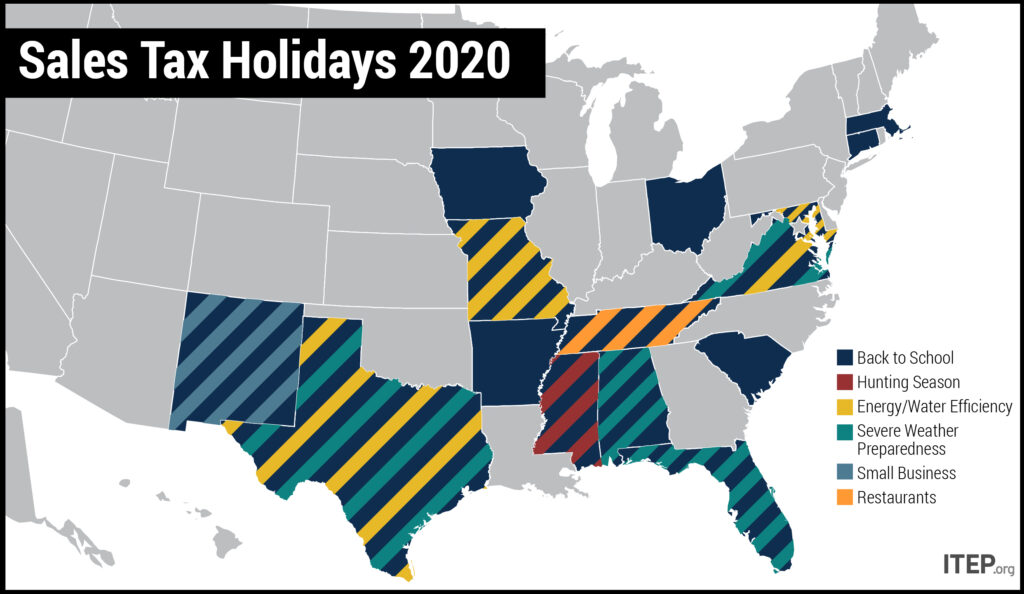
Lawmakers in many states have enacted “sales tax holidays” (16 states will hold them in 2020) to provide a temporary break on paying the tax on purchases of clothing, school supplies, and other items. These holidays may seem to lessen the regressive impacts of the sales tax, but their benefits are minimal while their downsides are significant—and amplified in the context of the COVID-19 pandemic. This policy brief looks at sales tax holidays as a tax reduction device.
A Cautionary Tale on Sales Tax Holidays During a Pandemic
July 29, 2020 • By Dylan Grundman O'Neill

Sixteen U.S. states will hold “sales tax holidays” this year. As ITEP’s newly updated brief explains, these events offer dubious benefits at significant public expense even in normal years, problems which are only amplified in the context of the COVID-19 pandemic.
Biden Proposes to Fund Child Care and Elder Care by Shutting Down Tax Breaks for Real Estate Investors
July 21, 2020 • By Steve Wamhoff

On Tuesday, Democratic presidential candidate Joe Biden announced a $775 billion proposal to expand care options for children and elderly people, suggesting that the cost would be at least partly offset by paring back tax breaks for real estate investors. Bigtime real estate investors are simply unaccustomed to operating without government subsidies provided through the tax code.
Bloomberg: Virus Surge Hits Budgets of States Most Vulnerable to Shutdowns
July 17, 2020
As the two states have each surpassed nearly 600,000 confirmed cases combined, with daily new cases in the tens of thousands, governors in Florida and Texas are considering scaling back their economies amid enormous pressure. Their initial hesitancy to shut down may have fueled the recent surges according to some reports. Yet, experts say that […]
As ITEP analyst Kamolika Das wrote today, July 1 is typically the beginning of state fiscal years and “a point when one can take a step back and reflect on the wins and disappointments of the past state legislative sessions.” Not so in 2020, she writes, as uncertainty surrounding the virus, state revenues, and potential federal action give state lawmakers no such time to relax and reflect. Although most recent state actions, such as those covered below in California, Mississippi, and West Virginia, have focused on funding cuts and temporary measures to bring budgets into short-term balance, the need for…
New Fiscal Year Brings New Challenges and Opportunities in the States
July 1, 2020 • By Kamolika Das
July 1—the start of the new fiscal year in most states—typically marks a point when one can take a step back and reflect on the wins and disappointments of the past state legislative sessions. 2020 is markedly different. Nationwide business closures and stay-at-home orders in response to COVID-19 have led to unprecedented spikes in unemployment, decreased demand for consumer spending, and increased demand for vital public services. As a result, states face incredibly uncertain financial futures with little clarity regarding how their tax collections will fare over the next year.
State Rundown 6/26: States Take Varying Fiscal Approaches While Awaiting Federal Action
June 26, 2020 • By ITEP Staff
State policymakers this week took a variety of approaches to their fiscal situations amid the COVID-19 pandemic. Tennessee lawmakers chose to balance their budget through $1.5 billion in cuts to public services, but not before adding to those cuts by going forward with planned tax cuts. California legislators also passed a budget but relied on a number of temporary measures and delays to do so. Their counterparts in Massachusetts, New Jersey, and Rhode Island opted for interim budgets to tide them over for a few months while they continue to look for lasting solutions. Meanwhile, many states are debating whether…
State Rundown 5/27: Some States Finally Talking Revenue Solutions to Revenue Crisis
May 27, 2020 • By ITEP Staff
This week the immense scale and uneven distribution of economic and health damage from the COVID-19 pandemic continued to come into focus, hand in hand with greater clarity around pandemic-related revenue losses threatening state and local revenues and the priorities—such as health care, education, and public safety—they fund. Officials in many states, including Ohio and Tennessee, nonetheless rushed to declare their unwillingness to be part of any solution that includes raising the tax contributions of their highest-income residents. On the brighter side, some leaders are willing to do just that, for example through progressive tax increases proposed in New York…
Tampa Bay Times: They Pay Taxes, But There’s No Stimulus Money for Them
May 24, 2020
In Florida, passing the HEROES Act and extending the CARES Act retroactively would help an additional 277,240 people — those living in households where at least one member uses a taxpayer identification number, according to the Institute On Taxation and Economic Policy, a nonpartisan tax policy organization in Washington, D.C. Read more
Orlando Sentinel: Is Wall Street Journal right? Is Florida “well-managed?” It depends
May 22, 2020
New York’s tax burdens are relatively even. The effective rate for New York’s poorest is 11.4 percent, compared to 11.3 for the top one percent and 12.4 for the middle. The comparisons are by the Institute on Taxation and Economic Policy, which last updated them in 2018. So it’s obvious why the Journal resents New […]
State Rundown 5/20: State Revenue Crisis Getting Clearer…and Scarier
May 20, 2020 • By ITEP Staff
State policymakers are navigating incredibly uncertain waters these days as they attempt to get a firmer grasp on the scale of their revenue crises, identify painful budget cuts they may have to make in response, and look for ways to raise tax revenues coming from the households and corporations still bringing in large incomes and profits amid the pandemic—all while hoping that additional federal aid and greater flexibility in how they can use federal CARES Act funds will help relieve some of these difficult decisions.
Orlando Sentinel: Make corporations – not teachers – pay up
May 19, 2020
In fact, the Institute on Taxation and Economic Policy found that Florida families that make less than $50,000 spend 8-12% of their annual income on local and state taxes while families that make $200,000 or more spend between 2% and 4.5%. Read more
Intended Consequences: Deliberate Disinvestment Caused Florida’s Unemployment Disaster
May 4, 2020 • By Stephanie Clegg
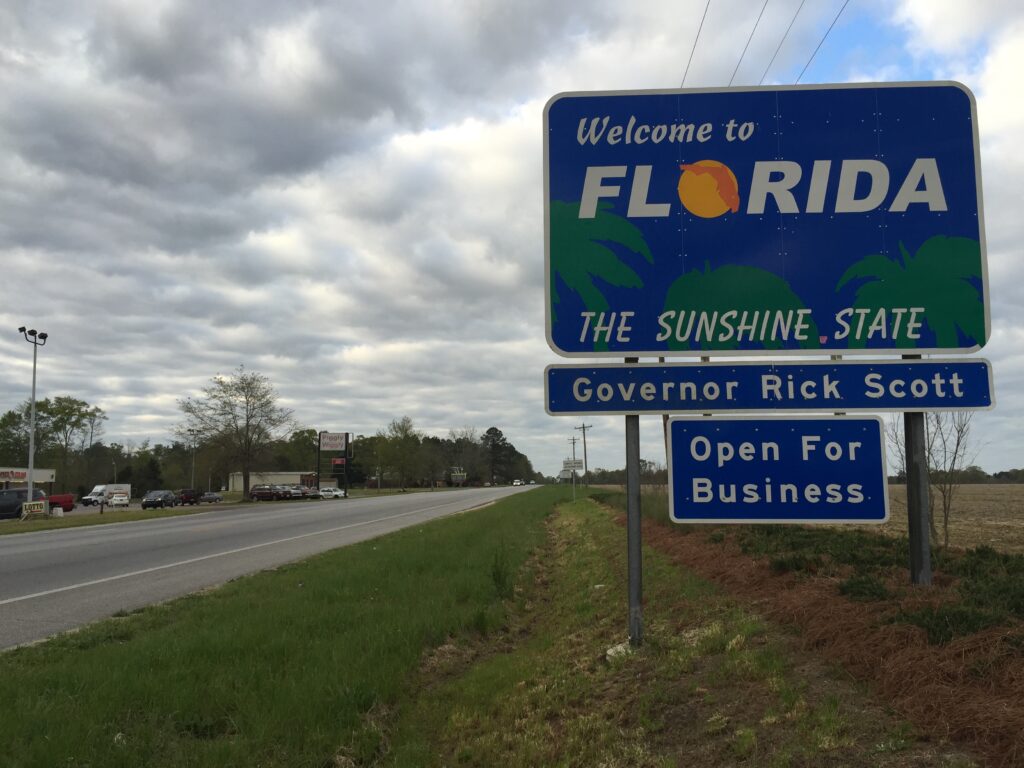
Florida politicians deliberately rigged the unemployment system after the Great Recession to avoid raising taxes on businesses. Now, in a pandemic, some out-of-work residents are left waiting more than six weeks for unemployment benefits while more than 280,000 others have been inexplicably denied. What’s happening in Florida underscores deeper challenges with systems that should help those in need, but instead are designed to fail them.
