Oregon

Updated Estimates: Section 1202 ‘QSBS’ Tax Giveaway Is Draining State and Local Revenues While Enriching the Wealthy
• By Nick Johnson, Sarah Austin
The federal Section 1202 capital gains exclusion, also misleadingly named the Qualified Small Business Stock (QSBS) exclusion, will cause 33 states plus the District of Columbia to lose $4.1 billion in tax revenue over the next five years. States can opt out of this tax break with a simple change to their tax laws, thereby preserving revenue for public services.
Oregon Center for Public Policy: Tax Cuts for the Rich, Higher Prices for Everyone Else: the Net Effect of Trump’s Inflationary Policies
• By ITEP Staff
Only the richest 5 percent of Oregonians are better off from the combined impact of tax changes and inflationary policies enacted by the Trump administration and the congressional Republican majority, according to a new analysis by the Institute on Taxation and Economic Policy (ITEP).

State Earned Income Tax Credits Will Support Families and Workers in 2027
• By Neva Butkus
Nearly two-thirds of states (plus the District of Columbia and Puerto Rico) have an Earned Income Tax Credit. These credits boost low-paid workers’ incomes and offset some of the taxes they pay, helping working class families achieve greater economic security.

State Child Tax Credits Will Boost Financial Security for Families and Children in 2027
• By Neva Butkus
Sixteen states provide Child Tax Credits to reduce poverty, boost economic security, and invest in children. State lawmakers have several options to maximize the impact of Child Tax Credits.
Audio: ITEP’s Sarah Austin Warns Against Swapping Income Taxes for Sales Taxes.
• By Sarah Austin
ITEP Senior Analyst Sarah Austin appeared on the Oregon Center for Public Policy’s “Policy for the People” podcast, discussing tax policy choices that would ask more from working families instead of the wealthy.
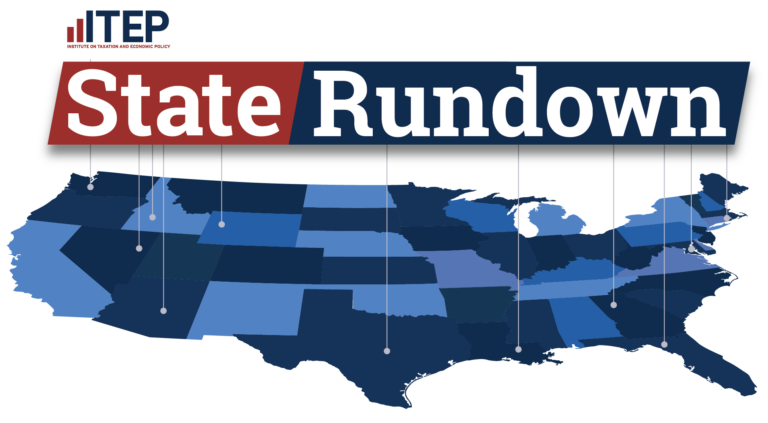
State Rundown 9/10: States Brace for (and in Some Cases Embrace) Ballots and Budgets
• By ITEP Staff
States across the country will consider a host of ballot measures that could reshape the fairness and adequacy of their states’ tax systems, while other states are receiving budget forecasts that could further shape upcoming policy debates.

2026 Sessions in Review: States Fund Tax Credits by Preserving, Raising Revenue
• By Aidan Davis
In a year of cautious uncertainty around current and ongoing revenues, many state lawmakers strengthened their tax credits for families and children.
State-by-State Tax Expenditure Reports
• By ITEP Staff
Below is a list of tax expenditure reports published in the states.

States Are Standing Up to the Monster Known as QSBS
• By Nick Johnson
We estimate that by 2032, QSBS will be costing states $1.1 billion a year, and since states must balance their budgets, that’s money they can’t use for public services.

Institute on Taxation
and Economic Policy
ITEP is a non-profit, non-partisan tax policy organization. We conduct rigorous analyses of tax and economic proposals and provide data-driven recommendations to shape equitable and sustainable tax systems.
Subscribe to ITEP Emails
Tax research and policy news in your inbox.
Promote Fair Tax Policy
Your gift to ITEP promotes tax justice. With your help, we do research that supports taxing millionaires and billionaires, taxing big corporations and raising revenue for the things our people, our communities and our planet need.
Together, we can create a country with more economic justice, more racial justice, more climate justice… and more tax justice.