Many Americans across the country feel they can no longer afford the necessities of a middle-class life, like adequate and affordable housing, child care, and retirement. There are many policy options that would help, such as addressing home prices and the cost of health care. However, some states have proposed tax policies that would make the problem worse by raising middle-class families’ bills.
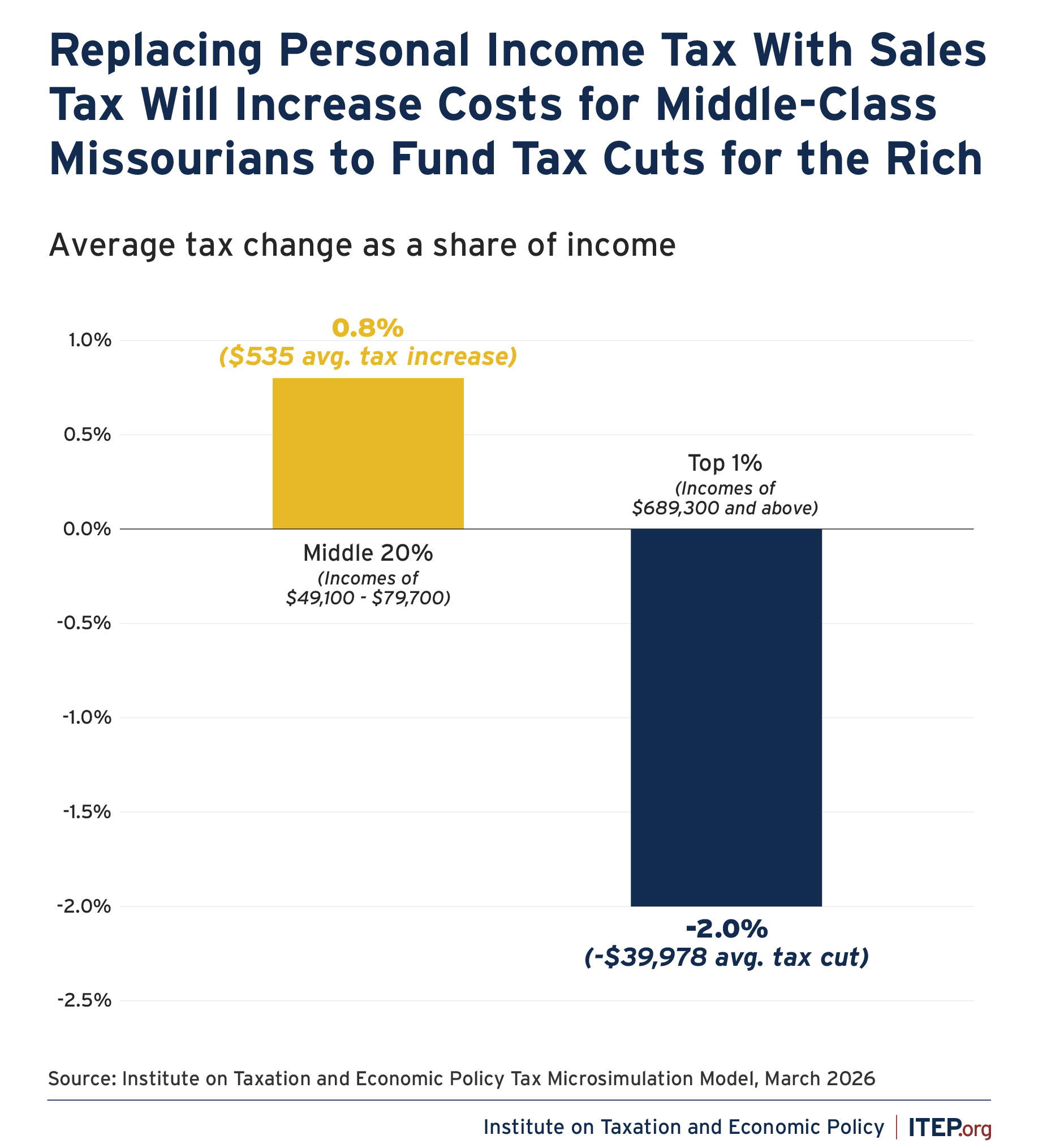
For example, a proposal to replace the Missouri personal income tax with a higher sales tax would increase costs for the middle 20 percent of filers, with incomes between $49,000 and $78,000, by about $535 a year on average. For Missourians with a bit less income, between about $24,000 and $49,000, the cost will be even higher at about $850 a year – or 2.4 percent of their annual income. All this so the top 1 percent of households can get an average annual tax cut of almost $40,000.
Figure 1
Unfortunately, Missouri is not alone.
Alaska Gov. Mike Dunleavy proposed a comparable scheme. His aim was to eliminate the state’s corporate income tax while creating a seasonal sales tax. This would have shifted costs onto working families and made life less affordable. A reworked version of the bill—approved recently by a Senate committee—wisely stripped these proposals and replaced them with revenue-raising measures that would lean more on profitable oil companies as opposed to low- and middle-income families.
In other states, income tax cuts are often later paired with consumption tax increases, as lawmakers face the fiscal reality of declining revenues and possible deep public service cuts.
For example, starting in 2018 Kentucky paired increases to the state’s sales tax with a steady drip of cuts to their personal income tax, with the end goal of bringing the state’s income tax rate to zero. These cuts overwhelmingly benefit the richest in the state. When looking at state and federal tax changes over the past decade, Kentucky’s highest-earning 5 percent of families benefited from $3.4 billion in tax cuts in 2026 alone. As the permanent cuts have resulted in cuts to vital investments like education and health care, under one in ten Kentuckians think the tax cuts have helped them personally.
Families never see their sales tax bill in one place. But it is the largest state and local tax type for most households, and it is regressive, falling more heavily on low- and moderate-income families than their wealthy counterparts. Hikes will make life less affordable unless the state dramatically increases public provision of expensive services, which of course states are less equipped to do when income taxes for the rich have been slashed. With recent support from the White House’s Council of Economic Advisors for raising sales taxes, too many states continue to consider directly increasing day-to-day expenses. But American families understand their own finances and don’t need higher sales tax bills to fund tax cuts for the rich.