
ITEP's feature Research Priorities
What to Watch for on Tax Policy During the Presidential Primary
July 1, 2019 • By ITEP Staff

Taxes fund our democracy and candidates’ philosophy on how the nation raises revenues to fund its priorities matters. Here is an overview of how bold progressive tax policy ideas (on which some candidates have stated policy positions) can work.
Understanding Major Federal Tax Credit Proposals
June 30, 2019 • By ITEP Staff
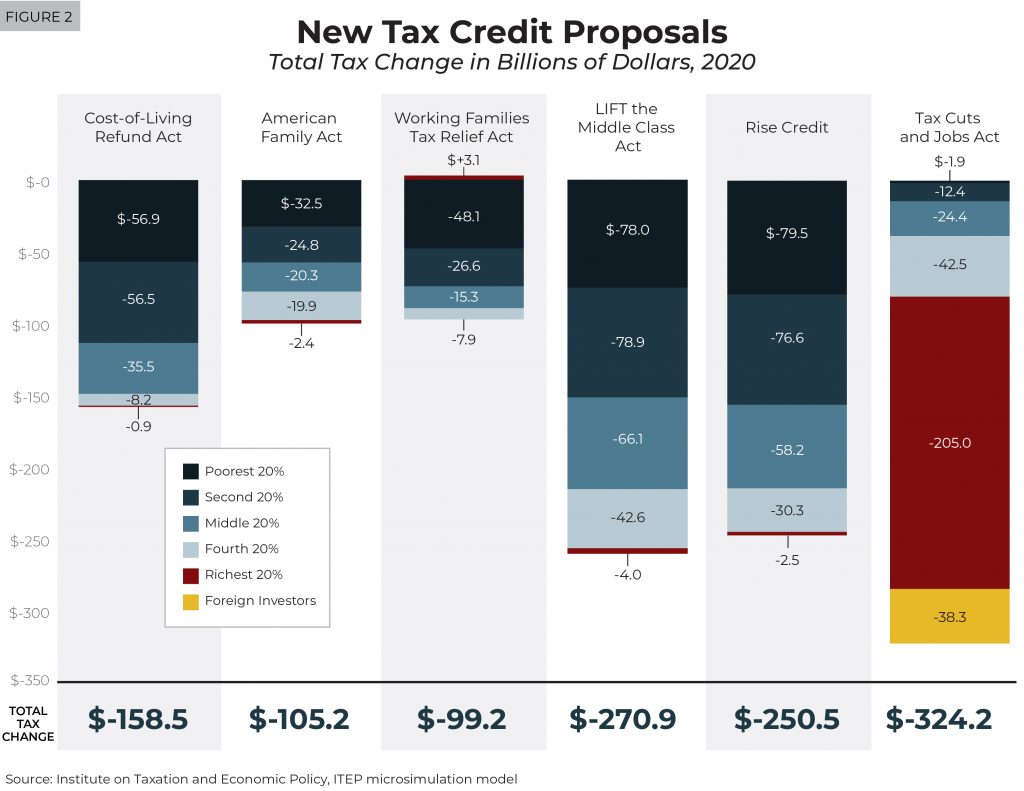
Federal lawmakers have announced at least five proposals to significantly expand existing tax credits or create new ones to benefit low- and moderate-income people. While these proposals vary a great deal and take different approaches, all would primarily benefit taxpayers in income groups who received only a small share of benefits from the Tax Cuts […]
The Case for Extending State-Level Child Tax Credits to Those Left Out: A 50-State Analysis
June 30, 2019 • By ITEP Staff
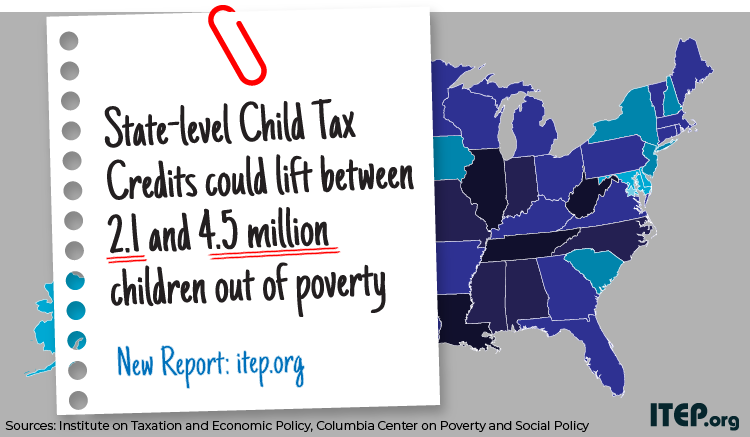
11.5 million children live in poverty across the country. Lawmakers can tackle poverty in their home states with refundable state-level Child Tax Credits and reach families the Tax Cuts and Jobs Act left behind. Joint report with the Columbia Center on Poverty and Social Policy.
The Illusion of Race-Neutral Tax Policy
June 30, 2019 • By ITEP Staff

It is well known that the bulk of the federal tax cuts flowed to the highest-earning households, who received the largest tax cut both in terms of real dollars and also as a share of income. But as our analysis with Prosperity Now reveals, solely examining the tax law in the context of class misses a bigger-picture story about how the nation’s public policies not only perpetuate widening income and wealth inequality, they also preserve historic and current injustices that continue to allow white communities to build wealth while denying the same level of opportunity (and often suppressing it) to…
Federal Tax Cuts in the Bush, Obama, and Trump Years
October 17, 2018 • By ITEP Staff
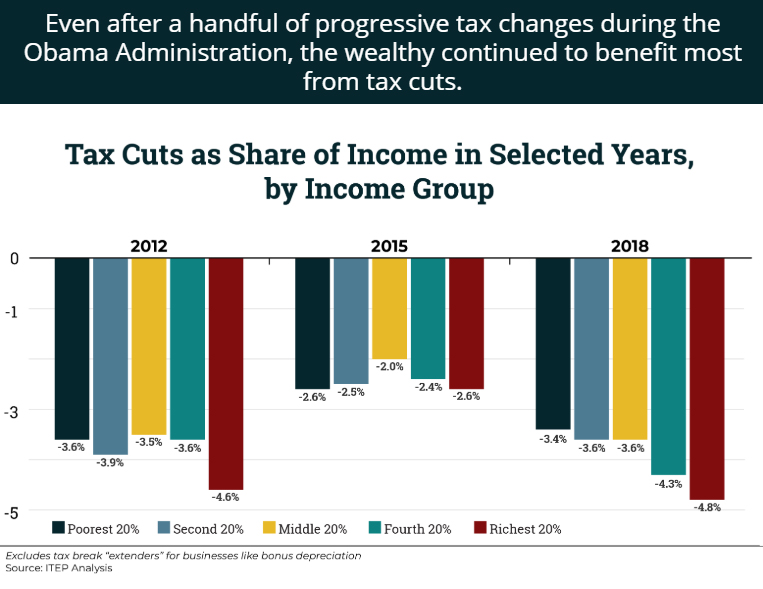
Since 2000, tax cuts have reduced federal revenue by trillions of dollars and disproportionately benefited well-off households. From 2001 through 2018, significant federal tax changes have reduced revenue by $5.1 trillion, with nearly two-thirds of that flowing to the richest fifth of Americans.
A Fair Way to Limit Tax Deductions
October 17, 2018 • By ITEP Staff
The cap on federal tax deductions for state and local taxes (SALT) that is in effect now under the Tax Cuts and Jobs Act (TCJA) is a flawed provision but repealing it outright would be costly and provide a windfall to the rich. Congress should consider replacing the SALT cap with a different type of limit on deductions that would avoid both of these outcomes. Using the ITEP microsimulation tax model, this report provides revenue estimates and distributional estimates for several such options, assuming they would be in effect in 2019.
Race, Wealth and Taxes: How the Tax Cuts and Jobs Act Supercharges the Racial Wealth Divide
October 17, 2018 • By ITEP Staff
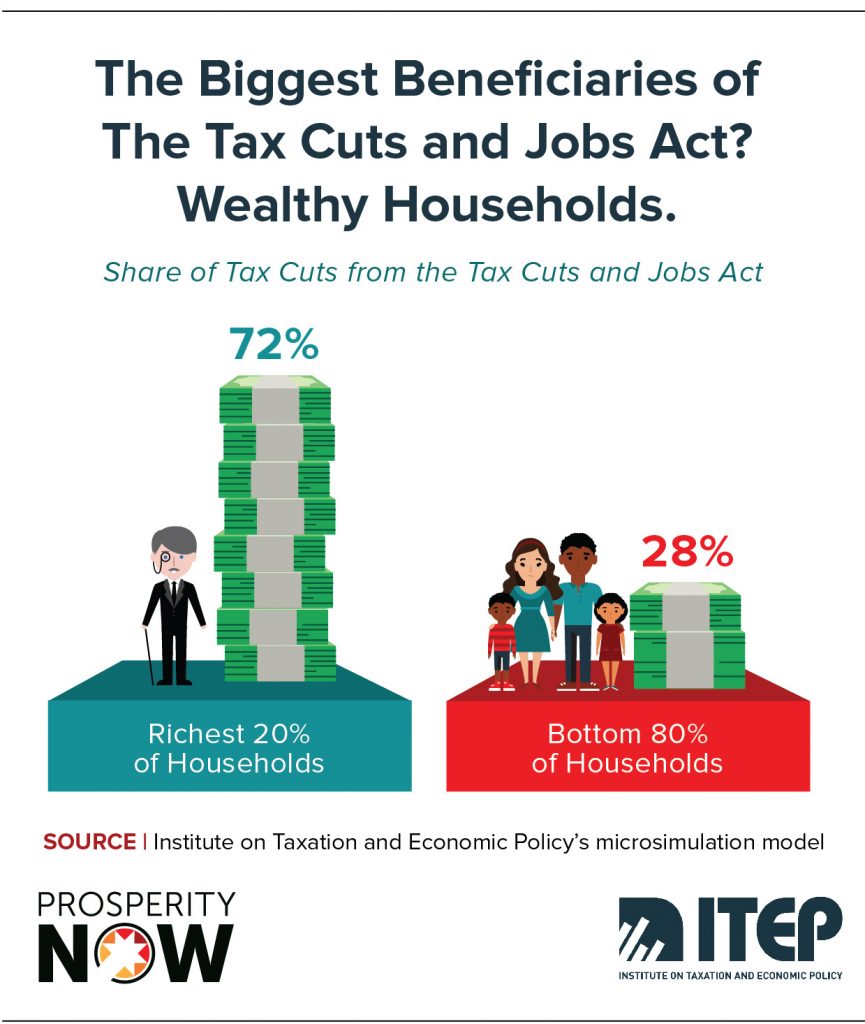
A newly released report by Prosperity Now and the Institution on Taxation and Economic Policy, Race, Wealth and Taxes: How the Tax Cuts and Jobs Act Supercharges the Racial Wealth Divide, finds that the TCJA not only adds unnecessary fuel to the growing problem of overall economic inequality, but also supercharges an already massive racial […]
Who Pays? Sixth Edition
October 1, 2018 • By ITEP Staff
ITEP’s sixth edition of Who Pays? A Distributional Analysis of the Tax System in All 50 States finds that most state and local tax systems continue to tax low- and middle-income households at higher rates than the wealthy. Read the full report
ITEP Resources on the Proposed SALT Workaround Regulations
August 22, 2018 • By ITEP Staff

As taxpayers across the country find ways to circumvent the cap on SALT deductions, the IRS is on the verge of proposing regulations to end "charitable donations" in the name of tax avoidance. ITEP expert Carl Davis shares resources for what you need to know about the SALT cap workarounds.
10 Things You Should Know About the Nation’s Tax System
July 12, 2018 • By ITEP Staff

This list of resources provides basic information about the federal and state tax systems.
State and Local Tax Contributions of Young Undocumented Immigrants
August 29, 2017 • By ITEP Staff

This report specifically examines the state and local tax contributions of undocumented immigrants who are currently enrolled or immediately eligible for DACA and the fiscal implications of various policy changes.
Who Pays? 5th Edition
August 3, 2017 • By ITEP Staff

ITEP’s Who Pays? report assesses the fairness of state and local tax systems, examining the share of income paid in state and local taxes by people across the economic spectrum. The new federal tax law is expected to effect changes in many state tax codes this year. ITEP staff continues to monitor and analyze tax […]

Institute on Taxation
and Economic Policy
ITEP is a non-profit, non-partisan tax policy organization. We conduct rigorous analyses of tax and economic proposals and provide data-driven recommendations to shape equitable and sustainable tax systems.
Subscribe to ITEP Emails
Tax research and policy news in your inbox.
Promote Fair Tax Policy
Your gift to ITEP promotes tax justice. With your help, we do research that supports taxing millionaires and billionaires, taxing big corporations and raising revenue for the things our people, our communities and our planet need.
Together, we can create a country with more economic justice, more racial justice, more climate justice… and more tax justice.