
Minnesota
Analysis of Tax Provisions in the House Reconciliation Bill: National and State Level Estimates
May 22, 2025 • By Carl Davis, Jessica Vela, Joe Hughes, Steve Wamhoff
The poorest fifth of Americans would receive 1 percent of the House reconciliation bill's net tax cuts in 2026 while the richest fifth of Americans would receive two-thirds of the tax cuts. The richest 5 percent alone would receive a little less than half of the net tax cuts that year.
State Rundown 5/15: State Tax Debates Carry On in the Midst of Chaotic Federal Tax Landscape
May 15, 2025 • By ITEP Staff
Even as most major headlines have been about the ever-changing landscape of federal tax policy, the latest “ideas of the week," and now the House tax bill, state tax policy continues to be a priority for lawmakers.
State Rundown 5/7: As Budget Season Heats Up, Tax Proposals Are Getting Serious
May 7, 2025 • By ITEP Staff
With spring in full bloom ,many state lawmakers are reaching tax policy agreements. Out west, lawmakers in North Dakota and Texas have moved major property tax cuts. Meanwhile, in the east and south, Vermont appears likely to pass an expansion to its Child Tax Credit and Earned Income Tax Credit, and South Carolina lawmakers are aiming to make deep, drastic cuts to the state’s income tax.
Want to know more about the tax and spending megabill that President Trump recently signed into law? We've got you covered.
State Rundown 4/16: No Vacation from Spring Tax Breaks as Bills Advance
April 16, 2025 • By ITEP Staff
While students and families are enjoying spring break vacations, legislative sessions are still in full swing. And some are poised for a spring tax break season as proposals advance with major implications for the sustainability of state budgets.
IRS Cooperation with ICE Will Damage Public Trust, Putting Tax Revenues in Jeopardy
April 10, 2025 • By Marco Guzman

Attempts by the Department of Homeland Security to secure private information from the IRS on people who file taxes with an Individual Taxpayer Identification Number is a violation of federal privacy laws that protect taxpayers. It is also a change that could seriously damage public trust in the IRS, which could jeopardize billions of dollars in tax payments by hardworking immigrant families.
Residents and state lawmakers across the country are pushing back against anti-tax measures and are looking for ways to protect revenue and advance proposals that would raise revenue in progressive ways. This comes at a time when federal policy brings significant risks for state tax revenue.
State Rundown 4/3: Amidst Tariff Uncertainty, State Lawmakers Talk Taxes
April 3, 2025 • By ITEP Staff
While all eyes are on the Trump administration’s tariffs on foreign imports, state lawmakers are moving forward with a mix of deep, regressive tax cuts and progressive revenue raisers.
Minnesota Budget Project: Trump’s 2025 Tax Plans Would Hurt Everyday Americans
March 12, 2025
Trump tax plans – like extending most provisions of the Tax Cuts and Jobs Act (TCJA) that are set to expire, special tax breaks for people who earn some kinds of income, or new corporate tax cuts – would provide the largest tax cuts to higher-income households and profitable corporations. Because the Trump tax plans are also very costly, they could add hundreds of billions of dollars to the deficit every year and put health care, food support, and other public services that low- and middle-income people benefit from on the chopping block to pay for those tax cuts.1
Below is a list of tax expenditure reports published in the states.
In the face of immense uncertainty around looming federal tax and budget decisions, many of which could threaten state budgets, state lawmakers have an opportunity to show up for their constituents by raising and protecting the revenue needed to fund shared priorities. Lawmakers have a choice: advance tax policies that improve equity and help communities thrive, or push tax policies that disproportionately benefit the wealthy, drain funding for critical public services, and make it harder for most families to get ahead.
States Could Raise $19 Billion a Year with One Policy Change Targeting Corporate Tax Avoidance
February 20, 2025 • By ITEP Staff
Worldwide combined reporting negates the tax benefits of shifting corporate income offshore Public polling has consistently shown for decades that most people believe big multinational corporations are paying too little in taxes. Closing the loopholes these corporations use to avoid taxes is one of the most effective – and popular – solutions to this problem. […]
A Revenue Analysis of Worldwide Combined Reporting in the States
February 20, 2025 • By Carl Davis, Matthew Gardner, Michael Mazerov

Universal adoption of mandatory worldwide combined reporting would boost state corporate income tax revenues by roughly 14 percent. Thirty-eight states and the District of Columbia would experience revenue increases totaling $19.1 billion.
Turning IRS Agents to Deportation Will Reduce Public Revenues
February 11, 2025 • By Carl Davis, Jon Whiten
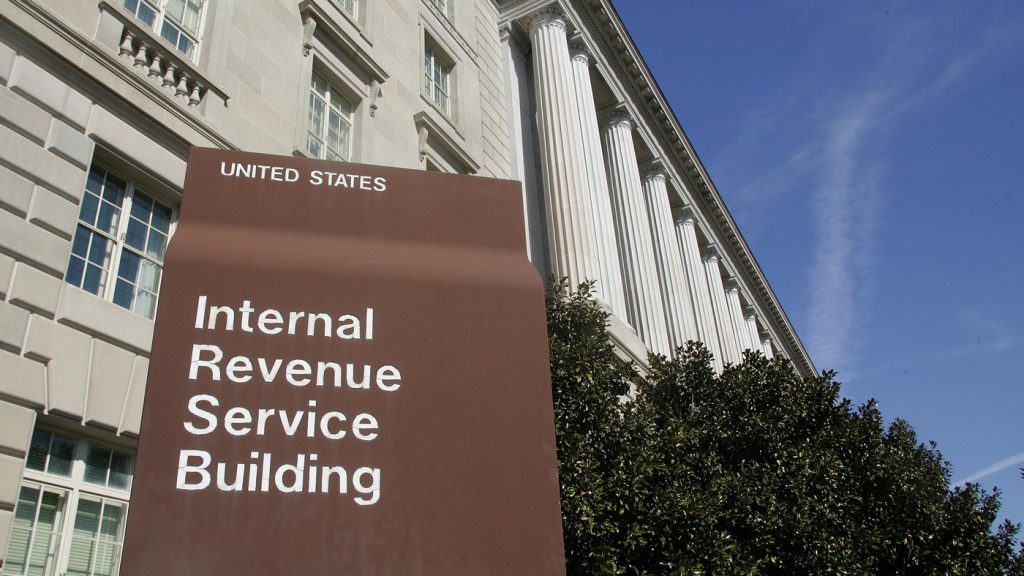
The Trump Administration’s plan to turn IRS agents into deportation agents will result in lower tax collections in addition to the harm done to the families and communities directly affected by deportations.
Maryland’s Tax Reform Likely Won’t Cause Millionaire Migration
January 30, 2025 • By Nick Johnson

The moment Gov. Wes Moore announced his proposal to reform Maryland’s tax system, in part, by raising income tax rates on high-income households, opponents began predicting that wealthy people would respond by leaving. Experience from other states says that’s not the case.
State Rundown 1/22: Tax Policy, Affordability, and Where It Misses the Mark
January 22, 2025 • By ITEP Staff
As state legislative sessions ramp up many lawmakers discuss their prioritization of affordability of necessities like food and housing as they craft their legislative agendas. Arkansas, Mississippi and Utah are looking to reduce or fully exempt groceries from their state sales taxes. Meanwhile, multiple proposals to reduce property taxes are making their way around state […]
Trump’s Plan to Extend His 2017 Tax Provisions: Updated National and State-by-State Estimates
January 8, 2025 • By Steve Wamhoff
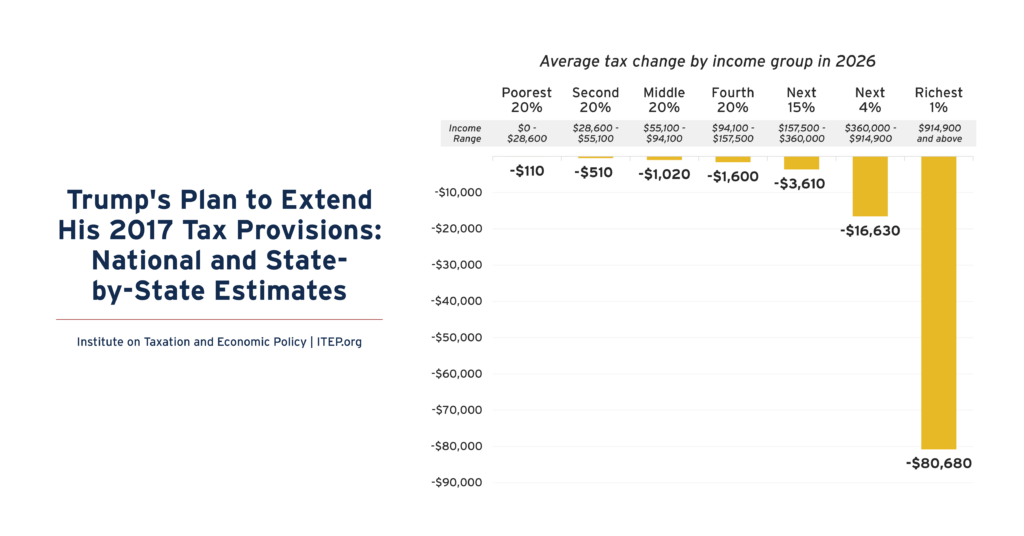
Trump’s plan to make most of the temporary provisions of his 2017 tax law permanent would disproportionately benefit the richest Americans. This includes all major provisions except the $10,000 cap on deductions for state and local taxes (SALT) paid.
State Tax Policy Should Adopt the Principles of ‘Black Women Best’
November 20, 2024 • By Brakeyshia Samms

Focusing policy analysis on Black women illustrates how Black women have long shouldered the shortcomings of the economy and clearly points to solutions that work for all. Black women are at their best when they are financially secure, healthy, and free – and our economy is at its best when all people can thrive and benefit.
On Election Day, Voters Across the Country Chose to Invest in Their States & Communities
November 19, 2024 • By Kamolika Das
On election day, voters across the country — in states red and blue and communities rural and urban — approved a wide range of state and local ballot measures on taxation and public investment. The success of these measures clearly shows that voters are willing to invest in public priorities that feel tangible and close to home.
Taxing Transportation Is One Great Way to Reduce Carbon Emissions
November 12, 2024 • By Amy Hanauer

Federal, state, and local tax codes are important but underused tools that can create a more climate-resilient, less carbon-emitting America. A modernized tax code would stop subsidizing emissions and instead encourage lower-carbon design. Because cars and trucks produce roughly one-fourth of US greenhouse gas emissions, transportation taxation is a great starting point.
The tax proposals from Vice President Kamala Harris would, on average, lead to a tax increase for the richest 1 percent of Americans and a tax cut for all other income groups.
A Distributional Analysis of Donald Trump’s Tax Plan
October 7, 2024 • By Carl Davis, Erika Frankel, Galen Hendricks, Joe Hughes, Matthew Gardner, Michael Ettlinger, Steve Wamhoff

Former President Donald Trump has proposed a wide variety of tax policy changes. Taken together, these proposals would, on average, lead to a tax cut for the richest 5 percent of Americans and a tax increase for all other income groups.
CBS News: What Are Tim Walz’s Economic Policies? Here’s a Look at What He’s Done in Minnesota.
October 1, 2024
Minnesota Gov. Tim Walz may be best known for his Midwestern roots, having grown up in Nebraska and spent years as a public school teacher and football coach in Minnesota. But voters will get a chance during his debate Tuesday with vice presidential rival Sen. JD Vance on CBS to hear more about Walz's views on taxes and the economy, a critical issue in the November election.
NPR Planet Money: Inside the Economic Minds of the VP Candidates
September 27, 2024
FOUNTAIN: Yeah, let's talk about that for a second. Tax policy is our wheel house. Tell us about the tax policies of Walz. ROSALSKY: So, to set the scene a little bit, according to the Institute on Taxation and Economic Policy, most states in our country actually have somewhat regressive tax systems. They tax the rich at lower rates, and therefore are tax systems that aren't progressive at all. Walz helped make Minnesota one of the few tax systems in the country that is progressive. And he did this through a series of tax cuts and rebates and credits for…
Economic Opportunity Institute: Oregon and Washington: Different Tax Codes and Very Different Ballot Fights about Taxes this November
September 25, 2024
First, some background. The Institute on Taxation and Economic Policy’s definitive report on state tax systems lists Oregon as #42 – within the top ten – of least regressive tax codes in the country (D.C. and Minnesota are #51 and #50, respectively). In Oregon, the lowest 20% of households by income pay 12 percent of their income in state and local taxes, while the top 1% pay 10.4 percent. What contributes to this relatively fair system is that Oregon’s tax code does not have a sales tax and does have:
