
Ohio
AP News: Ohio Budget Bill With Browns Stadium Funding, LGBTQ+ Restrictions Heads to Gov. Mike DeWine
June 27, 2025
Republicans tout that as a benefit to working Ohioans and the economy and another step in their continuing efforts to reduce the state’s tax burden, with the aim of some of them being to eventually eliminate the income tax entirely. Institute on Taxation and Economic Policy, a Washington, D.C. nonprofit, found 98% of the benefit […]
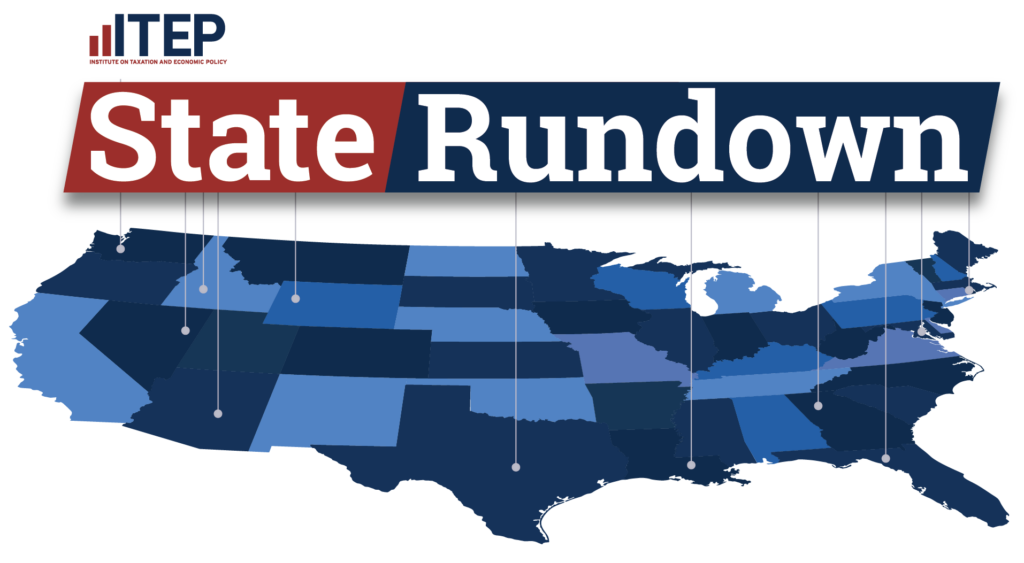
Many states are reaching their end-of-June budget deadlines, and major tax policy changes look to have big implications as states are forced, per federal policy, to do more with less.
State Rundown 6/20: Federal tax policy heats up, states wrap sessions and weigh impacts
June 18, 2025 • By ITEP Staff
As state legislative sessions come to a close, decisions on tax policy are being made. Several southern states have cut taxes, while the northeast is making some more measured reforms.
Policy Matters Ohio: A Budget for Ohio’s Millionaires
June 13, 2025 • By ITEP Staff

The Ohio Senate has passed its state budget bill. Policy Matters Ohio Tax Policy Researcher Bailey Williams issued the following statement:
State Rundown 6/5: States Wrap Sessions, Some Prepare for Fiscal Uncertainty
June 5, 2025 • By ITEP Staff
States use the final hours of their legislative sessions to address deficits and preserve revenue in preparation for the times ahead.
Cincinnati Enquirer: Ohio Homeowners Want Property Tax Relief. Other States May Offer a Solution
May 26, 2025
"Families are overloaded with their property taxes," said Brakeyshia Samms, a senior analyst for the institute. "The circuit breaker kicks in like an electrical circuit breaker and helps alleviate the pressure that these taxes put on family budgets."
Analysis of Tax Provisions in the House Reconciliation Bill: National and State Level Estimates
May 22, 2025 • By Carl Davis, Jessica Vela, Joe Hughes, Steve Wamhoff
The poorest fifth of Americans would receive 1 percent of the House reconciliation bill's net tax cuts in 2026 while the richest fifth of Americans would receive two-thirds of the tax cuts. The richest 5 percent alone would receive a little less than half of the net tax cuts that year.
State Rundown 5/7: As Budget Season Heats Up, Tax Proposals Are Getting Serious
May 7, 2025 • By ITEP Staff
With spring in full bloom ,many state lawmakers are reaching tax policy agreements. Out west, lawmakers in North Dakota and Texas have moved major property tax cuts. Meanwhile, in the east and south, Vermont appears likely to pass an expansion to its Child Tax Credit and Earned Income Tax Credit, and South Carolina lawmakers are aiming to make deep, drastic cuts to the state’s income tax.
Want to know more about the tax and spending megabill that President Trump recently signed into law? We've got you covered.
State Rundown 4/16: No Vacation from Spring Tax Breaks as Bills Advance
April 16, 2025 • By ITEP Staff
While students and families are enjoying spring break vacations, legislative sessions are still in full swing. And some are poised for a spring tax break season as proposals advance with major implications for the sustainability of state budgets.
IRS Cooperation with ICE Will Damage Public Trust, Putting Tax Revenues in Jeopardy
April 10, 2025 • By Marco Guzman

Attempts by the Department of Homeland Security to secure private information from the IRS on people who file taxes with an Individual Taxpayer Identification Number is a violation of federal privacy laws that protect taxpayers. It is also a change that could seriously damage public trust in the IRS, which could jeopardize billions of dollars in tax payments by hardworking immigrant families.
Policy Matters Ohio: Flat Income Tax Would Gut Ohio’s Budget
March 27, 2025 • By ITEP Staff
Ohio’s House Ways and Means Committee today holds its first hearing on HB 30, a bill that would tax the income of everyday Ohioans at the same rate as the state’s wealthiest households. The bill would eliminate the state’s top income-tax bracket of 3.5% on income above $100,000. By tax year 2026, Ohio would be left with a single rate of 2.75% on income above $27,350.
March Madness kicks off today and the pressure is on as many states’ legislative sessions are nearing the final buzzer. Some state lawmakers are seemingly competing for the title of most regressive state tax policies while others are looking to lift up best practices for more equitable outcomes. The Mississippi legislature landed on a […]
Stateline: Child Tax Credits, Long a Liberal Priority, Find Favor In Republican States
March 17, 2025
Cash would flow directly into the hands of Ohio parents under a proposal from Republican Gov. Mike DeWine. As part of multibillion-dollar budget negotiations this session, Ohio lawmakers will consider the new refundable tax credit worth up to $1,000 per young child, to be paid for by an increase in tobacco taxes.
Learn from Prop 13 History to Avoid Repeating Past Mistakes
February 26, 2025 • By Rita Jefferson

Worries about housing costs and property tax bills are leading people to check the history books for solutions, but there’s a danger that they’ll repeat past mistakes. If anti-tax lawmakers carelessly weaken property taxes as they did in the 1970s, as they did with California’s Proposition 13, they will undercut public finances, making municipalities, school districts, and other special districts worse off.
State Rundown 2/20: Tools to Address Corporate Tax Avoidance and Property Tax Affordability
February 20, 2025 • By ITEP Staff
A new ITEP report finds that states could raise $19 billion a year with one policy change targeting corporate tax avoidance. That policy, worldwide combined reporting, strengthens state corporate taxation by giving states a full view of multinational corporate profits, essentially eliminating the tax savings that companies currently see by pretending their profits were earned in Switzerland, the Cayman Islands, and other international tax havens.

In the face of immense uncertainty around looming federal tax and budget decisions, many of which could threaten state budgets, state lawmakers have an opportunity to show up for their constituents by raising and protecting the revenue needed to fund shared priorities. Lawmakers have a choice: advance tax policies that improve equity and help communities thrive, or push tax policies that disproportionately benefit the wealthy, drain funding for critical public services, and make it harder for most families to get ahead.
Turning IRS Agents to Deportation Will Reduce Public Revenues
February 11, 2025 • By Carl Davis, Jon Whiten
The Trump Administration’s plan to turn IRS agents into deportation agents will result in lower tax collections in addition to the harm done to the families and communities directly affected by deportations.
Tax changes have been proposed or are nearing the finish line in many states. Kentucky is poised to enact an income tax cut as a bill heads to the governor’s desk. In Pennsylvania, Gov. Josh Shapiro’s budget proposal called to accelerate existing corporate tax cuts while closing corporate tax loopholes by enacting combined reporting. Ohio Gov. Mike DeWine proposed a new credit for children of working parents. And Virginia Democrats countered Gov. Glenn Youngkin’s proposed tax cuts with a plan of their own that includes an increase to the state’s Earned Income Tax Credit (EITC) and a one-time, nonrefundable tax…

Local income taxes can be an important progressive revenue raiser, as they ask more of higher-income households and are connected to ability to pay. They can raise substantial revenue to fund key public services to make cities and regions better off.
It’s a new year, and state legislatures across the country are resolved to write new tax policy. Tax debates are heating up nearly everywhere in the early days of 2025, but states’ fiscal situations vary dramatically. New York is considering expanding the state’s Child Tax Credit following Gov. Hochul’s proposed expansion. On the other side […]
Trump’s Plan to Extend His 2017 Tax Provisions: Updated National and State-by-State Estimates
January 8, 2025 • By Steve Wamhoff
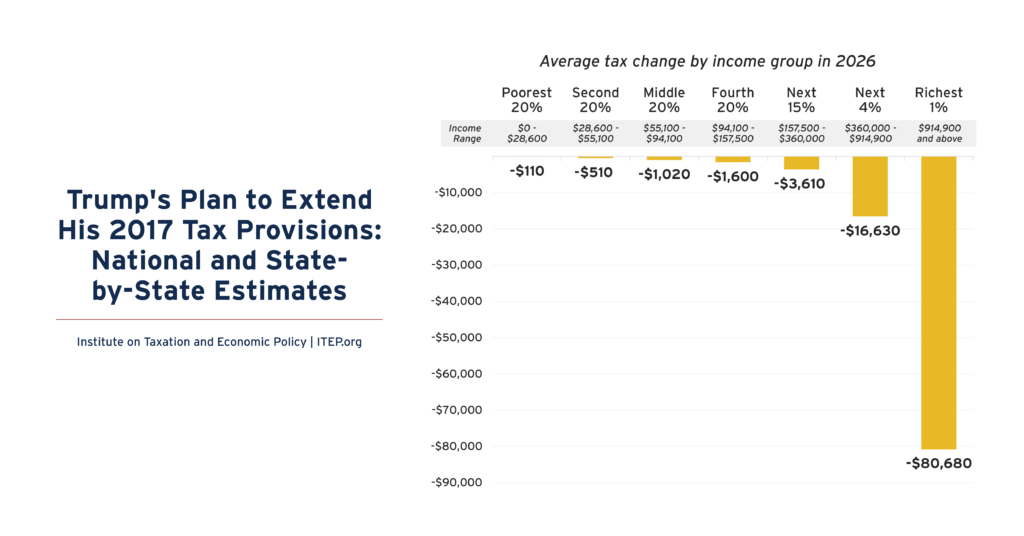
Trump’s plan to make most of the temporary provisions of his 2017 tax law permanent would disproportionately benefit the richest Americans. This includes all major provisions except the $10,000 cap on deductions for state and local taxes (SALT) paid.
On Election Day, Voters Across the Country Chose to Invest in Their States & Communities
November 19, 2024 • By Kamolika Das

On election day, voters across the country — in states red and blue and communities rural and urban — approved a wide range of state and local ballot measures on taxation and public investment. The success of these measures clearly shows that voters are willing to invest in public priorities that feel tangible and close to home.
Billionaires and businesses have too much power in Washington. Tax revenue is needed to pay for things we all need. If we want economic justice, racial justice and climate justice, we must have tax justice.
2024 Local Tax Ballot Measures: Voters in Dozens of Communities Will Shape Local Policy
October 17, 2024 • By Rita Jefferson
Next month, voters across the country will weigh in on many local ballot measures that will have a profound effect on the adequacy of our local tax systems and whether cities and communities can fund public needs. These are in addition to statewide ballot questions, many of which have local implications this year.
