
Recent Work by ITEP
National Sausage Month isn’t until October, but now is the time of year when state lawmakers are really diving into their sausage-making processes, as separate legislative houses and oftentimes political parties send competing bills, budgets, and visions back and forth to grind out their differences.
Pioneer Institute Criticizes ITEP For Not Writing the Paper They Would Have Written
February 25, 2026 • By Eli Byerly-Duke

Voters, lawmakers, researchers, and advocates frequently disagree about ideal tax policy. But the facts here speak for themselves.
Yum! Brands’ Recipe for Tax Avoidance: Trump Tax Cuts with a Dash of Malta
February 24, 2026 • By Matthew Gardner

the fast-food multinational that owns KFC, Taco Bell, and Pizza Hut reported this week that it made $1 billion of pretax profits in the U.S. last year—and didn’t pay a dime of federal income taxes on those profits.
State-by-State Estimates of the First Year of Trump’s Tax Policies: All But the Richest Americans Face Higher Taxes
February 23, 2026 • By Steve Wamhoff, Michael Ettlinger

As a result of the tax policies approved by President Trump and the Republican majority in Congress, all but the richest Americans are paying higher taxes on average in 2026 than they did last year.
Despite a Supreme Court Victory for Middle-Class Americans, Trump’s Disastrous Tariff Policies Are Not Over
February 20, 2026 • By Steve Wamhoff

Today the Supreme Court made the right decision in striking down most of the tariffs President Trump has put into motion during his second term.
Live Nation Entertainment Says Trump Tax Law Drove its 2025 Federal Income Tax Bill to Zero
February 20, 2026 • By Matthew Gardner

The company paid zero federal income tax in 2025 despite reporting $145 million of U.S. profits.
Trump Administration Provides Biggest Illegal Tax Cuts Yet for Billion-Dollar Corporations
February 20, 2026 • By Amy Hanauer

The Treasury Department is unilaterally cutting corporate taxes with regulations that ignore the statute they claim to implement, disregarding the separation of powers between the branches of government that has defined how America works for more than two centuries.

Homes in Black neighborhoods are more likely to be over-assessed for tax purposes while being undervalued by private appraisers.
It’s Time for States to Jettison Nonsensical FDDEI Deductions
February 19, 2026 • By Carl Davis
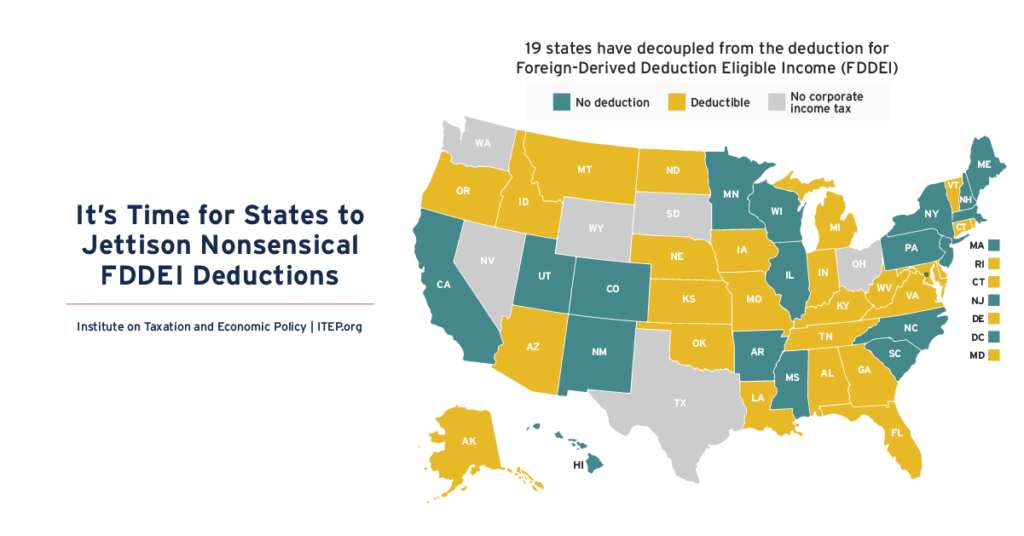
FDDEI deductions should be repealed for policy reasons alone as they do not serve a legitimate purpose at the state level.
State Rundown 2/19: Necktie (NCTI) Offers a Way Out of a Knotty Situation
February 19, 2026 • By ITEP Staff
State lawmakers are grappling with a range of challenges as their fiscal outlooks deteriorate, federal tax enforcement wanes (after the Trump administration cut the IRS workforce by 25 percent), and a rewritten federal tax code sends states scrambling to decide what changes they might want to make in their own codes.
ITEP in the News
The American Prospect: Live Tax-Free and Die
NPR: She Paid Into Medicare for Years. Trump’s Immigration Policy Will End Her Coverage
The Guardian: Billionaire Fortunes Have Reached All-Time Highs Under Trump. So Has the Movement To Tax Them
The Guardian: Washington State’s ‘Historic’ Millionaire Tax Takes Aim at Super-Rich – Will It Succeed?
Video: ITEP's Amy Hanauer Discusses How to Make the Federal Tax Code Fairer on WHYY
ITEP Work in Action
Every Texan: Two Property Tax Plans, One Fiscal Reality
FACT Coalition: Take the Money and Run – Amidst Oil Price Windfalls, U.S. Oil Majors Continue to Pay Less Tax at Home than Abroad
Brookings: The Caregiving Crisis and the 2026 Vote
Gov. Evers Vetoes Bill Requiring Wisconsin to Opt Into Nationwide Expansion of Private Voucher Schools
Oxfam: The Case for Fairly Taxing the Rich in New York

Institute on Taxation
and Economic Policy
ITEP is a non-profit, non-partisan tax policy organization. We conduct rigorous analyses of tax and economic proposals and provide data-driven recommendations to shape equitable and sustainable tax systems.
Subscribe to ITEP Emails
Tax research and policy news in your inbox.
Promote Fair Tax Policy
Your gift to ITEP promotes tax justice. With your help, we do research that supports taxing millionaires and billionaires, taxing big corporations and raising revenue for the things our people, our communities and our planet need.
Together, we can create a country with more economic justice, more racial justice, more climate justice… and more tax justice.