
Maine
States Should Move Quickly to Chart Their Own Course on SALT Deductions
July 17, 2025 • By Dylan Grundman O'Neill, Nick Johnson

While a federal SALT cap is hotly debated, capping deductibility at $10,000 was an unambiguously good idea at the state level. States would be smart to stick with the current cap or, better yet, go even farther and repeal SALT deductions outright. Going along with a higher federal SALT cap would double down on a regressive tax cut that will mostly benefit a small number of relatively wealthy state residents and cost states significant revenue.
How Much Would Every Family in Every State Get if the Megabill’s Tax Cuts Given to the Rich Had Instead Been Evenly Divided?
July 14, 2025 • By Michael Ettlinger
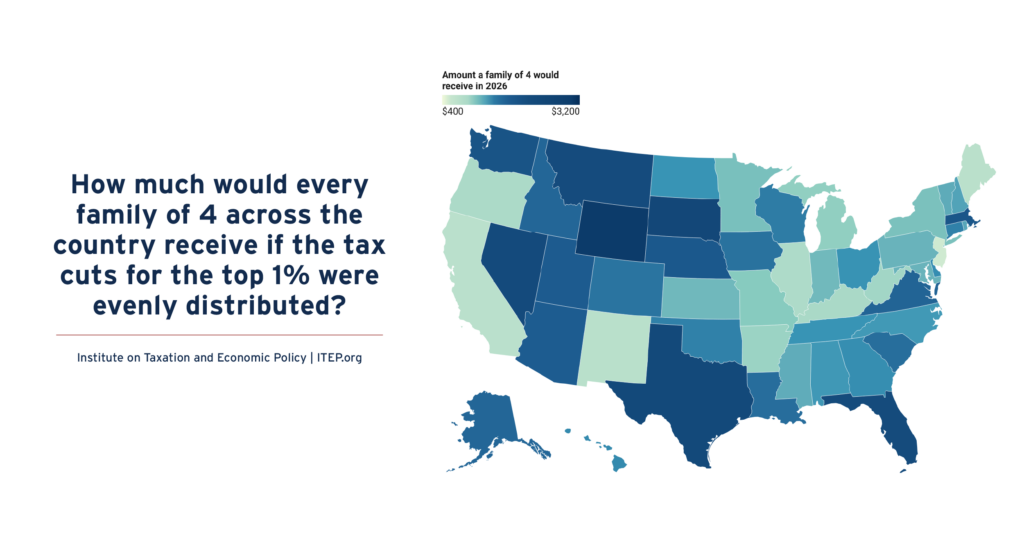
If instead of giving $117 billion to the richest 1 percent, that money had been evenly divided among all Americans, we'd each get $343 - or nearly $1,400 for a family of four.
State Rundown 7/8: State Tax Cuts Continue Despite Federal Megabill Passing
July 8, 2025 • By ITEP Staff
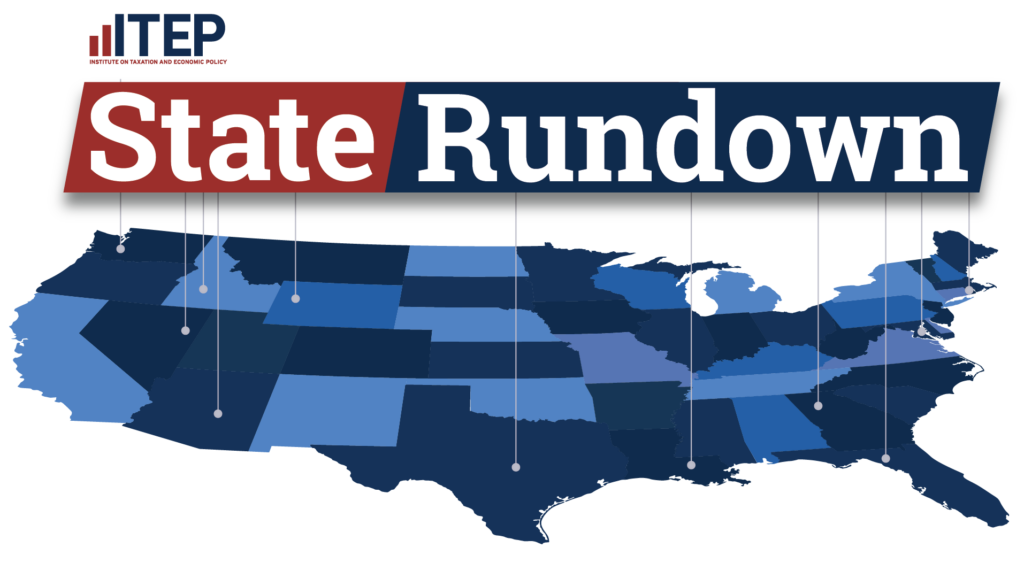
The last states are wrapping up legislative sessions, and some are crossing the finish line with major income tax cuts.
Analysis of Tax Provisions in the Trump Megabill as Signed into Law: National and State Level Estimates
July 7, 2025 • By Steve Wamhoff, Carl Davis, Joe Hughes, Jessica Vela

President Trump has signed into law the tax and spending “megabill” that largely favors the richest taxpayers and provides working-class Americans with relatively small tax cuts that will in many cases be more than offset by Trump's tariffs.
Trump Megabill Will Give $117 Billion in Tax Cuts to the Top 1% in 2026. How Much In Your State?
June 30, 2025 • By Michael Ettlinger

The predominant feature of the tax and spending bill working its way through Congress is a massive tax cut for the richest 1 percent — a $114 billion benefit to the wealthiest people in the country in 2026 alone.
How Much Do the Top 1% in Each State Get from the Trump Megabill?
June 30, 2025 • By Carl Davis

The Senate tax bill under debate right now would bring very large tax cuts to very high-income people. In total, the richest 1 percent would receive $114 billion in tax cuts next year alone. That would amount to nearly $61,000 for each of these affluent households.
Many states are reaching their end-of-June budget deadlines, and major tax policy changes look to have big implications as states are forced, per federal policy, to do more with less.
State Rundown 6/20: Federal tax policy heats up, states wrap sessions and weigh impacts
June 18, 2025 • By ITEP Staff
As state legislative sessions come to a close, decisions on tax policy are being made. Several southern states have cut taxes, while the northeast is making some more measured reforms.
Analysis of Tax Provisions in the House Reconciliation Bill: National and State Level Estimates
May 22, 2025 • By Carl Davis, Jessica Vela, Joe Hughes, Steve Wamhoff

The poorest fifth of Americans would receive 1 percent of the House reconciliation bill's net tax cuts in 2026 while the richest fifth of Americans would receive two-thirds of the tax cuts. The richest 5 percent alone would receive a little less than half of the net tax cuts that year.
State Rundown 5/21: Big and Not-So Beautiful Tax Cut Bills Abound in States
May 21, 2025 • By ITEP Staff
As a sprawling, regressive tax bill continues to take shape at the federal level, many states are moving forward with major tax cut proposals of their own.

Want to know more about the tax and spending megabill that President Trump recently signed into law? We've got you covered.
IRS Cooperation with ICE Will Damage Public Trust, Putting Tax Revenues in Jeopardy
April 10, 2025 • By Marco Guzman

Attempts by the Department of Homeland Security to secure private information from the IRS on people who file taxes with an Individual Taxpayer Identification Number is a violation of federal privacy laws that protect taxpayers. It is also a change that could seriously damage public trust in the IRS, which could jeopardize billions of dollars in tax payments by hardworking immigrant families.
Residents and state lawmakers across the country are pushing back against anti-tax measures and are looking for ways to protect revenue and advance proposals that would raise revenue in progressive ways. This comes at a time when federal policy brings significant risks for state tax revenue.
State Rundown 4/3: Amidst Tariff Uncertainty, State Lawmakers Talk Taxes
April 3, 2025 • By ITEP Staff
While all eyes are on the Trump administration’s tariffs on foreign imports, state lawmakers are moving forward with a mix of deep, regressive tax cuts and progressive revenue raisers.
Maine Center for Economic Policy: Expanding the Dependent Exemption Tax Credit is an Investment in Maine’s Future
April 2, 2025
Maine’s Dependent Exemption Tax Credit (DETC) is a vital investment in the state’s future. As Maine’s version of the child tax credit, it helps families with children or dependent adults afford essentials like food, rent, and childcare, especially in rural areas.
March Madness kicks off today and the pressure is on as many states’ legislative sessions are nearing the final buzzer. Some state lawmakers are seemingly competing for the title of most regressive state tax policies while others are looking to lift up best practices for more equitable outcomes. The Mississippi legislature landed on a […]
State Rundown 3/12: Last-Minute Tax Cut Mayhem and New Progressive Revenue Raisers
March 12, 2025 • By ITEP Staff
A bevy of tax cut proposals sprung to life this week while others were signed into law. In Kentucky, lawmakers are working to make it easier for the legislature to enact income and business tax cuts. The governor in Idaho signed into law a personal and corporate income tax cut.
Below is a list of tax expenditure reports published in the states.
Sarah Austin
February 24, 2025 • By ITEP Staff

Sarah is a Senior Analyst at ITEP. She focuses her research on progressive revenue-raising options for states. Before joining ITEP in 2025, Sarah served as senior policy advisor to the Speaker of the Maine House of Representatives. Prior to that, she served as the research and policy director at the Maine Center for Economic Policy […]
Maine Center for Economic Policy: Proposed Medicaid Cuts Put Maine Families’ Incomes At Risk
February 22, 2025
Proposed Medicaid cuts could affect over 400,000 Mainers, especially children, older adults, and families with low income, reducing access to essential health care and economic stability. Read more.

In the face of immense uncertainty around looming federal tax and budget decisions, many of which could threaten state budgets, state lawmakers have an opportunity to show up for their constituents by raising and protecting the revenue needed to fund shared priorities. Lawmakers have a choice: advance tax policies that improve equity and help communities thrive, or push tax policies that disproportionately benefit the wealthy, drain funding for critical public services, and make it harder for most families to get ahead.
A Revenue Analysis of Worldwide Combined Reporting in the States
February 20, 2025 • By Carl Davis, Matthew Gardner, Michael Mazerov

Universal adoption of mandatory worldwide combined reporting would boost state corporate income tax revenues by roughly 14 percent. Thirty-eight states and the District of Columbia would experience revenue increases totaling $19.1 billion.
Turning IRS Agents to Deportation Will Reduce Public Revenues
February 11, 2025 • By Carl Davis, Jon Whiten
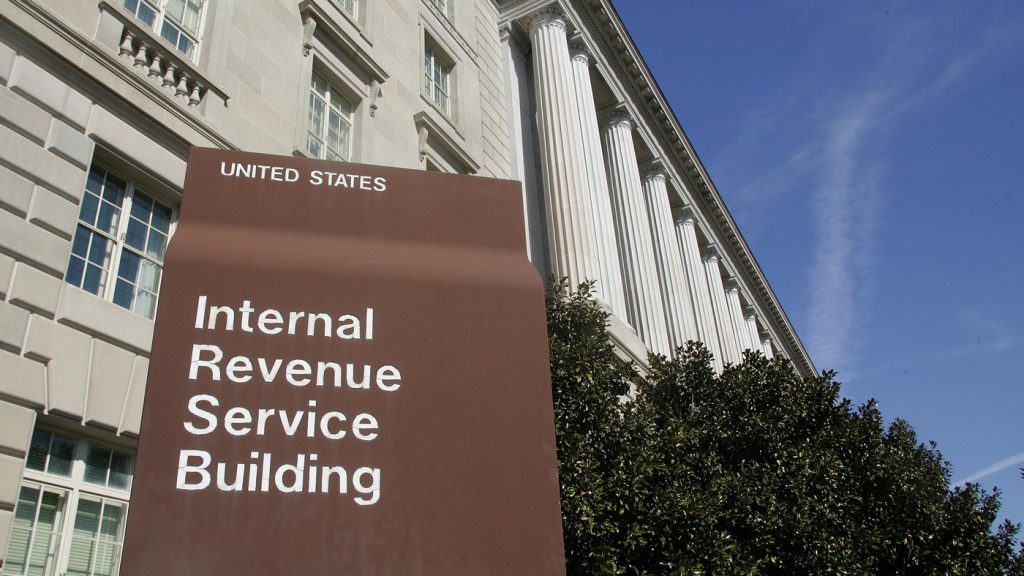
The Trump Administration’s plan to turn IRS agents into deportation agents will result in lower tax collections in addition to the harm done to the families and communities directly affected by deportations.

Local income taxes can be an important progressive revenue raiser, as they ask more of higher-income households and are connected to ability to pay. They can raise substantial revenue to fund key public services to make cities and regions better off.
More details on this year’s batch of major tax proposals are emerging from statehouses - and some revenue cuts look like they could be steep. A governor-backed and House-passed plan in Mississippi would phase out the personal income tax, while a recent tax cut proposal out of Idaho is anchored by a $253 million dollar income tax cut.

Institute on Taxation
and Economic Policy
ITEP is a non-profit, non-partisan tax policy organization. We conduct rigorous analyses of tax and economic proposals and provide data-driven recommendations to shape equitable and sustainable tax systems.
Subscribe to ITEP Emails
Tax research and policy news in your inbox.
Promote Fair Tax Policy
Your gift to ITEP promotes tax justice. With your help, we do research that supports taxing millionaires and billionaires, taxing big corporations and raising revenue for the things our people, our communities and our planet need.
Together, we can create a country with more economic justice, more racial justice, more climate justice… and more tax justice.