
Undocumented immigrants
The Child Tax Credit Leaves Out Millions of Children in 2026. There Are Better Alternatives.
March 10, 2026 • By Joe Hughes

The 2025 Trump tax law slightly increased the Child Tax Credit in a way that benefits virtually none of the children who most need help.

From Congressional discussions over the so-called "One Big Beautiful Bill Act" to debates on property taxes, ITEP kept busy this year analyzing tax proposals and showing Americans across the country how tax decisions affect them.
Immigration Impact: Ahead of Tax Day, Fear of Filing Taxes Rises Among Undocumented Immigrants
April 2, 2025
Tax Day is approaching, but the Trump administration’s mass deportation efforts may make many undocumented immigrants hesitant to file taxes. Some worry that providing personal information to the Internal Revenue Service (IRS) could be used against them.
Undocumented Immigrants Pay More Than Their Fair Share of Taxes
January 6, 2025 • By ITEP Staff

Undocumented immigrants help fund teacher salaries, road and bridge repairs and other local quality-of-life improvements. They also pay into vital programs that make up our social safety net (including Social Security, Medicare and unemployment insurance) even though they will likely never see any benefits from these programs — because, in most circumstances, they are legally prohibited from accessing them.
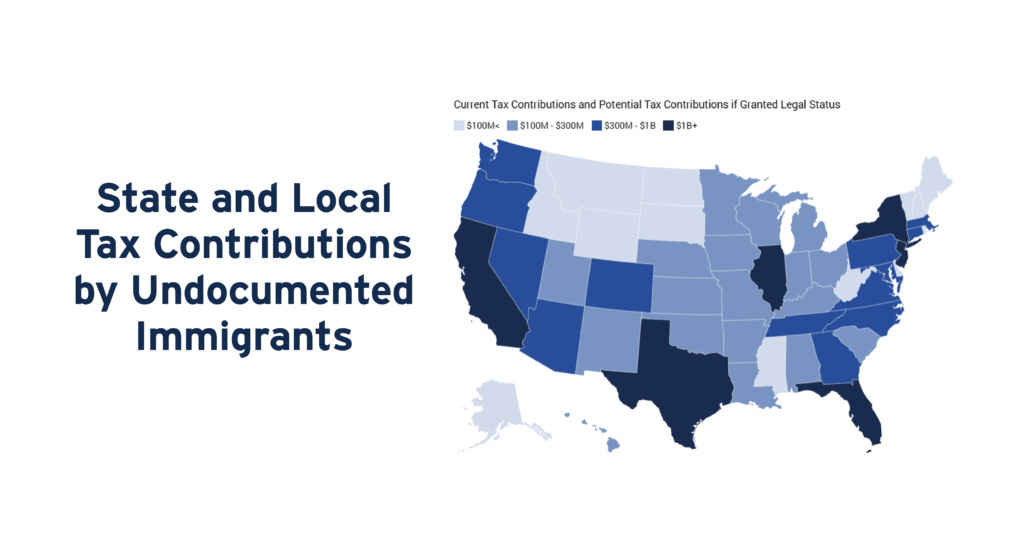
Undocumented immigrants pay taxes that help fund public infrastructure, institutions, and services in every U.S. state. Nearly 39 percent of the total tax dollars paid by undocumented immigrants in 2022 ($37.3 billion) went to state and local governments.
Study: Undocumented Immigrants Contribute Nearly $100 Billion in Taxes a Year
July 30, 2024 • By ITEP Staff
Contact: Jon Whiten ([email protected]) Immigration policies have taken center stage in public debates this year, but much of the conversation has been driven by emotion, not data. A new in-depth study from the Institute on Taxation and Economic Policy aims to help change that by quantifying how much undocumented immigrants pay in taxes – both […]
Undocumented immigrants paid $96.7 billion in federal, state, and local taxes in 2022. Providing access to work authorization for undocumented immigrants would increase their tax contributions both because their wages would rise and because their rates of tax compliance would increase.
Morally and Economically, Including Undocumented Immigrants Is the Right Thing to Do
April 17, 2020 • By ITEP Staff

Undocumented immigrants pay taxes and play an integral part in the social and economic welfare of our country, yet Congress left them almost entirely out of the CARES Act package. Fortunately, immigrants, workers and their allies are helping policymakers advance better policy approaches.
State & Local Tax Contributions of Young Undocumented Immigrants
April 30, 2018 • By ITEP Staff
This report specifically examines the state and local tax contributions of undocumented immigrants who are currently enrolled or immediately eligible for DACA and the fiscal implications of various policy changes. The report includes information on the national impact (Chart 1) and provides a state-by-state breakdown (Appendices 1 and 2).
Updated Tax Contributions of Young Undocumented Immigrants
December 13, 2017 • By ITEP Staff
In September 2017, US Citizenship and Immigration Services released updated enrollment data for the program Deferred Action for Childhood Arrivals (DACA). The updated data included estimates of the number of former DACA enrollees that were now legal permanent residents and those that failed to reapply or their reapplication was denied. The table below provides updated estimates of their tax contributions.

Institute on Taxation
and Economic Policy
ITEP is a non-profit, non-partisan tax policy organization. We conduct rigorous analyses of tax and economic proposals and provide data-driven recommendations to shape equitable and sustainable tax systems.
Subscribe to ITEP Emails
Tax research and policy news in your inbox.
Promote Fair Tax Policy
Your gift to ITEP promotes tax justice. With your help, we do research that supports taxing millionaires and billionaires, taxing big corporations and raising revenue for the things our people, our communities and our planet need.
Together, we can create a country with more economic justice, more racial justice, more climate justice… and more tax justice.