
District of Columbia

State Earned Income Tax Credits Will Support Families and Workers in 2027
• By Neva Butkus
Nearly two-thirds of states (plus the District of Columbia and Puerto Rico) have an Earned Income Tax Credit. These credits boost low-paid workers’ incomes and offset some of the taxes they pay, helping working class families achieve greater economic security.
District of Columbia Tax Expenditure Report Cites ITEP Analysis
• By ITEP Staff
The District’s property tax circuit breaker program (also known as “Schedule H”) allows low-income homeowners and renters to claim a property tax credit applied to the taxpayer’s income tax liability
DC Fiscal Policy Institute: Five Principles for Strong DC Tax Policy
• By ITEP Staff
Lawmakers can use this moment to advance a more progressive and racially-just tax system by evaluating tax proposals across five dimensions: equity, adequacy and stability, simplicity, neutrality, and accountability.
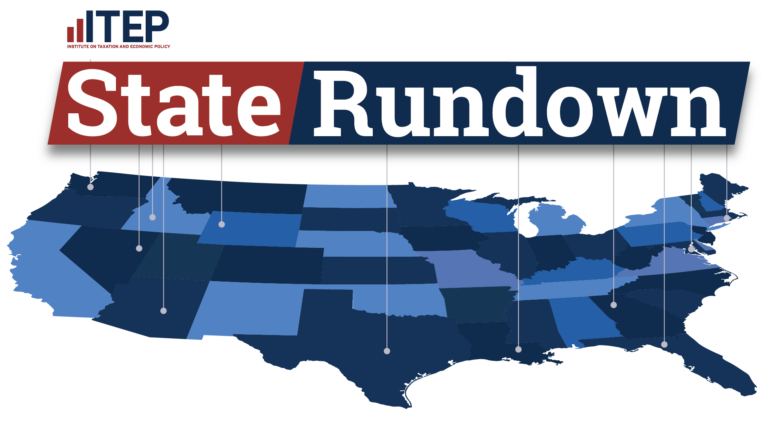
State Rundown 7/29: The Misguided, Miserly Missouri Amendment to Eliminate the Income Tax
• By ITEP Staff
Missouri voters are facing a major decision at the ballot box next week on Amendment 5, which would amend the state constitution to allow lawmakers to eliminate the individual income tax and expand the state’s sales tax on any good or service to make up for lost revenue.

Congressional Republicans Say D.C. Shouldn’t Be Allowed to Run Its Own Tax System
• By Matthew Gardner
This week a U.S. House of Representatives committee approved a bill that would effectively take away Washington, D.C.’s fiscal autonomy, requiring Congressional approval of any new D.C. laws that increase taxes or fees.

2026 Sessions in Review: States Fund Tax Credits by Preserving, Raising Revenue
• By Aidan Davis
In a year of cautious uncertainty around current and ongoing revenues, many state lawmakers strengthened their tax credits for families and children.
State-by-State Tax Expenditure Reports
• By ITEP Staff
Below is a list of tax expenditure reports published in the states.
State Rundown 6/11: Taxing the Rich Heats Up
• By ITEP Staff
As we head into summer, many state legislatures are in the final stretches of their sessions. Rhode Island moved another step closer to joining the ranks of Washington, Maine, and Hawai’i in enacting a new high-income surcharge this year.

NYC and Montana Lead the Way on Second-Home Taxes
• By Rita Jefferson
Second home taxes make a lot of sense for communities struggling with housing costs for full-time residents. They can raise real revenues too, which can be used to support further affordable housing development.

Institute on Taxation
and Economic Policy
ITEP is a non-profit, non-partisan tax policy organization. We conduct rigorous analyses of tax and economic proposals and provide data-driven recommendations to shape equitable and sustainable tax systems.
Subscribe to ITEP Emails
Tax research and policy news in your inbox.
Promote Fair Tax Policy
Your gift to ITEP promotes tax justice. With your help, we do research that supports taxing millionaires and billionaires, taxing big corporations and raising revenue for the things our people, our communities and our planet need.
Together, we can create a country with more economic justice, more racial justice, more climate justice… and more tax justice.