
District of Columbia

State Earned Income Tax Credits Will Support Families and Workers in 2027
• By Neva Butkus
Nearly two-thirds of states (plus the District of Columbia and Puerto Rico) have an Earned Income Tax Credit. These credits boost low-paid workers’ incomes and offset some of the taxes they pay, helping working class families achieve greater economic security.
District of Columbia Tax Expenditure Report Cites ITEP Analysis
• By ITEP Staff
The District’s property tax circuit breaker program (also known as “Schedule H”) allows low-income homeowners and renters to claim a property tax credit applied to the taxpayer’s income tax liability
DC Fiscal Policy Institute: Five Principles for Strong DC Tax Policy
• By ITEP Staff
Lawmakers can use this moment to advance a more progressive and racially-just tax system by evaluating tax proposals across five dimensions: equity, adequacy and stability, simplicity, neutrality, and accountability.

State Rundown 7/29: The Misguided, Miserly Missouri Amendment to Eliminate the Income Tax
• By ITEP Staff
Missouri voters are facing a major decision at the ballot box next week on Amendment 5, which would amend the state constitution to allow lawmakers to eliminate the individual income tax and expand the state’s sales tax on any good or service to make up for lost revenue.
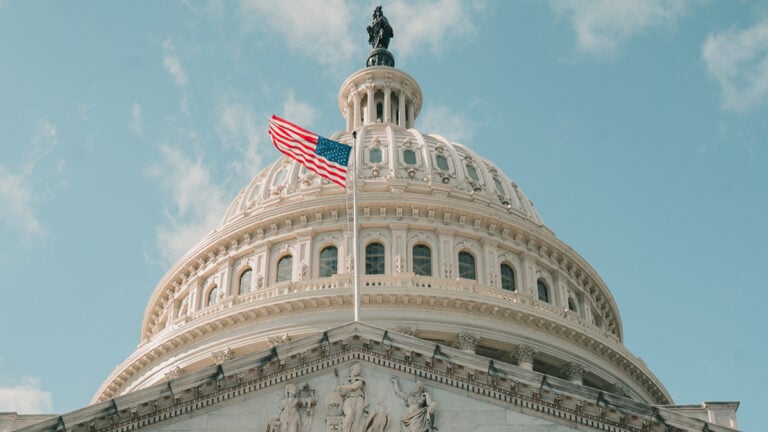
Congressional Republicans Say D.C. Shouldn’t Be Allowed to Run Its Own Tax System
• By Matthew Gardner
This week a U.S. House of Representatives committee approved a bill that would effectively take away Washington, D.C.’s fiscal autonomy, requiring Congressional approval of any new D.C. laws that increase taxes or fees.

2026 Sessions in Review: States Fund Tax Credits by Preserving, Raising Revenue
• By Aidan Davis
In a year of cautious uncertainty around current and ongoing revenues, many state lawmakers strengthened their tax credits for families and children.
State-by-State Tax Expenditure Reports
• By ITEP Staff
Below is a list of tax expenditure reports published in the states.
State Rundown 6/11: Taxing the Rich Heats Up
• By ITEP Staff
As we head into summer, many state legislatures are in the final stretches of their sessions. Rhode Island moved another step closer to joining the ranks of Washington, Maine, and Hawai’i in enacting a new high-income surcharge this year.

NYC and Montana Lead the Way on Second-Home Taxes
• By Rita Jefferson
Second home taxes make a lot of sense for communities struggling with housing costs for full-time residents. They can raise real revenues too, which can be used to support further affordable housing development.

As Inequality Grows, More States Look to Tax the Rich
• By Alex Welch
From surcharges on the income of high-earners to higher taxes on second homes, here are recent steps states have taken to tax the rich.
DC Fiscal Policy Institute: Restoring Tax Credits Would Benefit Nearly 62,000 DC Children
• By ITEP Staff
The already dire conditions for Black and brown residents and those with low incomes are likely to worsen this year and beyond as the combined harm of federal layoffs on DC’s economy and cuts to vital safety net programs like Temporary Assistance for Needy Families, the Supplemental Nutrition Assistance Program, and Medicaid take effect. Read […]

While States Debate New Trump Tax Changes, Equity Must Be at the Core
• By Brakeyshia Samms
States continue to debate whether and how to link their state tax codes to the 2025 federal tax law. This is not just a technical debate.
State Rundown 4/16: Tax Day, a New Millionaires’ Tax and Late Blooming State Tax Action
• By ITEP Staff
Yesterday was Tax Day, and with many state legislative sessions wrapping, some tax changes are gearing up or crossing over the finish line.

Tax Break for Ultra-wealthy Investors Takes a Hit in Maine and Oregon
• By Nick Johnson
Policymakers in Maine and Oregon wisely said “no” last week to an income tax break for deep-pocketed tech investors and venture capitalists that was expanded in last year’s federal tax bill.
State Tax Watch 2026
• By ITEP Staff
ITEP tracks tax discussions in legislatures across the country and uses our unique data capacity to analyze the revenue, distributional, and racial and ethnic impacts of many of these proposals. State Tax Watch offers the latest news and movement from each state.
State Rundown 4/1: No Fooling Around Anymore in Washington, But Cruel Pranks in South Carolina
• By ITEP Staff
In Washington, Gov. Bob Ferguson and lawmakers decided to stop fooling around with one of the nation’s most upside-down tax codes and finally brought to life a new millionaires’ tax, the first new income tax created in a state since 1991.
State Rundown 3/12: Washington Lawmakers Pass Millionaires’ Tax, Expand Working Families Tax Credit
• By ITEP Staff
Washington is on its way to making history after the legislature approved the “millionaires’ tax,” a 9.9 percent tax on income over $1 million. The bill, which is expected to raise more than $3 billion a year, making significant investments in public education and childcare, will also expand the Working Families Tax Credit – the […]
State Rundown 3/4: Budget Realities Set In
• By ITEP Staff
As many state legislative sessions near or cross the halfway point, lawmakers are facing tough choices.
D.C Fiscal Policy Institute: DC Can Raise $121 Million or More with a Simple Tax on Proceeds from Wealth
• By ITEP Staff
DC can raise needed revenue and address tax inequity by taxing more of the gains, or proceeds, generated by wealth—such as capital gains, dividends, and other forms of passive income. DC’s tax system protects and grows wealth concentration through myriad preferences and loopholes, exacerbating racial and economic inequality. This special treatment also prevents the District […]
State Rundown 2/19: Necktie (NCTI) Offers a Way Out of a Knotty Situation
• By ITEP Staff
State lawmakers are grappling with a range of challenges as their fiscal outlooks deteriorate, federal tax enforcement wanes (after the Trump administration cut the IRS workforce by 25 percent), and a rewritten federal tax code sends states scrambling to decide what changes they might want to make in their own codes.
Center for American Progress: Overturning D.C.’s Tax Law Would Infringe on Common State Tax Practices and Threaten the District’s Budget and Fiscal Autonomy
• By ITEP Staff
Overruling the jurisdiction’s control of its own state tax code would deprive Washington, D.C., of $658 million in revenue, raise child poverty, and throw the tax-filing system into disarray. Read more.
State Rundown 2/11: This Valentine’s Day, Conscious Decoupling Is Our Love Language
• By ITEP Staff
While some may be excited for a romantic Valentine’s Day this weekend, many state lawmakers are breaking up and decoupling from recent federal tax changes that are poised to leave states with revenue shortfalls – much like a bad date who forgets their wallet and asks you to pick up the tab.

What Did 2025 State Tax Changes Mean for Racial and Economic Equity?
• By Brakeyshia Samms
The results are a mixed bag, with some states enacting promising policies that will improve tax equity and others going in the opposite direction.

D.C.’s Fiscal Autonomy is at Stake, District’s Conformity Decisions Should Stand
• By Kamolika Das
Federal lawmakers passed a bill along party lines that would force the District of Columbia to override the decision of local elected officials and implement all of the costly and inequitable federal tax cuts passed under the “One Big Beautiful Bill Act” (OBBBA).
State Rundown 2/5: Icy Roads Do Not Slow Tax Policy Debates
• By ITEP Staff
Despite wintry conditions across much of the country, that hasn’t stopped state lawmakers from debating major tax policy changes.
