Taxing the rich is proven fiscal policy – it raises revenue for vital public services and makes tax codes fairer. But a part of the debate that rarely gets enough attention: taxing the rich is also one of the most effective tools available for advancing racial equity.
The wealthiest American households are disproportionately white, with white households constituting 67 percent of the population but 91 percent of the wealthiest 1 percent, according to the 2022 Survey of Consumer Finances.
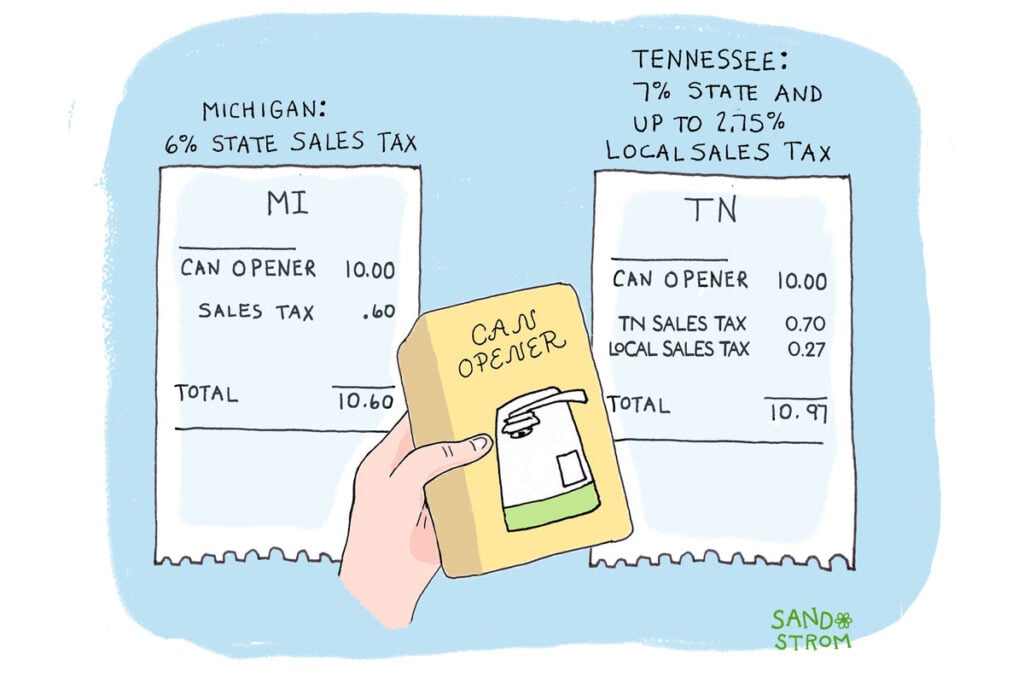
Current state tax laws are unfair for many low- and middle-income households, because they rely heavily on consumption taxes, like sales and excise taxes that take away a larger share of their income than for wealthy households. This imbalance makes it harder for state residents of all backgrounds to make ends meet and succeed economically, and in many places, it has a particularly profound impact on Black and Hispanic households who, on average, have lower incomes than white households in part because they have been held back by centuries of racism and discrimination.
Raising taxes on the wealthy flips that script. With higher taxes on the rich, states can also boost funding for education, health care, and other services that expand economic opportunities for everyone. So, states are facing both a massive challenge and a massive opportunity.
The challenge is that the federal government will be providing far less funding for state-administered health and nutrition programs, shifting costs directly onto state and local governments at a time when states are facing tighter budgets after years of tax cuts and reductions in federal aid. Since states are required to balance their budgets, they will need new revenues to avert enormous cuts that will harm families, particularly in programs that provide healthcare and nutrition assistance to families of all races. While these programs reach a larger number of white households, they are used by higher shares of Black and Hispanic households. The opportunity is that the massive federal tax cuts for rich people and profitable corporations make this an opportune moment to reset tax rates to capture a portion of those lost revenues.
Four states this year passed new tax laws showing how this can be done.
Lawmakers in Hawai’i tweaked their 11 percent top tax bracket with a 2 percent surcharge for some filers, bringing the rate to 13 percent for single filers with income above $500,000 and joint filers with income above $1 million. This change is expected to bring in more than $70 million a year. This revenue can help the state make deeper public investments in people and communities.
In Maine, legislators passed a new tax that will place a 2 percent income tax surcharge on residents with incomes over $1 million ($1.5 million for joint filers and heads of households), providing Maine a fairer tax code and increased revenues to help its underfunded public services. The new law is estimated to bring in close to $100 million in new revenue by fiscal year 2027. Maine will use this revenue to make community college free and raise salaries for teachers, practical solutions that help all communities.
Rhode Island lawmakers enacted a new millionaires’ tax that will place a 3 percent surcharge on taxable income over $1 million. This tax is estimated to raise more than $150 million a year. The plan additionally created the state’s first permanent child tax credit. This fully refundable credit will reduce poverty and boost economic security for the state’s children and families. With these responsible tax policy decisions, Rhode Island made important progress in improving the economic and racial equity of the state’s tax system and raised much needed revenue to support its public services.
The state of Washington enacted a 9.9 percent tax on incomes of over $1 million. Historically, Washington has had a woefully upside-down tax code where wealthier residents paid a smaller share of their income in taxes than working class and lower-income residents. The new millionaires’ tax is an important step toward reducing the unfairness of the state’s tax code. In addition to the new tax bracket, the new law improves the state’s Working Families Tax Credit, which is the state’s version of the Earned Income Tax Credit (EITC). The proposal is projected to raise more than $3 billion in 2029 after going into effect in 2028, leaving policymakers with a reasonable plan for public investments, specifically public education and childcare.
Other states are considering similar measures. In November, voters in California and Colorado will consider increasing taxes on high-income households. Similar measures are likely to emerge in 2027 legislative sessions. This momentum reflects a growing belief that current tax policies are not working as intended.
Understanding why reform is needed starts with looking at how regressive tax codes deepen the very inequities these policies aim to fix.
Most state and local tax systems are regressive, relying heavily on sales and excise taxes that hit hardest for low- and middle-income families who must spend most of what they earn. This means state and local tax codes often draw a particularly large share of the income of Black and Hispanic households, who, on average, earn less and hold far less wealth than white households.
Taxing the rich helps correct this imbalance, allowing states to reduce reliance on regressive taxes and build systems that are more progressive, better funded, and more equitable. The new revenue raised from taxing the wealthy can be invested in programs and services that further reduce racial inequities, compounding the benefits of a fairer tax code.
Massachusetts offers a clear example. A millionaires’ tax approved by voters in 2022 has exceeded forecasts and raised billions of dollars for public education and transportation, which can advance equity. White households comprise 71 percent of the Massachusetts population, but the state’s wealthy population (top 5 percent) is 80 percent white, according to the Census. Black and Hispanic households, at 6 and 11 percent of the state’s population, comprise just 1 and 3 percent of wealthy households, respectively. By taxing the very rich, the state is improving both economic and racial equity in who pays taxes.
Higher taxes on the wealthy benefit everyone. They fund the public goods that make states desirable places to live and that underpin a strong economy: schools, transportation, health and more.
The benefits of these programs extend across race and geography. A fairer tax code reduces pressure on low- and middle-income families and strengthens communities.
Given the historic role tax policy has played in reinforcing inequality, it is important that it is part of the solution. As more states consider proposals to tax the wealthy, lawmakers should be clear about what’s at stake. These policies reduce regressivity, ask those with the most to pay more, raise critical revenue, and take meaningful steps toward narrowing economic and racial inequalities.
Taxing the rich won’t solve inequality on its own. But it’s a clear, effective tool states have on hand to build fairer tax systems and invest in a more equitable future. Federal cuts are pushing states to review their own revenue tools. By taxing the wealthy, states can reclaim their revenue – bringing fiscal stability back to their core budget priorities and communities.