Last week Colorado voters approved Amendment 87, also known as Initiative 195. The result: a tax system that no longer grants the state’s richest the lowest tax rates.
Figure 1
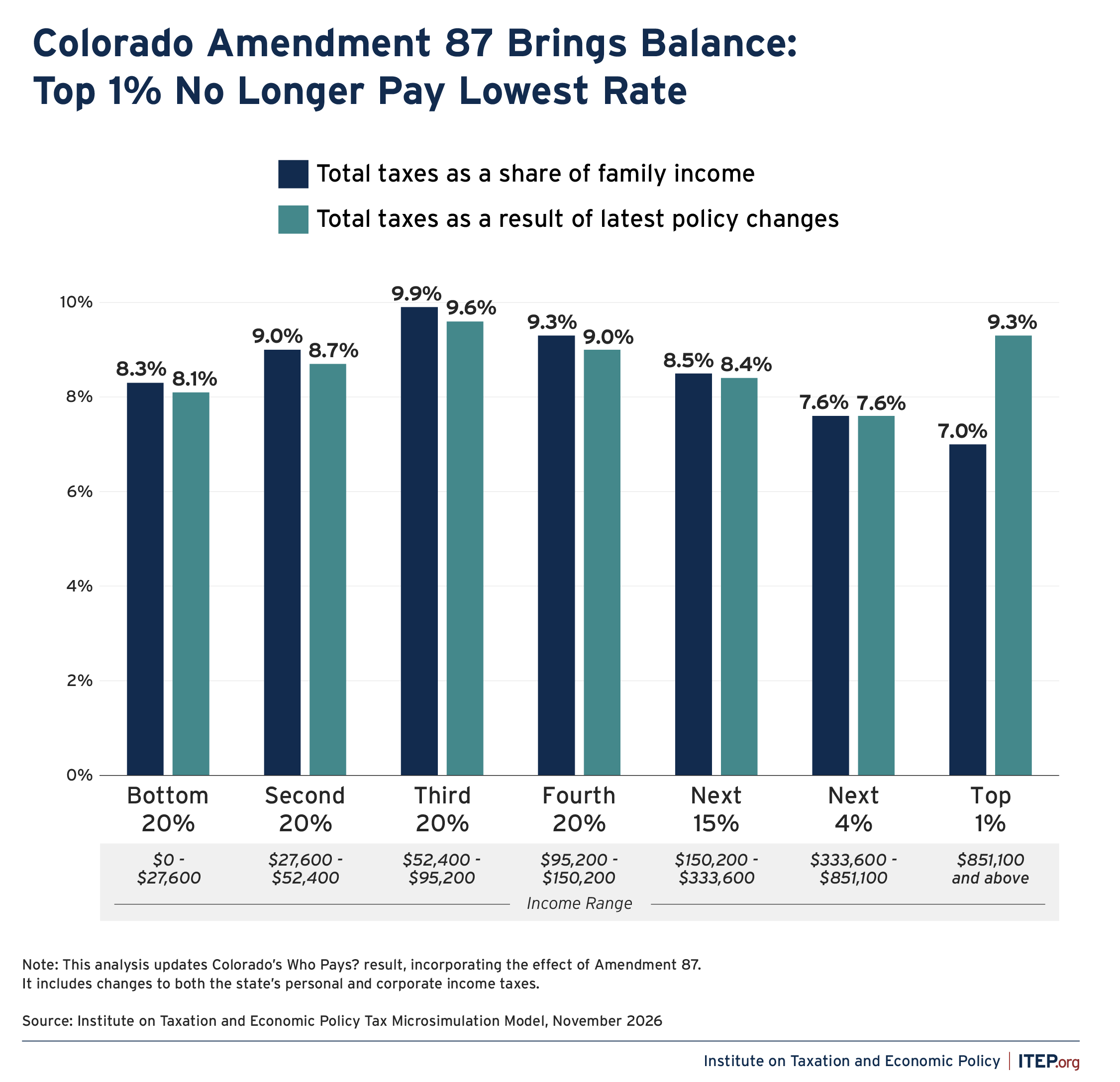
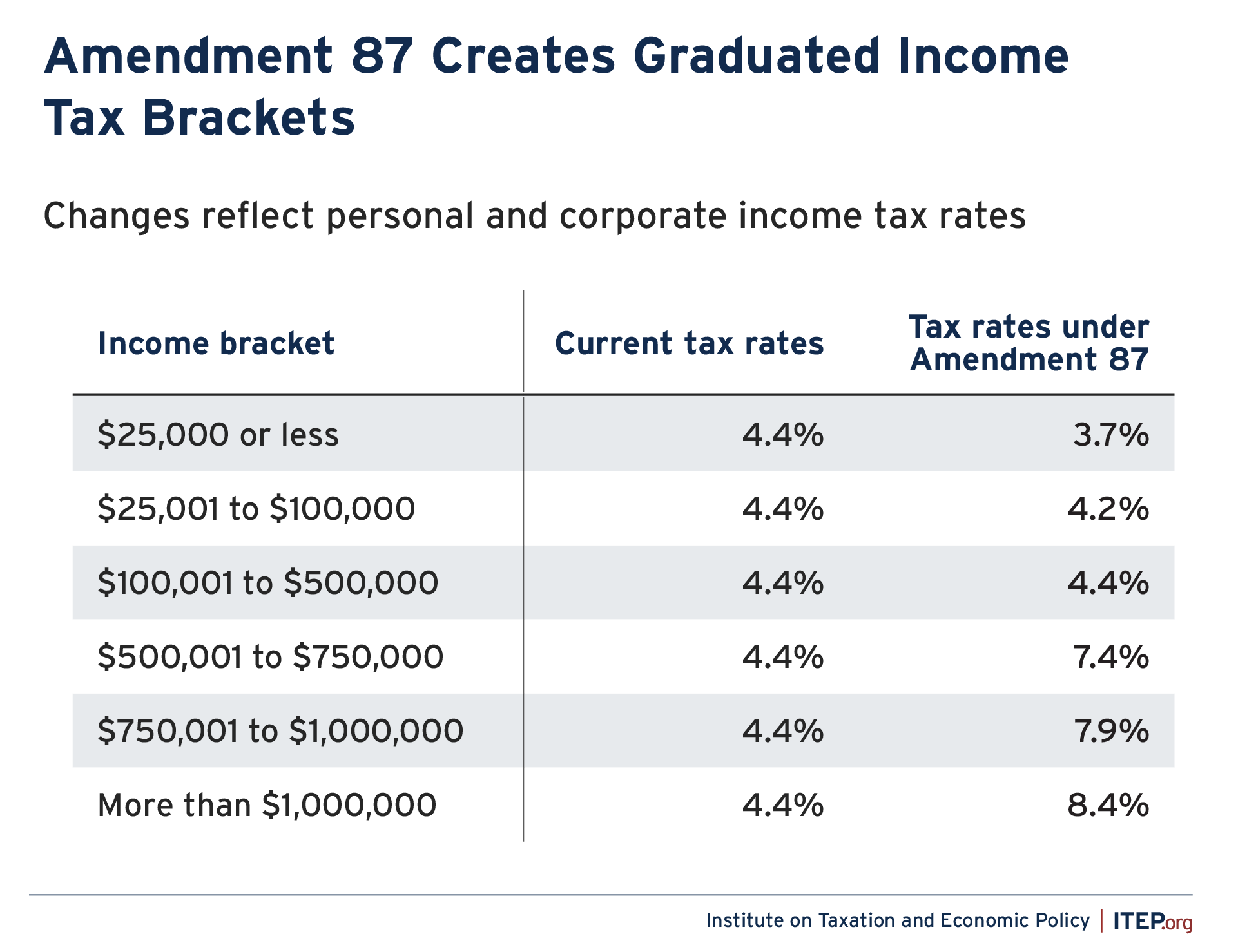
In January, the measure will replace the state’s flat 4.4 percent personal and corporate income tax rates with graduated structures with rates ranging from 3.7 to 8.4 percent. The move, which lowers taxes for most residents while raising taxes on those with the highest incomes, removes the uniform tax rate requirement from the state’s Taxpayer’s Bill of Rights, or TABOR – marking the first direct voter change to TABOR since its passage in the early 1990s.
Comparing Colorado’s tax system pre- and post-Amendment 87 makes the effect of the policies clear. The richest 1 percent of Coloradans will now pay tax rates more in line with the state’s middle-class families, a reasonable and needed reform. Meanwhile, most low- and middle-income Coloradans will experience a tax cut and lower overall effective tax rates.
The change will maintain or reduce rates on income below $500,000 while levying higher rates above that threshold. The vast majority of Coloradans will receive an income tax cut, and only households in the richest 5 percent will pay more. The state will raise approximately $2 billion a year in new revenue to fund K-12 education, healthcare, and childcare.
Similarly, the corporate changes will raise revenue from profitable corporations for services that directly benefit Coloradans. The corporate tax increase will fall overwhelmingly on large multinational corporations with shareholders located around the country and the world. According to our analysis, more than 90 percent of the corporate tax increase will ultimately fall on people who aren’t Coloradans.
Figure 2
The measure is a smart alternative to the flawed flat-tax approach that Colorado has had for decades. After decades of TABOR and flat taxes, Colorado voters are now opting to raise needed revenue, fund core priorities, and prioritize their people and communities.
The Centennial State joins a chain of ballot decisions to raise revenue, tax the rich
Colorado joins a growing number of states moving ballot measures to tax the top. This year, California voters passed Proposition 3, which makes permanent the state’s current income tax rates on its richest households. These rates, which contribute $10 billion every year to California’s schools, roads, and other priorities, would have expired after 2030 without further action.
Massachusetts and Arizona voters have also passed new taxes on high-income individuals in recent years.
In 2022, Massachusetts voters approved a 4 percent surcharge on income over $1 million. Since its approval, Massachusetts has brought in billions each year to fund education, infrastructure, and transportation. This year alone, the state’s millionaires’ tax has already generated more than $3.1 billion in revenue, continuing to exceed expectations.
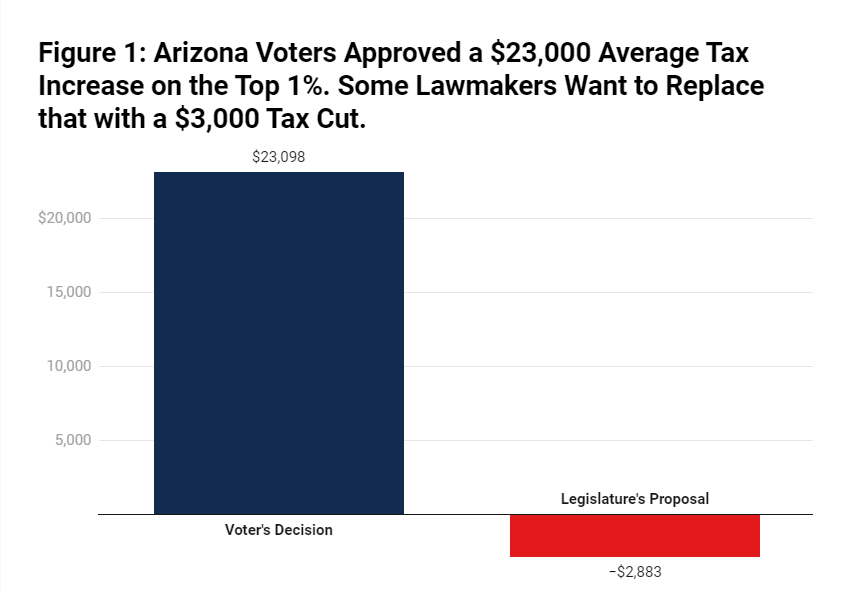
In 2020, Arizona voters approved Proposition 208 to enact a 3.5 percent surcharge on high-income individuals (single filers with incomes above $250,000 and joint filers with incomes over $500,000). However, anti-tax state lawmakers quickly undermined the will of the people and instead drastically cut taxes for that same subset of high-income families, moving the state to a flat income tax with the lowest rate in the nation (at 2.5 percent). This drastically heightened tax regressivity and badly underfunded Arizona schools.
The voter measures toward fair taxes join a growing legislative effort to improve fairness, raise revenue, and fund better lives for people across the country.
Coloradans reject anti-tax efforts, steeper restrictions
Alongside the passage of Amendment 87, Colorado voters rejected Proposition 136, also known as Initiative 232. The measure, added after the fact to undermine Amendment 87, would have capped the state’s corporate and personal income tax rates at 4.4 percent (the state’s existing flat rate) – in effect, taking away the legislature’s ability to enact popular measures, like a millionaires’ tax or higher taxes on high earners, that could be used to generate revenue for schools and other public services.
In a world where moneyed interests are willing to spend big to try to avoid paying more for the society that enables them, and all of our communities, to thrive, these voter-approved measures for progressive taxation and higher taxes on the rich stand out.
Moving forward, the federal tax and spending cuts passed in 2025 will make it imperative that states have options to raise revenue fairly. The people of Colorado just moved the state in a more equitable and sustainable direction and will reap the benefits of this important and timely decision.