
Blog
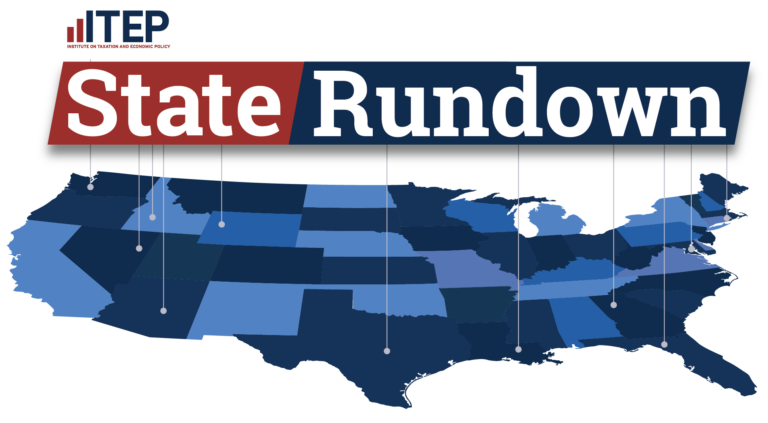
State Rundown 10/8: Ballot Debates and Gas Tax Promises Accelerate as Election Day Nears
• By ITEP Staff
As the Iran War continues to cause gas prices to rise across the country, lawmakers are stepping on the accelerator instead of pumping the brakes on costly and ineffective proposals to suspend the gas tax ahead of the November election.
State Rundown 9/24: States Reckon with Tightening Fiscal Futures
• By ITEP Staff
States across the nation are reckoning with their tightening fiscal futures as inflation and economic woes continue to eat into their budgets.
State Rundown 9/10: States Brace for (and in Some Cases Embrace) Ballots and Budgets
• By ITEP Staff
States across the country will consider a host of ballot measures that could reshape the fairness and adequacy of their states’ tax systems, while other states are receiving budget forecasts that could further shape upcoming policy debates.
State Rundown 6/4: Fiscal Flowers and Weeds Bloom in June
• By ITEP Staff
A veritable superbloom of tax and budget policies occurred over these last few weeks, including both flowers worth admiring and weeds worth fighting back.
State Rundown 5/7: Federal Showers Make States Dour
• By ITEP Staff
The effects of last year’s federal tax and spending cuts continue to ripple through the states. With gas prices soaring due to the Iran war, some states are attempting to provide a bit of relief in the form of gas tax reductions and suspensions.
State Rundown 4/30: Aloha to Tax Cuts, Hawaiʻi Lawmakers Address Revenue Gap with High-End Tax Changes
• By ITEP Staff
This week Hawaiʻi lawmakers reached a compromise to balance the state budget and maintain tax cuts for most residents by, in part, raising rates on the richest Hawaiians. Other states are working to generate revenue from their wealthiest residents, too.
State Rundown 4/23: While Some States Stop Digging, Others Move Full Steam Ahead with Anti-Affordability Agendas
• By ITEP Staff
Missouri lawmakers passed legislation that will have residents vote on a proposal at the ballot box. The ask: for them to pay more in sales taxes to offset cuts – and the possible elimination – of the state's individual income tax, which makes up nearly two-thirds of Missouri’s general fund.
State Rundown 3/26: Sobering Revenue Projections Keep States on Their Toes
• By ITEP Staff
This week, troubling revenue projections are making headlines, with many lawmakers scrambling to determine how the tax changes at the federal level, plus price hikes driven by national policy decisions, will impact their states.
State Rundown 3/12: Washington Lawmakers Pass Millionaires’ Tax, Expand Working Families Tax Credit
• By ITEP Staff
Washington is on its way to making history after the legislature approved the “millionaires’ tax,” a 9.9 percent tax on income over $1 million. The bill, which is expected to raise more than $3 billion a year, making significant investments in public education and childcare, will also expand the Working Families Tax Credit – the […]
State Rundown 2/25: Sausage-Making Season Is Upon Us
• By ITEP Staff
National Sausage Month isn’t until October, but now is the time of year when state lawmakers are really diving into their sausage-making processes, as separate legislative houses and oftentimes political parties send competing bills, budgets, and visions back and forth to grind out their differences.
State Rundown 2/19: Necktie (NCTI) Offers a Way Out of a Knotty Situation
• By ITEP Staff
State lawmakers are grappling with a range of challenges as their fiscal outlooks deteriorate, federal tax enforcement wanes (after the Trump administration cut the IRS workforce by 25 percent), and a rewritten federal tax code sends states scrambling to decide what changes they might want to make in their own codes.
State Rundown 2/11: This Valentine’s Day, Conscious Decoupling Is Our Love Language
• By ITEP Staff
While some may be excited for a romantic Valentine’s Day this weekend, many state lawmakers are breaking up and decoupling from recent federal tax changes that are poised to leave states with revenue shortfalls – much like a bad date who forgets their wallet and asks you to pick up the tab.

What Did 2025 State Tax Changes Mean for Racial and Economic Equity?
• By Brakeyshia Samms
The results are a mixed bag, with some states enacting promising policies that will improve tax equity and others going in the opposite direction.

Local Governments Are Increasingly Strapped: 2026 Will Bring New Challenges and New Opportunities
• By Kamolika Das
2025 saw an intensification of state and local tax fights across the country, as well as growing experimentation with local-option taxes, levies, fees, and tourism taxes aimed at keeping budgets afloat while also navigating political constraints imposed by state legislatures.
State Rundown 1/7: New Year, New Opportunities for Progressive Revenue
• By ITEP Staff
As we kick off a new year, several states are facing revenue shortfalls. Some lawmakers are approaching the challenge with sustainable and equitable solutions.
2025: The Year in Tax Policy
• By ITEP Staff
From Congressional discussions over the so-called "One Big Beautiful Bill Act" to debates on property taxes, ITEP kept busy this year analyzing tax proposals and showing Americans across the country how tax decisions affect them.
State Rundown 11/24: States Say ‘No Thank You’ to Federal Tax Cuts Reducing State Revenue
• By ITEP Staff
Lawmakers in two more states have wisely said “no thank you” to federal tax cuts that would have flowed through to their state tax codes and undermined funding for their priorities
State and Local Policymakers Can Resist Austerity Even Amid Historic Federal Retreat
• By Kamolika Das
The progressivity of the federal tax code has been waning. State and local policymakers should respond by protecting their revenue bases, promoting equity, and safeguarding vulnerable communities from harmful budget cuts.
State Rundown 11/5: Voters Say “Yes!” to Public Investments
• By ITEP Staff
Despite being an off-year election, voters made a call for shared public investments at the polls.
State Rundown 10/27: As Temperatures Cool Tax Policy Heats Up
• By ITEP Staff
States across the nation are debating how best to respond to costly new federal tax cuts.
State Rundown 9/4: Colorado Tackles Offshore Corporate Tax Avoidance, Paves Way for State Conformity Best Practices
• By ITEP Staff
Despite an increasingly bleak state revenue outlook, state lawmakers across the country continue to prioritize regressive tax cuts.
State Rundown 8/20: States to Face Serious Conformity, Revenue Issues as Summer Ends
• By ITEP Staff
While tax news has slowed as summer comes to an end, there are rumblings beneath the surface that could be an inauspicious sign of the times ahead for states and state budgets.

Trump’s Tax Law Clobbers State Budgets. Now’s the Time to Prepare.
• By ITEP Staff
The Trump megabill hands the richest 1% a trillion-dollar windfall while gutting funding for health care, education, and disaster relief — leaving communities to pick up the pieces. State and local leaders must step up, tax the wealthiest fairly, and safeguard the essentials that keep America healthy, educated, and safe.

State Tax Action in 2025: Amid Uncertainty, Tax Cuts and New Revenue
• By Aidan Davis, Neva Butkus, Marco Guzman
Federal policy choices on tariffs, taxes, and spending cuts will be deeply felt by all states, which will have less money available to fund key priorities. This year some states raised revenue to ensure that their coffers were well-funded, some proceeded with warranted caution, and many others passed large regressive tax cuts that pile on to the massive tax cuts the wealthiest just received under the federal megabill.

Which States Expanded Refundable Credits in 2025?
• By Neva Butkus
Refundable tax credits were a big part of state tax policy conversations this year. In 2025, nine states improved or created Child Tax Credits or Earned Income Tax Credits.

Institute on Taxation
and Economic Policy
ITEP is a non-profit, non-partisan tax policy organization. We conduct rigorous analyses of tax and economic proposals and provide data-driven recommendations to shape equitable and sustainable tax systems.
Subscribe to ITEP Emails
Tax research and policy news in your inbox.
Promote Fair Tax Policy
Your gift to ITEP promotes tax justice. With your help, we do research that supports taxing millionaires and billionaires, taxing big corporations and raising revenue for the things our people, our communities and our planet need.
Together, we can create a country with more economic justice, more racial justice, more climate justice… and more tax justice.