A veritable superbloom of tax and budget policies occurred over these last few weeks, including both flowers worth admiring and weeds worth fighting back. On property taxes, it will now be up to Florida voters to nip legislative property tax plans in the bud before they can slowly choke out funding for vital local services. Regarding corporate taxes, Illinois, Rhode Island, and Vermont are all poised to protect their state tax codes from upstream pollution by decoupling from the damaging Qualified Small Business Stock exemption (QSBS) that the federal megabill expanded, along with other federal business tax breaks. New York also decoupled from some of those items while extending its top corporate income tax rate.
Relatedly, Illinois hybridized some existing tax concepts into a new digital advertising tax and social media platform fee, while Indiana, Ohio, and Virginia have all been giving data center tax breaks new scrutiny as costs rise. Meanwhile, varietals of millionaire taxes continue to pop up around the country, as Hawai’i signed a new high-income tax bracket into law and a similar measure advanced in Rhode Island, along with a new state child tax credit.
Major State Tax Proposals and Developments
- FLORIDA lawmakers approved Gov. Ron DeSantis’ property tax plan that will phase in a full elimination of property taxes on homesteads. The plan must now be approved by 60 percent of voters at the ballot. The legislation, passed during a quick special session, would first increase the state’s homestead exemption to $250,000, then increase the exemption until property taxes are eliminated. Despite the initial proposal eliminating all homestead property taxes, school property taxes have since been carved out. — NEVA BUTKUS
- ILLINOIS lawmakers passed a budget that includes $1.8 billion in new revenue. The legislation made multiple changes to how the state piggybacks on the federal tax code in response to state revenue loss from OBBBA. This includes decoupling from the federal tax break for QSBS and limiting the Net Operating Loss deduction. Lawmakers also passed a targeted advertising services tax and a social media platform fee to be paid for by social media companies. — NEVA BUTKUS
- NEW YORK Gov. Kathy Hochul signed the state budget into law. Progressive tax components of the final package include a new tax on luxury second homes, extension of the 7.25 percent top corporate income tax rate, and decoupling from two depreciation-related tax cuts included in last year’s federal megabill. Other tax-related measures include sending out $150-$100 energy rebate checks to most New Yorkers, adopting the megabill’s deduction for up to $25,000 of tipped income, modestly expanding the state’s child and dependent care credit, and instituting a new tax on nicotine pouches. On the spending side, the most newsworthy changes are increased aid for New York City and a multi-billion-dollar set of investments in childcare intended to make care free or affordable for every family in the state. — DYLAN GRUNDMAN O’NEILL
- HAWAI’I Gov. Josh Green signed tax legislation that creates a new income tax bracket for those with incomes above $1 million (joint) and $500,000 (single) annually, maintains income tax cuts passed in 2024 for joint filers earning up to $350,000 and single filers earning up to $175,000, and also sunsets tax credits for business investments and renewable energy companies. — MILES TRINIDAD
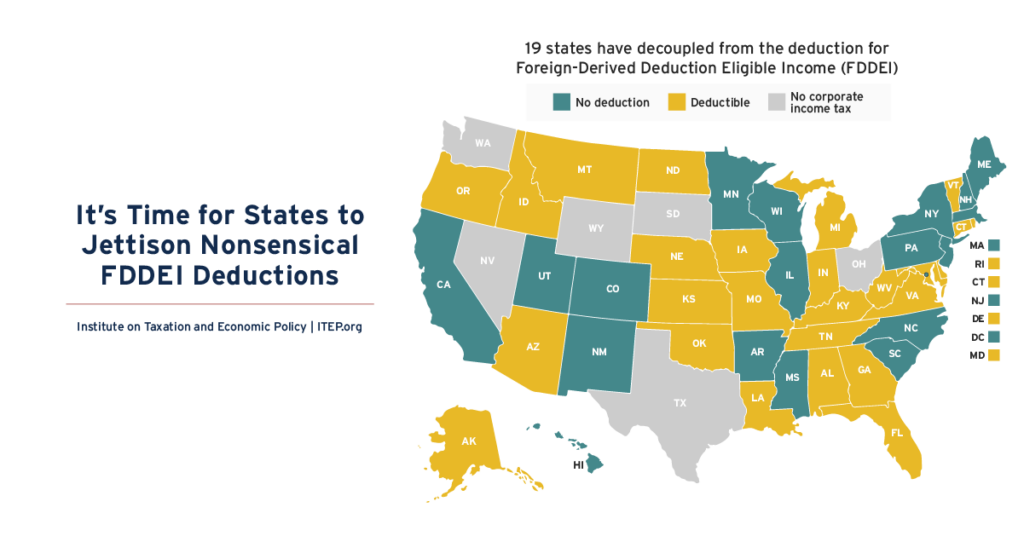
- VERMONT lawmakers adjourned after decoupling the state from several recent changes to the federal tax code and passing the next steps in education reform. The state opted to not mimic several federal business deductions — protecting $16 million in revenue — including changes to: bonus depreciation and domestic research and experimental expenses; foreign-sourced income (under FDDEI); and QSBS. Lawmakers also doubled the tax on profits that multinational corporations claim to have made abroad – an effective way to crack down on profit shifting (through changes to NCTI). The legislation also sets caps on what school districts can spend and pressures, but does not force, them to consolidate. Gov. Phil Scott initially refused to sign a budget unless state funds were used to dampen the projected property tax increases but ultimately agreed to the education reform bill. — MILES TRINIDAD
State Roundup
- The ALASKA legislature passed legislation that would create the state’s first tax on e-cigarette products. The bill would levy a 25 percent tax on retail products. Gov. Mike Dunleavy previously vetoed a similar measure four years ago citing his desire to avoid new taxes. Another version of the bill died in 2024.
- Attempts to pass a property tax incentive package to encourage the Chicago Bears to build a new stadium in Arlington Heights, ILLINOIS, instead of Indiana have failed. The controversial bill would have created a new designation for large economic development projects to freeze property tax values to the value of the property before the project or development was built for up to 40 years.
- A new investigation by local media in INDIANA found that data centers received more than $655 million in state sales and use tax exemptions in 2025. This does not include local property tax abatements, and some reports on sales tax exemptions are still outstanding, meaning the total could be higher.
- MICHIGAN organizers working to get an initiative on the ballot to eliminate property taxes announced they failed to get enough signatures to be eligible for the November ballot.
- NEW HAMPSHIRE lawmakers reached an agreement on property tax cap legislation that voters could decide on in the next two November elections. The first proposal would put a limit on how much local school districts can raise through taxes. The cap would be set at the prior year’s level, adjusted for inflation, and the percentage increase in taxable property value that is attributed to new construction. Voters would also be asked whether the administrative office budget for school administrative unit (SAU) should be limited to 6 percent of the combined appropriations of school districts within the SAU. Both proposals need to pass the legislature with three-fifths support before the proposals are placed before voters.
- NORTH CAROLINA Gov. Josh Stein warned the state could be forced to hike other taxes or fees on “regular” North Carolinians if a constitutional amendment that would reduce the state’s income tax rate cap from 7 percent to 3.5 percent is approved. With the state’s tax rate set to drop to 3.49 percent by 2027, Gov. Stein warned that if there is a recession and revenues are needed, it could result in an increase in the sales tax rate instead.
- Several NORTH DAKOTA communities are expected to ask voters to decide on sales tax increases this June. While the proposals come after the state’s new 3 percent cap on year-to-year property tax increases, officials in some communities said the ballot measures were either partly or not directly tied to the new policy.
- OHIO Gov. Mike Dewine announced a moratorium on data center sales tax breaks which have cost the state nearly $1.6 billion in 2025. Gov. DeWine’s announcement comes after recent scrutiny from Ohio lawmakers and communities.
- Portland, OREGON’s city council approved a change to the city’s longstanding arts tax. The local fee will increase to $50 annually but will exempt some low-income taxpayers. The arts tax supports professional non-profit arts organizations and arts programming in schools.
- The controversial MISSOURI measure to authorize expansion of the state’s sales tax and cuts to the income tax is advancing on the August ballot as both sides muster significant financial resources for the campaign.
- The PUERTO RICAN Fiscal Oversight and Management Board — the federal board with fiscal control over the island after its bankruptcy — approved a one-time income tax rebate of about $550 million. The measure was approved after extensive negotiations and the board refusing to approve a permanent reduction in the commonwealth’s personal income tax rates.
- RHODE ISLAND lawmakers advanced the state’s annual budget that includes a new phased-in surtax on high-income households, a new refundable child tax credit, and protects state revenue from some of the business provisions from the federal tax bill. The bill would gradually phase in a 3 percent surtax on annual income over $1 million, which is projected to raise about $142 million annually. The proposal comes after Gov. Dan McKee endorsed a millionaire tax in his budget proposal. The new child tax credit would provide a $330 per child credit, which would be phased out at $88,500 for single filers and $110,640 for joint filers, while keeping the current dependent exemption unchanged. Lawmakers also eliminated the age requirement that limited the Social Security income exemption from income taxes. The budget decouples the state from federal corporate tax deductions for QSBS and the business interest limitation. The agreement now moves to the House and Senate for final votes.
- VIRGINIA lawmakers are set to reconvene in two weeks with a deadline to pass a new state budget by July 1 as they remain in a legislative deadlock over a proposal to roll back tax breaks for data centers. Lawmakers are also expected to include a proposal in the budget that would allow localities to pursue a one-cent sales tax referendum that would pay for capital improvement projects for public schools.
What We’re Reading
- ITEP weighs in on North Carolina’s continued push to eliminate the state’s corporate income tax despite widespread public opposition to doing so. The move would be a windfall for large, multinational companies and offers no real upside for the state’s economy.
- Two urban planners push back on the idea that economic development in cities and towns across the country often privileges the needs and desires of an investor class that tends to extract rather than create value in those places, and they offer policy options for cities that can flip the script and invest in people and communities to fund economic development from the bottom up.
- Economists Saez and Zucman lay out the astonishing explosion in wealth held by California’s billionaires. Despite the enormous growth in their wealth, the state’s billionaires avoid taxable income and pay little in state taxes. They argue the best solution is the state’s proposed wealth tax, which is set to be on the ballot in November.
- Governing delves into the ways that states are attempting to forecast and stress-test for fiscal shocks that could be coming in the future.
If you like what you are seeing in the Rundown (or even if you don’t) please send any feedback or tips for future posts to Aidan Davis at aidan@itep.org. Click here to sign up to receive the Rundown via email.