
Michigan

Preventing an Overload: How Property Tax Circuit Breakers Promote Housing Affordability
• By Brakeyshia Samms, Carl Davis
Circuit breaker credits are the most effective tool available to promote property tax affordability. These policies prevent a property tax “overload” by crediting back property taxes that go beyond a certain share of income. Circuit breakers intervene to ensure that property taxes do not swallow up an unreasonable portion of qualifying households’ budgets.
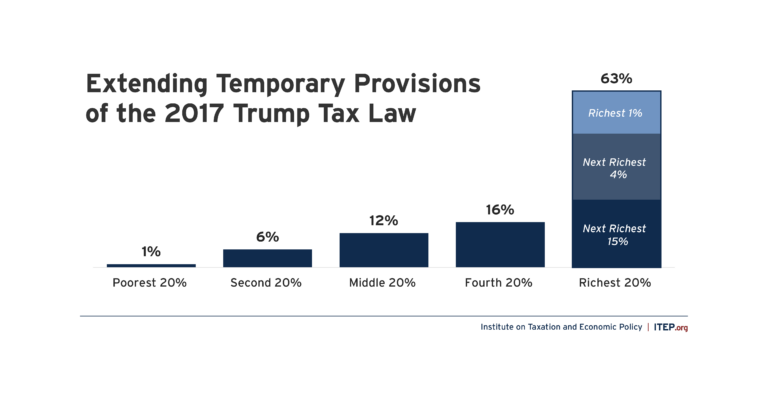
Extending Temporary Provisions of the 2017 Trump Tax Law: National and State-by-State Estimates
• By Joe Hughes, Matthew Gardner, Steve Wamhoff
The push by Congressional Republicans to make the provisions of the 2017 Tax Cuts and Jobs Act permanent would cost nearly $300 billion in the first year and deliver the bulk of the tax benefits to the wealthiest Americans.

State Rundown 4/27: Health, Wealth, and State Tax Policy
• By ITEP Staff
This week the importance of state tax policy is center stage once again...
State Rundown 4/19: Revenue Discussions Heat Up Like the Temperature
• By ITEP Staff
Tax season has ended for most filers, but the topic remains a hot one in states around the country...
State Rundown 3/30: A Win for Tax Equity in The Evergreen State
• By ITEP Staff
Over the past week Washington state saw a major victory for tax fairness after the state Supreme Court held the state’s capital gains tax—passed in 2021—constitutional...
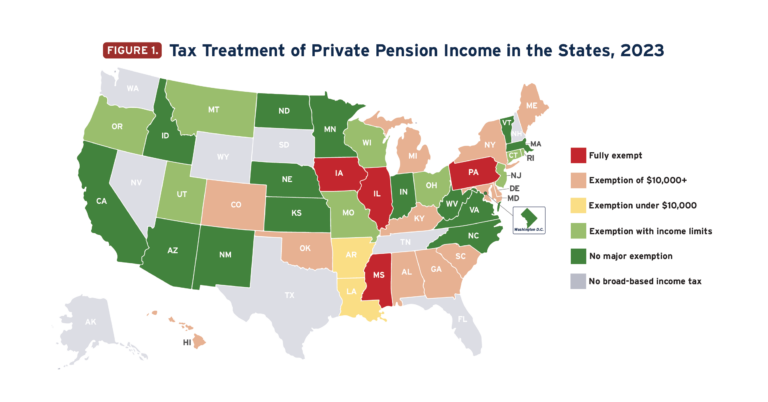
States Prioritize Old Over Young in Push for Larger Senior Tax Subsidies
• By Carl Davis, Eli Byerly-Duke
Under a well-designed income tax based on ability to pay, it is simply not necessary to offer special tax subsidies to older adults but not younger families. At the end of the day, your income tax bill should depend on what you can afford to pay, not the year you were born. It’s really as simple as that.

State Income Tax Subsidies for Seniors
• By Carl Davis, Eli Byerly-Duke
State governments provide a wide array of tax subsidies to their older residents. But too many of these carveouts focus on predominately wealthy and white seniors, all while the cost climbs.
Costly and Poorly Targeted Senior Tax Subsidies Widen Economic, Racial, and Generational Inequalities
• By ITEP Staff
Contact: Jon Whiten – jon@itep.org Costly and Poorly Targeted Senior Tax Subsidies Widen Economic, Racial, and Generational Inequalities State lawmakers should focus on improving overall tax fairness, not creating special carveouts based on age Lawmakers in several states are currently considering tax subsidies for senior citizens, even though these breaks are costly and poorly targeted. […]
State Rundown 3/15: Tax Madness
• By ITEP Staff
It’s March and state lawmakers are showing why the Madness isn’t only reserved for the basketball court...
State Rundown 3/9: The Whirlwind 2023 Legislative Session Continues
• By ITEP Staff
State 2023 legislative sessions are proving to be eventful ones. With many states eager to make use of their budget surpluses, major tax changes are still being proposed and others signed into law. Michigan residents will soon see an increase to their state Earned Income Tax Credit (from 6 percent to 30 percent) after the […]
State Rundown 3/1: The Long March to the Finish Line
• By ITEP Staff
This week, several big tax proposals took strides on the march toward becoming law...
State Rundown 2/23: Tax Dominos Take Shape, Begin to Fall as Session Heats Up
• By ITEP Staff
The 2023 legislative session is in full swing, and dominos continue to be set up as others fall...

The Five Best Tax Ideas Coming from Governors This Year
• By Carl Davis
The word “tax” appears 97 times and counting in one recent summary of governors’ addresses to state legislators so far this year. The policy visions that governors are bringing, however, vary enormously. While there's good reason to worry about tax cuts for wealthy families and the flattening or elimination of income taxes, there are at least five great tax ideas coming directly out of governors’ offices this year.
State Rundown 2/15: Love You, Love You Not – Tax Edition
• By ITEP Staff
This week, a fresh bouquet of tax proposals was delivered by state lawmakers, but not all of them have left us with that warm, fuzzy feeling in our stomachs...
State Rundown 2/9: We <3 Taxes
• By ITEP Staff
The great women’s philosopher, Pat Benatar, once said “love is a battlefield,” and there’s no greater test of our love for state tax policy than following the ups and downs of state legislative sessions...
State Rundown 2/1: February Brings New (and Some Old) Tax Policy Conversations
• By ITEP Staff
Tax bills across the U.S. are winding their way through state legislatures and governors continue to set the tone for this year’s legislative sessions...
State Rundown 1/26: Tax Season Brings With it Reminder of EITC’s Impact
• By ITEP Staff
Tax season has officially kicked off and with Earned Income Tax Credit (EITC) Awareness Day right around the corner, it serves as another reminder for how important the EITC is...
State Rundown 1/19: ITEP Provides a Roadmap for Equitable Tax Goals in 2023
• By ITEP Staff
State legislatures are buzzing as leaders and lawmakers jockey to advance their 2023 goals...
How Many States Have a Flat Income Tax?
• By ITEP Staff
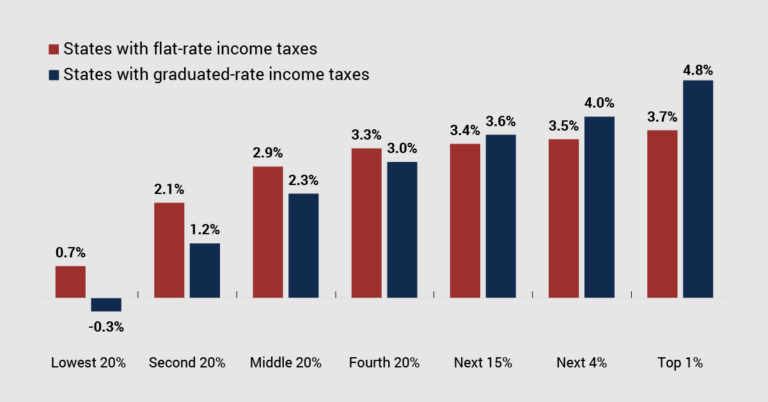
Two-thirds of states with broad-based personal income tax structures have a graduated rate, while one-third have flat taxes.

State Lawmakers Should Break the 2023 Tax Cut Fever Before It’s Too Late
• By Miles Trinidad
Despite mixed economic signals for 2023, including a possible recession, many state lawmakers plan to use temporary budget surpluses to forge ahead with permanent, regressive tax cuts that would disproportionately benefit the wealthy at the expense of low- and middle-income households. These cuts would put state finances in a precarious position and further erode public investments in education, transportation and health, all of which are crucial for creating inclusive, vibrant communities where everyone, not just…

Momentum Behind State Tax Credits for Workers and Families Continues in 2023
• By Miles Trinidad
Refundable tax credits are an important tool for improving family economic security and advancing racial equity, and there is incredible momentum heading into 2023 to boost two key state credits: the Child Tax Credit and the Earned Income Tax Credit.
The Pitfalls of Flat Income Taxes
• By Carl Davis, Eli Byerly-Duke
Flat taxes have some surface appeal but come with significant disadvantages. Critically, a flat tax guarantees that wealthy families’ total state and local tax bill will be a lower share of their income than that paid by families of more modest means.

Lawmakers Seek to Extend Tax Break for “Research” that Corporations Use to Develop Frozen Foods, New Beer Flavors, Casino Games and Tax Avoidance
• By Steve Wamhoff
If Congress creates a tax break to encourage businesses to conduct research that benefits society, should Netflix be eligible for it? There is no shame in binge-watching Stranger Things or Bridgerton or The Crown, but how many of us really think Netflix deserves a tax break for whatever “research” the company did to provide this […]

State Child Tax Credits and Child Poverty: A 50-State Analysis
• By Aidan Davis
Regardless of future Child Tax Credit developments at the federal level, state policies can supplement the federal credit to deliver additional benefits to children and families. State credits can be specifically tailored to meet the needs of local populations while also producing long-term benefits for society as a whole

State Rundown 9/21: Earth, Wind, Fire & Taxes Edition
• By ITEP Staff
Do you remember/the big tax news innn September? Well, if not, we at ITEP got you covered...
