
Recent Work
2316 items
Relentless State Income Tax Cuts Add Up to Massive Giveaways for the Wealthy
August 26, 2026 • By Sarah Austin

Today's state income tax cutting is defined less by sweeping one-time reforms than by sustained campaigns to ratchet down income tax rates year after year. This approach enables lawmakers to enshrine significant long-term reductions into law, while obscuring the fiscal impact by spreading it across multiple state budgets and legislative cycles.
The Impact of Proposed New Tax Credit Restrictions for Immigrant Filers: An Updated Analysis of the DACA Recipient Population
August 26, 2026 • By Carl Davis, Erika Frankel, Emma Sifre

New Treasury Department public regulations would drastically reduce tax credit claims by DACA recipients and their families, among others. We find that 158,000 people in households with at least one DACA recipient will suffer financial harm, and that more than half of the impacted individuals are U.S. citizens.
Video: It turns out that voters don’t love massive tax cuts for the rich
August 21, 2026 • By Marcus Rojas

The Trump Administration Slashed Taxes for H&R Block and Raised Costs for Tax Filers
August 20, 2026 • By Joe Hughes

Tax-prep giant H&R Block paid no federal taxes on its U.S. income in 2025. It also made a public disclosure, required by the European Union, characterizing one-third of its global profits as earned in Ireland, a low-tax country where the company offers no tax services and has only 15 employees.
Five Things to Know About the Trump Administration’s New Effort to Deny Tax Credits to Lawfully Present Immigrants
August 19, 2026 • By Carl Davis

Today the Trump administration proposed new regulations seeking to drastically reduce the tax credits that certain immigrant tax filers can claim. The affected credits include the Earned Income Tax Credit (EITC), Additional Child Tax Credit, American Opportunity Tax Credit, and the Adoption Tax Credit.

The federal deductions for up to $25,000 in tipped income, for a similar amount of overtime pay, and for some auto loan payments have not been widely adopted by states. As of late June, just nine states are allowing the deduction for overtime.
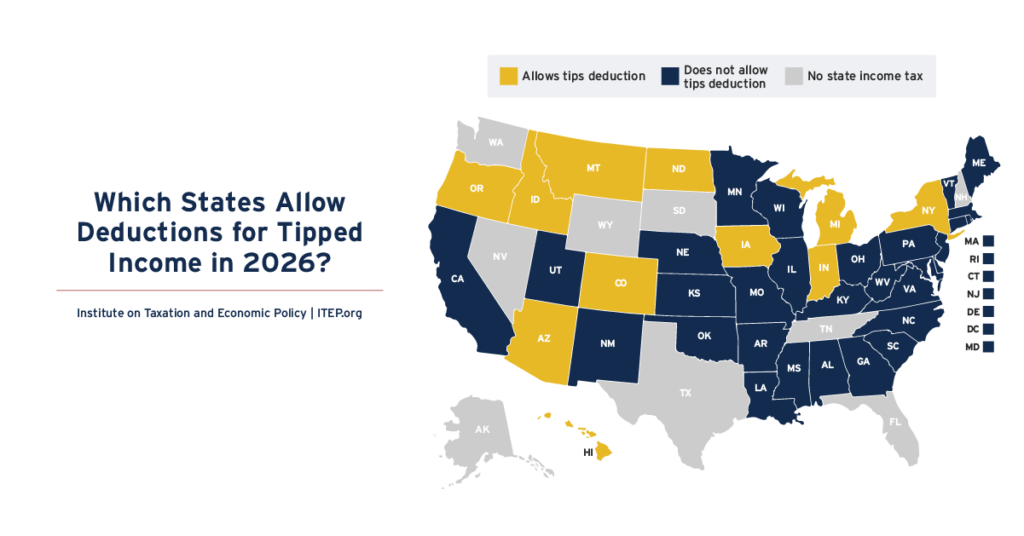
The federal deductions for up to $25,000 in tipped income, for a similar amount of overtime pay, and for some auto loan payments have not been widely adopted by states. As of late June, only 10 states – a quarter of the states with personal income taxes — have decided to allow the tipped income deduction for tax year 2026.
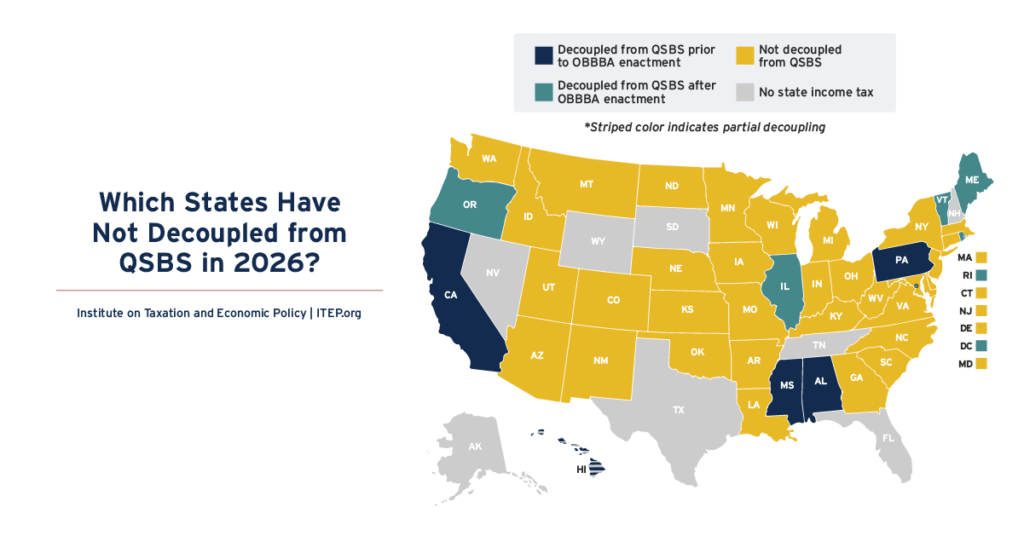
QSBS allows millionaire investors to pay zero income tax on their profits.
Video: ITEP’s Amy Hanauer Explores Tax Fairness on Story in the Public Square
August 19, 2026 • By Amy

It’s been said that the only things certain in life are death and taxes. But Amy Hanauer of the Institute on Tax Policy and Economic Policy says that for some, taxes might not be on that list anymore—with societal implications for us all. She’s discussing that this week with host Jim Ludes this week on […]
Six Companies Reaped $83 Billion in Federal Tax Breaks in 2025
August 14, 2026 • By Sarah Buttikofer, Matthew Gardner

Six companies alone accounted for $83 billion of federal tax breaks disclosed by publicly traded U.S companies so far for 2025. Microsoft received a record high for single-year federal tax breaks for one publicly traded company, followed by Alphabet, Amazon, Meta, JPMorgan Chase, and Nvidia.
In a win for Missouri workers and families, voters overwhelmingly rejected a proposed amendment that would have allowed lawmakers to replace the state's income tax with increased or expanded sales taxes.
Child Tax Credits and Child and Dependent Care Credits: What’s the Difference?
August 13, 2026 • By Maddie Shirley

Three popular state tax credits support families with children: the Child Tax Credit (CTC, or child credit), the Child and Dependent Care Tax Credit (CDCTC, or dependent care credit), and the Earned Income Credit (EITC). While the EITC is intended to boost wages for low- and moderate-income workers and families, the CTC and CDCTC are […]
Video: Microsoft barely paid any federal income tax last year.
August 13, 2026 • By Marcus Rojas

Trump Weighs Another Giveaway to the Wealthy With Capital Gains Indexing Ahead of Midterms
August 12, 2026 • By Jon Whiten

Trump is once again weighing a proposal to index capital gains taxes to inflation as part of a set of policy promises ahead of the midterm elections. It would amount to a massive new tax break for wealthy investors.
How Federal Tax Policy Can Address AI
August 10, 2026 • By Steve Wamhoff, Joe Hughes, Erika Frankel

Congress could use its taxing power to ensure a fairer distribution of the fruits of labor, innovation and investment, address the specific harms (the negative externalities) of AI specifically, and acquire a public stake in the companies that are driving the AI revolution.

Institute on Taxation
and Economic Policy
ITEP is a non-profit, non-partisan tax policy organization. We conduct rigorous analyses of tax and economic proposals and provide data-driven recommendations to shape equitable and sustainable tax systems.
Subscribe to ITEP Emails
Tax research and policy news in your inbox.
Promote Fair Tax Policy
Your gift to ITEP promotes tax justice. With your help, we do research that supports taxing millionaires and billionaires, taxing big corporations and raising revenue for the things our people, our communities and our planet need.
Together, we can create a country with more economic justice, more racial justice, more climate justice… and more tax justice.