
Recent Work
2316 items
After Two Rounds of Trump Tax Cuts, Corporate America Paid Less Than Ever in 2025
October 22, 2026 • By Matthew Gardner, Steve Wamhoff, Joe Hughes, Spandan Marasini
In 2025, 706 major American corporations collectively paid a federal income tax rate of just 10.4% on $1.88 trillion in U.S. profits. This is the lowest effective rate that ITEP has uncovered in over 40 years of analyzing corporate income taxes.
State Rundown 10/22: Despite Obstacles, Progressive Taxes Define 2026
October 22, 2026 • By ITEP Staff
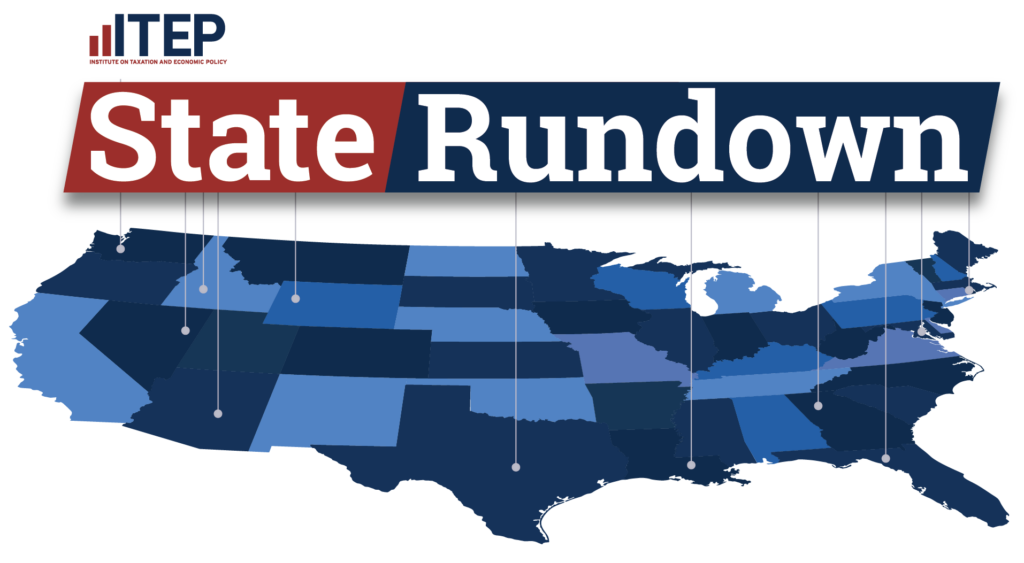
As more states move to raise revenue and tax the rich, anti-tax lobbyists and lawmakers are hard at work to undo that progress. Despite pushback, important conversations around needed revenue continue.
Testimony: ITEP’s Nick Johnson weighs in on revenue options for the District of Columbia
October 16, 2026 • By Nick Johnson
A D.C. Business Activity Tax, or BAT, meets commonly held standards for sound tax policy.
State Rundown 10/8: Ballot Debates and Gas Tax Promises Accelerate as Election Day Nears
October 8, 2026 • By ITEP Staff
As the Iran War continues to cause gas prices to rise across the country, lawmakers are stepping on the accelerator instead of pumping the brakes on costly and ineffective proposals to suspend the gas tax ahead of the November election.
Impact of Key Trump Policies on Taxes and Costs: National and State Estimates
October 8, 2026 • By Steve Wamhoff
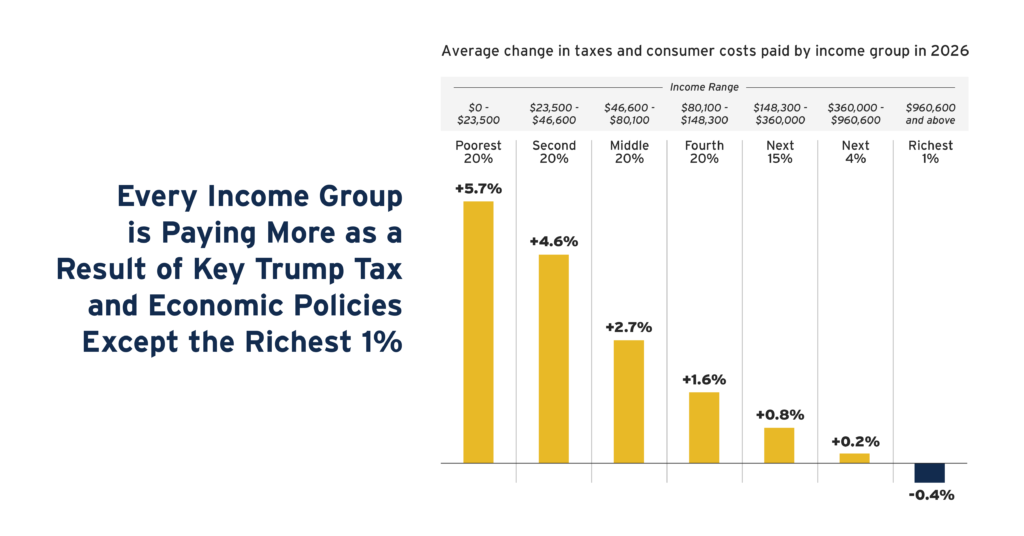
The major tax and economic policies of President Trump’s second term have increased taxes and household costs for most Americans except the richest 1%.

The Iran War has significantly raised energy prices. The Last Word on MS NOW highlights our interactive fuel price tracker that shows how much Americans have paid as a result.
ITEP Comment on Tax Credit Restrictions for Immigrants
October 6, 2026 • By Carl Davis, Emma Sifre
This proposal would bar a variety of immigrant tax filers from receiving the refunded portion of the Earned Income Tax Credit (EITC), Additional Child Tax Credit (ACTC), American Opportunity Tax Credit (AOTC), and Adoption Tax Credit.
New State Taxes on the Wealthy Raise Revenue and Rebalance Tax Codes, Advancing Racial Justice
October 6, 2026 • By Brakeyshia Samms
Taxing the rich is proven fiscal policy – it raises revenue for vital public services and makes tax codes fairer. But a part of the debate that rarely gets enough attention: taxing the rich is also one of the most effective tools available for advancing racial equity.

Higher fuel and food prices are on track to cost the average household over $1,300 by the end of the year.
Meta is claiming the research tax credit – a tax break meant to encourage innovation and experimentation – to pay for the equipment it uses in data centers to power its AI activities. ITEP described how Meta paid just 3.5% of its profits in federal corporate income taxes in 2025.
New Estimates of the Total Number of People and Children in Immigrant Families who Could Lose Eligibility for the Refundable Portions of the Earned Income Tax Credit and Child Tax Credit
September 30, 2026 • By Emma Sifre

Treasury and the IRS proposed a new rule that would further restrict eligibility for the refundable portions of four tax credits. The rule would affect primarily lawfully present immigrants authorized to work in the U.S. and their family members, including their children, the vast majority of whom are citizens.
Tallying Up the Impact of Florida’s Property Tax Ballot Measure on Local Communities
September 29, 2026 • By Neva Butkus

Florida voters will soon vote on Amendment 3, which would create a pathway for non-school property tax elimination in the state. If passed, the measure would cost local governments $13.7 billion in the first two years alone.
California’s Prop 40: Responses to Common Objections
September 28, 2026 • By Brian Galle, David Gamage, Darien Shankse

Proposition 40, California’s proposed billionaire tax, is a one-time 5 percent levy that addresses a significant one-time emergency, namely the cuts made to the healthcare system by the so-called “One Big Beautiful Bill Act.”
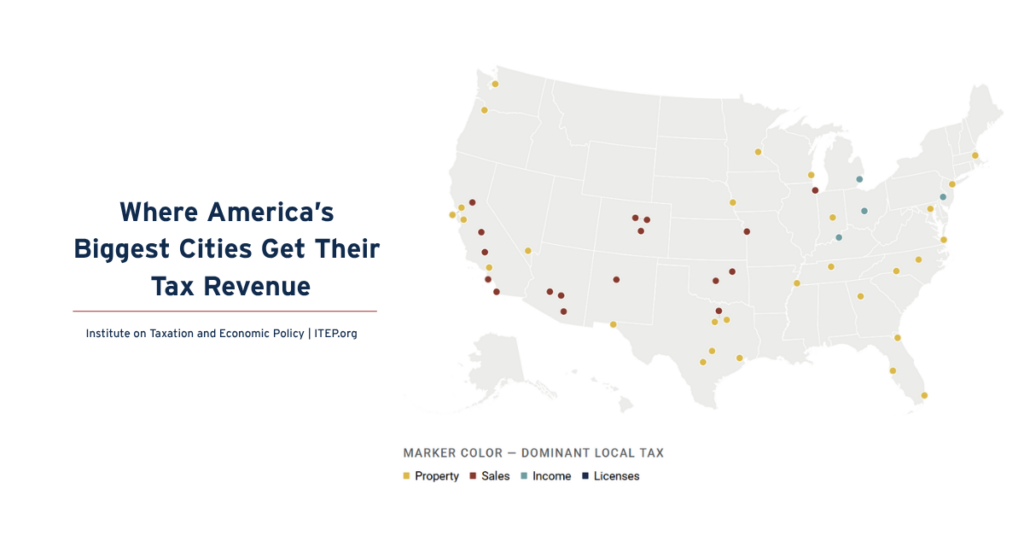
Property taxes are the largest source of revenue for over half of the 50 largest cities, but to a lesser degree than for other local governments.
State Rundown 9/24: States Reckon with Tightening Fiscal Futures
September 24, 2026 • By ITEP Staff
States across the nation are reckoning with their tightening fiscal futures as inflation and economic woes continue to eat into their budgets.

Institute on Taxation
and Economic Policy
ITEP is a non-profit, non-partisan tax policy organization. We conduct rigorous analyses of tax and economic proposals and provide data-driven recommendations to shape equitable and sustainable tax systems.
Subscribe to ITEP Emails
Tax research and policy news in your inbox.
Promote Fair Tax Policy
Your gift to ITEP promotes tax justice. With your help, we do research that supports taxing millionaires and billionaires, taxing big corporations and raising revenue for the things our people, our communities and our planet need.
Together, we can create a country with more economic justice, more racial justice, more climate justice… and more tax justice.