Yesterday was Tax Day, and with many state legislative sessions wrapping, some tax changes are gearing up or crossing over the finish line. Most prominently, Maine enacted a 2 percent millionaires’ tax as part of a budget that will, among other things, increase the state’s targeted Property Tax Fairness Credit, boost teacher pay, and provide free community college to Mainers. The new 2 percent surcharge will improve Maine’s tax structure and raise nearly $100 million in new revenue in its first year.
Elsewhere, Illinois joins a growing number of states considering similar measures, and both Oregon and Maine have now decoupled from some of the harmful federal changes under the Trump tax law – including a tax break for ultra-wealthy investors. In less rosy news, North Carolina lawmakers continue to push for tax cuts on three fronts, and risk repeating the Kansas debacle.
Major State Tax Proposals and Developments
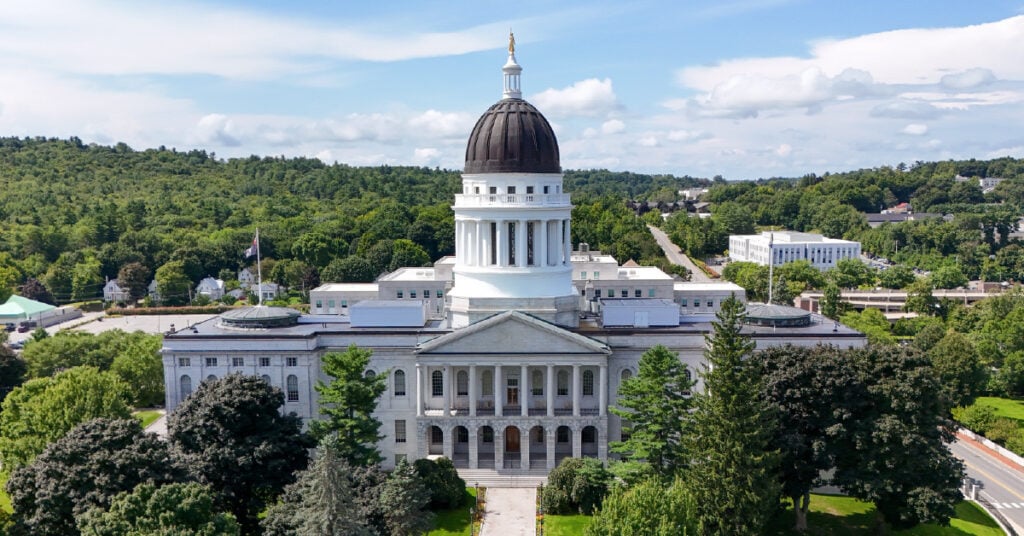
- MAINE Gov. Janet Mills signed into law the state supplemental budget, which included a millionaires’ tax that will impose a 2 percent surcharge on income over $1 million ($1.5 for heads of households and joint filers). The bill also expands the Property Tax Fairness Credit, authorizes $300 one-time payments for eligible households, increases pay for teachers, and makes community college free for residents. The state will also couple to select federal tax provisions and decouple from others, including depreciation, the Opportunity Zone program, and the Qualified Small Business Stock (QSBS) exclusion. – MARCO GUZMAN
- Faced with the downsizing of the federal workforce, slow revenue growth, and federal intervention on the District’s federal conformity decisions, DISTRICT OF COLUMBIA Mayor Muriel Bowser released her fiscal year 2027 budget seeking to fill a $1.1 billion budget gap. The plan doesn’t include any major tax increases, but does include significant cuts, like a pay freeze for D.C. employees, a trimmed universal paid leave program, and a near full elimination of the Pay Equity Fund, which supports the pay of child care workers. The budget also delays a planned sales tax increase from 6 percent to 7 percent. – MARCO GUZMAN
- House leadership in ILLINOIS endorsed a proposed constitutional amendment that would enact a 3 percent surcharge on income over $1 million. Democrats in the state are now debating how much of the $4.5 billion in new revenue should be spent on property tax cuts versus other priorities like public education. – NEVA BUTKUS
- OREGON Gov. Tina Kotek signed legislation that decouples the state from some provisions of the federal tax law, protecting about $300 million a year in state revenue. The legislation decouples the state from the QSBS exclusion, a provision allowing businesses to immediately claim tax breaks on large purchases known as bonus depreciation, and a tax deduction for car loan interest. – MILES TRINIDAD
State Roundup
- The ALASKA House rejected a Senate-approved bill that would have levied the state’s corporate income taxes on Hilcorp, a privately owned oil and gas producer.
- ARKANSAS Gov. Sarah Huckabee Sanders urged lawmakers to reduce spending so she can call a special session to further reduce income taxes later this spring.
- As part of the Mayor Muriel Bowser’s budget, the DISTRICT OF COLUMBIA will decouple from several federal tax provisions for the current tax year, saving $180 million in revenue that will be kept in escrow in case it’s needed for future litigation. The budget, however, in a break with the law that was passed by the District and rolled back by this Congress, couples to most provisions in future years, decoupling from the higher standard deduction, charitable deduction for non-itemizers, business expensing, depreciation for qualified production property, and the retroactive application of the R&E deduction.
- A Republican House member in FLORIDA is seeking to take his property tax elimination idea to the state ballot through a petition.
- Gov. Mike Braun of INDIANA signed an executive order pausing the state’s 7 percent sales tax on gas for 30 days.
- NEBRASKA lawmakers are all but finished with their legislative session and will officially adjourn at the end of this week. While the state’s immediate budget shortfall was closed mostly through short-term fixes that won’t help with the overall structural deficit, one bright spot in the closing days was that a child care subsidy extension that had been jettisoned as part of budget negotiations was brought back as a standalone bill and passed.
- NEW YORK policymakers are again discussing a “pied-à-terre tax” on high-value second homes owned by non-New Yorkers. Importantly, Gov. Kathy Hochul and New York City mayor Zohran Mamdani are both in support of the tax.
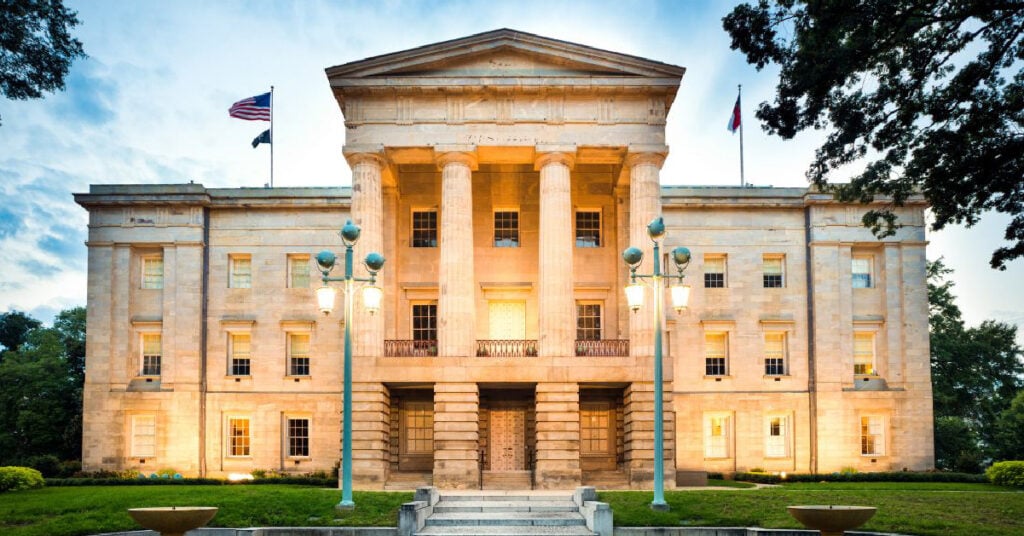
- A NORTH CAROLINA House Committee advanced a proposed constitutional amendment that would limit county and city property tax increases while increasing oversight of local tax authorities. The proposal comes as Republican leaders look to cut property taxes across the state (and continue to steeply reduce income taxes). Democratic lawmakers argued the proposal punishes local governments for filling in the gaps for funding that have occurred after Republican-backed tax cuts to state government funding.
- Following recent developments and lawmaker decisions on federal conformity in OREGON, Republicans in the state have started an effort to collect signatures to put the decoupling from the car loan deduction provision on the ballot for voters to decide.
- VIRGINIA Gov. Abigail Spanberger signed legislation that allows counties to levy a tax of up to 10 percent on admissions charged for attendance at events.
- The VERMONT Senate passed property tax legislation that would lower the “excess spending threshold” for school districts as a way to curb rising education costs, penalizing those that spend significantly more than the statewide average. However, the bill could sharply increase property taxes in many districts unless they cut services, which could lead to teacher layoffs.
- Negotiations between WISCONSIN legislators and Gov. Tony Evers are progressing, although there remain outstanding disagreements about the balance of tax cuts and spending on education.
What We’re Reading
- A recent article in The American Prospect outlines the concerted push by anti-tax lawmakers and advocates to hollow out local governments’ largest source of revenue, the property tax. Arthur Laffer, the architect of the disastrous “Kansas experiment,” among them. Opponents, concerned about how vital public services would be funded, say the idea “defies logic”.
- In a Tax Day op-ed, New York City Mayor Zohran Mamdani and economists Joseph Stiglitz and Gabriel Zucman discuss income and wealth inequality across the globe and the resulting economic, political, and social consequences. They explain that when the rich contribute less in taxes than the rest of us, inequality is deepened and sustained.
- The News and Observer explains how for-profit landlords are exploiting a loophole in North Carolina designed to eliminate property taxes for non-profit housing providers, taking millions in property value off the property tax rolls in Raleigh and Wake County. While most other states require a minimum of 50 percent or more ownership of a property held by a non-profit to qualify for the tax exemption, North Carolina has no such limit on ownership stake.
If you like what you are seeing in the Rundown (or even if you don’t) please send any feedback or tips for future posts to Aidan Davis at aidan@itep.org. Click here to sign up to receive the Rundown via email.