
Maryland

State Child Tax Credits Will Boost Financial Security for Families and Children in 2027
• By Neva Butkus
Sixteen states provide Child Tax Credits to reduce poverty, boost economic security, and invest in children. State lawmakers have several options to maximize the impact of Child Tax Credits.
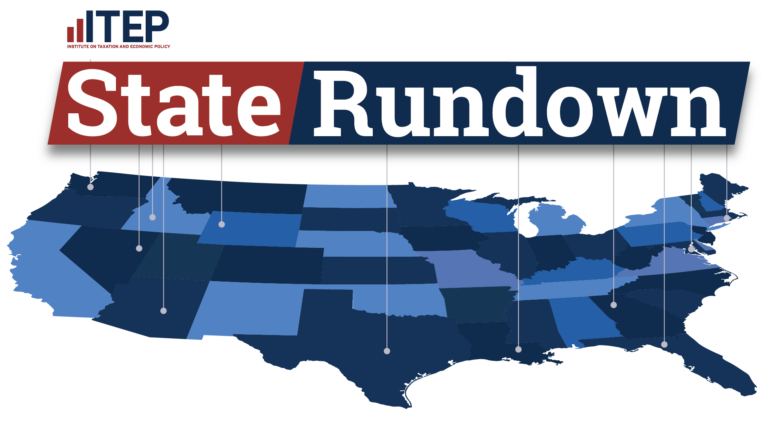
State Rundown 9/10: States Brace for (and in Some Cases Embrace) Ballots and Budgets
• By ITEP Staff
States across the country will consider a host of ballot measures that could reshape the fairness and adequacy of their states’ tax systems, while other states are receiving budget forecasts that could further shape upcoming policy debates.
Maryland Digital Advertising Ruling Shouldn’t Stop Other States from Considering Ad Taxes
• By Nick Johnson
Consumers are increasingly bombarded with advertisements based on our personal data. This explosion in targeted advertising is leading state policymakers to revisit the tax treatment of advertising, which has long been exempt from sales tax.
Senator Chris Van Hollen: Van Hollen, Pettersen Lead Lawmakers in Introducing Legislation to Bring Transparency to Corporate Abuse of Tax Havens, Job Offshoring
• By Matthew Gardner
U.S. Senator Chris Van Hollen and U.S. Representative Brittany Pettersen led their colleagues in reintroducing the Disclosure of Tax Havens and Offshoring Act, legislation to provide transparency around corporations’ use of tax havens and incentives to offshore jobs.

2026 Sessions in Review: States Fund Tax Credits by Preserving, Raising Revenue
• By Aidan Davis
In a year of cautious uncertainty around current and ongoing revenues, many state lawmakers strengthened their tax credits for families and children.
State-by-State Tax Expenditure Reports
• By ITEP Staff
Below is a list of tax expenditure reports published in the states.

A Growing Number of States Are Taxing the Sale of Advertising
• By Nick Johnson
ITEP’s report on taxing advertising identifies some reasons why states are curtailing longstanding sales tax exemptions for the ad sector.

States Can Raise Billions by Ending a Tax Giveaway to Big Tech
• By Nick Johnson
An advertising tax offers a way to raise significant money from a sector of the economy that has been getting a free ride for decades.
State Rundown 5/14: Fund Priorities or Increase Shortfalls?
• By ITEP Staff
As many legislative sessions end, lawmakers are revealing their priorities.

Taxing Advertising Would Modernize State Sales Tax Bases for the Information Age
• By Nick Johnson
Most states questionably exempt advertising from sales taxes. States that extend their sales taxes to advertising and/or enact an excise tax stand to raise billions in revenue while correcting a structural bias in their tax codes that implicitly subsidizes some of the most profitable corporations in human history.
State Rundown 4/8: Budget and Tax Packages Take Shape as Sine Die Approaches in Many States
• By ITEP Staff
State legislative sessions are wrapping up, and final tax and budget packages are making their way to governors’ desks.
State Tax Watch 2026
• By ITEP Staff
ITEP tracks tax discussions in legislatures across the country and uses our unique data capacity to analyze the revenue, distributional, and racial and ethnic impacts of many of these proposals. State Tax Watch offers the latest news and movement from each state.
State Rundown 4/1: No Fooling Around Anymore in Washington, But Cruel Pranks in South Carolina
• By ITEP Staff
In Washington, Gov. Bob Ferguson and lawmakers decided to stop fooling around with one of the nation’s most upside-down tax codes and finally brought to life a new millionaires’ tax, the first new income tax created in a state since 1991.
State Rundown 3/26: Sobering Revenue Projections Keep States on Their Toes
• By ITEP Staff
This week, troubling revenue projections are making headlines, with many lawmakers scrambling to determine how the tax changes at the federal level, plus price hikes driven by national policy decisions, will impact their states.
State Rundown 3/18: New Mexico Enacts Most Significant Corporate Tax Reform of the Year
• By ITEP Staff
As states lawmakers continue to weigh their linkages to the federal tax code in light of the recent federal tax law, New Mexico provides a blueprint for limiting multinational corporate tax avoidance.
State Rundown 3/12: Washington Lawmakers Pass Millionaires’ Tax, Expand Working Families Tax Credit
• By ITEP Staff
Washington is on its way to making history after the legislature approved the “millionaires’ tax,” a 9.9 percent tax on income over $1 million. The bill, which is expected to raise more than $3 billion a year, making significant investments in public education and childcare, will also expand the Working Families Tax Credit – the […]
Testimony: ITEP’s Miles Trinidad Urges Maryland Lawmakers to Decouple from Tax Breaks for Opportunity Zones and FDEII
• By Miles Trinidad
Chair, Vice Chair, and Members of the Committee, Thank you for the opportunity to submit testimony in support of House Bill 1080, which would decouple the state from federal tax breaks for Opportunity Zones (OZs) and Foreign-Derived Deduction Eligible Income (FDEII). My name is Miles Trinidad, and I am a state analyst with the Institute on Taxation and Economic Policy (ITEP), […]
Testimony: ITEP’s Miles Trinidad Urges Maryland Lawmakers to Decouple from Expanded 529 Education Savings Plans and Not Opt-In to New Private School Voucher Program
• By Miles Trinidad
This testimony was delivered to the Maryland House Ways and Means Committee on February 26, 2026 Chair, Vice Chair, and Members of the Committee, Thank you for the opportunity to submit testimony in support of House Bill 930, which would decouple Maryland’s tax code from recent federal expansions of 529 education savings plans as they related to private K-12 tuition, and would ensure […]
Testimony: ITEP’s Miles Trinidad Urges Maryland Lawmakers to Decouple from Increased SALT Cap
• By Miles Trinidad
This testimony was delivered to the Maryland House Ways and Means Committee on February 26, 2026 Chair, Vice Chair, and Members of the Committee, Thank you for the opportunity to submit testimony in support of House Bill 926, which would decouple Maryland from recent federal increases to the cap on state and local tax (SALT) deductions. My name is Miles Trinidad, […]
Testimony: ITEP’s Miles Trinidad Urges Maryland Lawmakers to Decouple from Bonus Depreciation and Business Interest Deductions
• By Miles Trinidad
This testimony was delivered to the Maryland House Ways and Means Committee on February 26, 2026 Chair, Vice Chair, and Members of the Committee, Thank you for the opportunity to submit testimony in support of House Bill 880, which would decouple Maryland from federal corporate tax changes on the expanded bonus depreciation and business interest deductions. My name is […]
Testimony: ITEP’s Miles Trinidad on Decoupling from the QSBS Exclusion Before the Maryland House Ways and Means Committee
• By Miles Trinidad
This testimony was delivered to the Maryland House Ways and Means Committee on February 26, 2026. Chair, Vice-Chair, and Members of the Committee, Thank you for the opportunity to provide testimony in support of House Bill 801. My name is Miles Trinidad, and I am an analyst at the Institute on Taxation and Economic Policy […]

What Did 2025 State Tax Changes Mean for Racial and Economic Equity?
• By Brakeyshia Samms
The results are a mixed bag, with some states enacting promising policies that will improve tax equity and others going in the opposite direction.
State Rundown 1/22: Cautious Tone Noticeable in Most Statehouses
• By ITEP Staff
Most states are adopting a very cautious approach so far this year as legislators begin their sessions and governors make their annual addresses, thanks to ongoing economic uncertainty and federal retrenchment.

Pennsylvania Just Gave Low-Income Workers a Tax Credit Boost. Now It’s Philadelphia’s Turn.
• By Kamolika Das
In the same way states are building upon federal tax credits, localities should consider building on state tax credits.
2025: The Year in Tax Policy
• By ITEP Staff
From Congressional discussions over the so-called "One Big Beautiful Bill Act" to debates on property taxes, ITEP kept busy this year analyzing tax proposals and showing Americans across the country how tax decisions affect them.

Institute on Taxation
and Economic Policy
ITEP is a non-profit, non-partisan tax policy organization. We conduct rigorous analyses of tax and economic proposals and provide data-driven recommendations to shape equitable and sustainable tax systems.
Subscribe to ITEP Emails
Tax research and policy news in your inbox.
Promote Fair Tax Policy
Your gift to ITEP promotes tax justice. With your help, we do research that supports taxing millionaires and billionaires, taxing big corporations and raising revenue for the things our people, our communities and our planet need.
Together, we can create a country with more economic justice, more racial justice, more climate justice… and more tax justice.