
New Hampshire
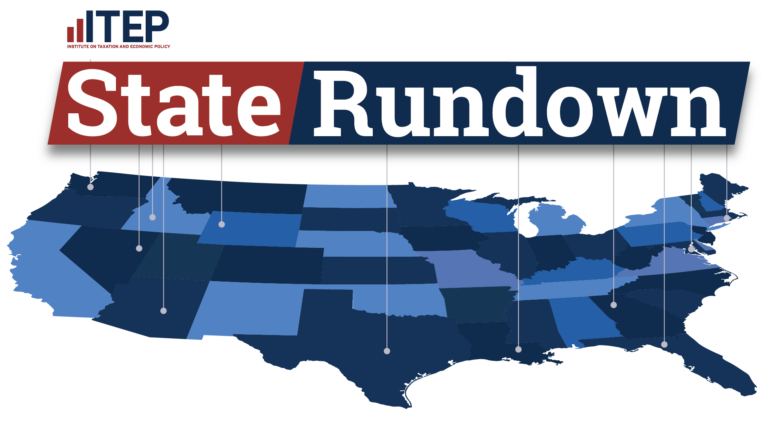
State Rundown 9/10: States Brace for (and in Some Cases Embrace) Ballots and Budgets
• By ITEP Staff
States across the country will consider a host of ballot measures that could reshape the fairness and adequacy of their states’ tax systems, while other states are receiving budget forecasts that could further shape upcoming policy debates.
State-by-State Tax Expenditure Reports
• By ITEP Staff
Below is a list of tax expenditure reports published in the states.
State Rundown 6/4: Fiscal Flowers and Weeds Bloom in June
• By ITEP Staff
A veritable superbloom of tax and budget policies occurred over these last few weeks, including both flowers worth admiring and weeds worth fighting back.
State Rundown 4/30: Aloha to Tax Cuts, Hawaiʻi Lawmakers Address Revenue Gap with High-End Tax Changes
• By ITEP Staff
This week Hawaiʻi lawmakers reached a compromise to balance the state budget and maintain tax cuts for most residents by, in part, raising rates on the richest Hawaiians. Other states are working to generate revenue from their wealthiest residents, too.
State Rundown 3/26: Sobering Revenue Projections Keep States on Their Toes
• By ITEP Staff
This week, troubling revenue projections are making headlines, with many lawmakers scrambling to determine how the tax changes at the federal level, plus price hikes driven by national policy decisions, will impact their states.
State Rundown 3/12: Washington Lawmakers Pass Millionaires’ Tax, Expand Working Families Tax Credit
• By ITEP Staff
Washington is on its way to making history after the legislature approved the “millionaires’ tax,” a 9.9 percent tax on income over $1 million. The bill, which is expected to raise more than $3 billion a year, making significant investments in public education and childcare, will also expand the Working Families Tax Credit – the […]
Education Week: How Do Schools Solve a Problem Like Property Taxes?
February 19, 2026
As tax season dawns, backlash to a nationwide surge in property-tax bills is spurring states to double down on proposals to diminish one of the main revenue sources for school districts. At least 10 states are pitching the end of one of schools’ chief revenue sources. Read more.
NCTI is an Important Part of the Federal Corporate Tax. States Should Adopt It Too.
• By Carl Davis
Including NCTI in state corporate tax law is an effective way to neutralize much of the tax avoidance that occurs when multinational companies artificially shift their profits into overseas tax havens.
State Rundown 2/11: This Valentine’s Day, Conscious Decoupling Is Our Love Language
• By ITEP Staff
While some may be excited for a romantic Valentine’s Day this weekend, many state lawmakers are breaking up and decoupling from recent federal tax changes that are poised to leave states with revenue shortfalls – much like a bad date who forgets their wallet and asks you to pick up the tab.

Institute on Taxation
and Economic Policy
ITEP is a non-profit, non-partisan tax policy organization. We conduct rigorous analyses of tax and economic proposals and provide data-driven recommendations to shape equitable and sustainable tax systems.
Subscribe to ITEP Emails
Tax research and policy news in your inbox.
Promote Fair Tax Policy
Your gift to ITEP promotes tax justice. With your help, we do research that supports taxing millionaires and billionaires, taxing big corporations and raising revenue for the things our people, our communities and our planet need.
Together, we can create a country with more economic justice, more racial justice, more climate justice… and more tax justice.