
Trump Tax Policies
After Two Rounds of Trump Tax Cuts, Corporate America Paid Less Than Ever in 2025
• By Matthew Gardner, Steve Wamhoff, Joe Hughes, Spandan Marasini
In 2025, 706 major American corporations collectively paid a federal income tax rate of just 10.4% on $1.88 trillion in U.S. profits. This is the lowest effective rate that ITEP has uncovered in over 40 years of analyzing corporate income taxes.
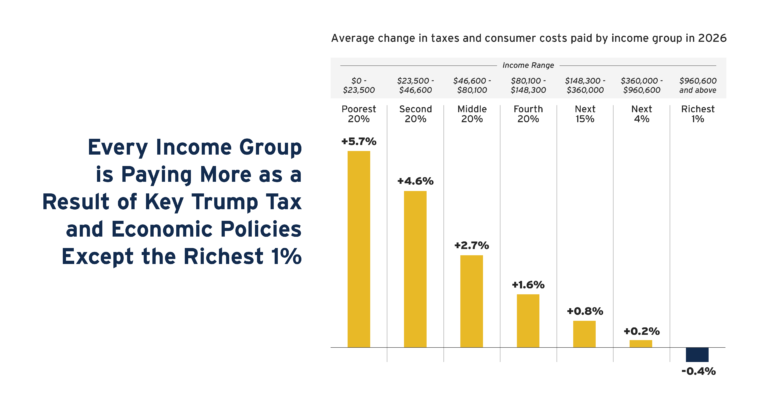
Impact of Key Trump Policies on Taxes and Costs: National and State Estimates
• By Steve Wamhoff
The major tax and economic policies of President Trump’s second term have increased taxes and household costs for most Americans except the richest 1%.

Big Tech Is Raking in Enormous Tax Breaks for AI Development
• By Matthew Gardner
OBBBA’s expensing provision is becoming especially lucrative for the companies building out AI infrastructure right now. There is no evidence whatsoever that tax breaks are necessary to encourage their construction.

TurboTax Maker Intuit Paid Zero Federal Income Tax in 2025
• By Joe Hughes
TurboTax maker Intuit reported nearly $6 billion in U.S. profits in 2025 and paid no federal income tax. Instead, the company received a refund, thanks in part to new tax breaks from OBBBA.

The Biggest Winners from Trump’s Tariff Refunds are Big Corporations
• By Matthew Gardner
The Trump administration has been forced to pay out over $100 billion from illegal tariffs, and the biggest winners from these tariff refunds have been big corporations.
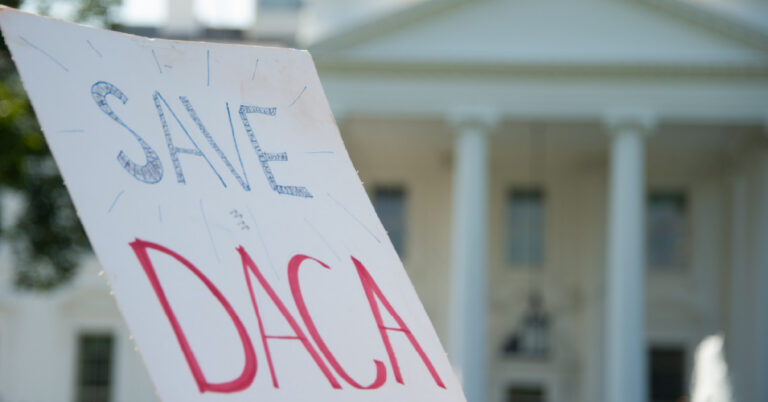
The Impact of Proposed New Tax Credit Restrictions for Immigrant Filers: An Updated Analysis of the DACA Recipient Population
• By Carl Davis, Erika Frankel, Emma Sifre
New Treasury Department public regulations would drastically reduce tax credit claims by DACA recipients and their families, among others. We find that 158,000 people in households with at least one DACA recipient will suffer financial harm, and that more than half of the impacted individuals are U.S. citizens.

The Trump Administration Slashed Taxes for H&R Block and Raised Costs for Tax Filers
• By Joe Hughes
Tax-prep giant H&R Block paid no federal taxes on its U.S. income in 2025. It also made a public disclosure, required by the European Union, characterizing one-third of its global profits as earned in Ireland, a low-tax country where the company offers no tax services and has only 15 employees.

Trump Weighs Another Giveaway to the Wealthy With Capital Gains Indexing Ahead of Midterms
• By Jon Whiten
Trump is once again weighing a proposal to index capital gains taxes to inflation as part of a set of policy promises ahead of the midterm elections. It would amount to a massive new tax break for wealthy investors.
Idaho Center for Fiscal Policy: How the One Big Beautiful Bill’s Tax Changes Impact Idaho Families
• By ITEP Staff
The One Big Beautiful Bill Act (OBBBA) made major changes to public programs and the federal tax code. It included about $4.5 trillion in tax cuts, with most of the benefits going to higher-income households. To help pay for those tax cuts, the law also reduced funding for health care and food assistance and shifted some federal costs onto the states.

Trump Says Exxon and Chevron Are Ripping Off Americans, But His Own Policies Are to Blame
• By Matthew Gardner
President Trump lashed out at ExxonMobil and Chevron for “making too much money." These companies are reporting enormous profits right now, partly the result of Trump’s war in Iran but also due to the corporate tax policies he's passed during his time in office.
Nevada Current: Lombardo says he’s powerless to address affordability
August 4, 2026
The state of Washington, which, like Nevada has no income tax, gave taxpayers a tax credit to help them get by.

Trump Administration Says Shining Light on Corporate Tax Avoidance is ‘Very Dangerous’
• By Matthew Gardner
Administration officials appear far more concerned about the public knowing too much about how U.S. corporations shift their income into offshore tax havens.

A Year Later, Many States Have Decided Not to Double Down on Trump’s Tax Cuts
• By Nick Johnson
Nearly one year after the Trump tax law was signed, many of the 42 states with income taxes are declining to incorporate significant parts of the new law into their own tax codes.
The Impact of Proposed New Tax Credit Restrictions for Immigrant Filers: An Analysis of the DACA Recipient Population
• By Carl Davis, Erika Frankel, Emma Sifre
We find that 337,000 people in households with at least one DACA recipient will suffer financial harm, and that nearly two-thirds (66 percent) of the impacted individuals are U.S. citizens.

The Impact of Proposed New Tax Credit Restrictions for Immigrant Filers: An Analysis of State EITCs
• By Neva Butkus
Immigrants and their families in as many as 30 states are at risk of seeing their state tax credits such as the Earned Income Tax Credit (EITC) and Child Tax Credit (CTC) reduced unless state lawmakers act.

Amidst Soaring Tech Earnings, Meta and Qualcomm Disclose a $13.7 Billion Tax Gift from Trump Administration
• By Matthew Gardner
Both companies acknowledge that they will save billions because of the Trump administration's weakening of the Corporate Alternative Minimum Tax (CAMT). Meta and Qualcomm are just two of the corporations that will benefit from this corporate tax cut provided unilaterally by the Trump's Treasury Department.

While States Debate New Trump Tax Changes, Equity Must Be at the Core
• By Brakeyshia Samms
States continue to debate whether and how to link their state tax codes to the 2025 federal tax law. This is not just a technical debate.
At Least 88 Profitable U.S. Corporations Paid Zero Federal Income Tax in 2025
• By Matthew Gardner, Spandan Marasini
At least 88 of the largest corporations in America paid $0 in federal income tax for 2025. Corporate tax avoidance has increased at least in part due to President Trump's “One Big Beautiful Bill Act” and the 2017 Tax Cuts and Jobs Act.
Despite Any Refunds, You’re Probably Paying More Taxes Under Trump While Richest Pay Less
• By Steve Wamhoff
For a large majority of Americans, the tax increase resulting from Trump’s tariffs, along with the ending of the health care tax credits, more than offsets any tax cuts provided by OBBBA. The exception is the richest 5 percent of Americans, for whom the net result is a tax cut on average.
Year One of Trump-Republican Tax Policy: The Consequences
• By Michael Ettlinger
President Trump has dramatically increased tariff taxes, enacted large tax cuts that primarily benefit the wealthy and corporations, dramatically curtailed IRS enforcement, and issued legally problematic regulations.

We Must Focus on Black Women to Reduce Inequity in the Tax Code
• By Brakeyshia Samms, Francine Lipman
As nice as it is to celebrate Women’s History Month, if we want a brighter future for women, we need to forge public policies that reduce inequity and include all of us.

How Four Big Pro-Trump Tech Companies Avoided Taxes
• By Steve Wamhoff, Matthew Gardner
The leaders of Alphabet, Amazon, Meta, and Tesla publicly supported Trump to ensure the most favorable corporate tax policies possible. And Trump delivered for them, both in his 2017 tax bill and again in 2025 with the so-called One Big Beautiful Bill Act.

The Child Tax Credit Leaves Out Millions of Children in 2026. There Are Better Alternatives.
• By Joe Hughes
The 2025 Trump tax law slightly increased the Child Tax Credit in a way that benefits virtually none of the children who most need help.

Nvidia’s Tax Bill Shows It’s Not Just Zero-Tax Corporations That Hurt Our Budget Deficit the Most
• By Matthew Gardner
Semiconductor giant Nvidia reported avoiding $6.8 billion in federal income taxes last year. The company did this in a year when it reported greater earnings growth than almost any corporation in history, with U.S. pretax income coming in at an astonishing $123 billion.

Yum! Brands’ Recipe for Tax Avoidance: Trump Tax Cuts with a Dash of Malta
• By Matthew Gardner
the fast-food multinational that owns KFC, Taco Bell, and Pizza Hut reported this week that it made $1 billion of pretax profits in the U.S. last year—and didn’t pay a dime of federal income taxes on those profits.

Institute on Taxation
and Economic Policy
ITEP is a non-profit, non-partisan tax policy organization. We conduct rigorous analyses of tax and economic proposals and provide data-driven recommendations to shape equitable and sustainable tax systems.
Subscribe to ITEP Emails
Tax research and policy news in your inbox.
Promote Fair Tax Policy
Your gift to ITEP promotes tax justice. With your help, we do research that supports taxing millionaires and billionaires, taxing big corporations and raising revenue for the things our people, our communities and our planet need.
Together, we can create a country with more economic justice, more racial justice, more climate justice… and more tax justice.