In the past year, Congress and the courts have meekly sat aside as the Trump administration has bulldozed through the Constitution’s separation of powers. Senate Democrats now have an official revenue estimate of one of Trump’s insults to the constitution: a regulatory change that unilaterally cut taxes for some very large corporations at a cost of $10 billion over a decade.
Unfortunately, Senate Republicans this week rejected a Democratic resolution that would have sensibly reversed that regulation. Of course, even if lawmakers of both parties had sufficient backbone to retake the legislative power that the executive branch has usurped, President Trump would veto such a bill.
But as a matter of educating lawmakers and the public, the recently-rejected measure was a success given that tax legislation (such as this resolution) up for a vote in Congress usually gets an official budget score from Congress’ revenue estimators at the Joint Committee on Taxation. And in this case, that reveals that this unilateral corporate tax cut from the Trump administration will cost $10 billion over a decade unless it is reversed.
At a technical level, the legislation up for a vote was Senate Joint Resolution 95, sponsored by Sen. Ron Wyden, which would have relied on the Congressional Review Act to repeal the aggressive anti-tax regulation promulgated by the Trump administration last year.
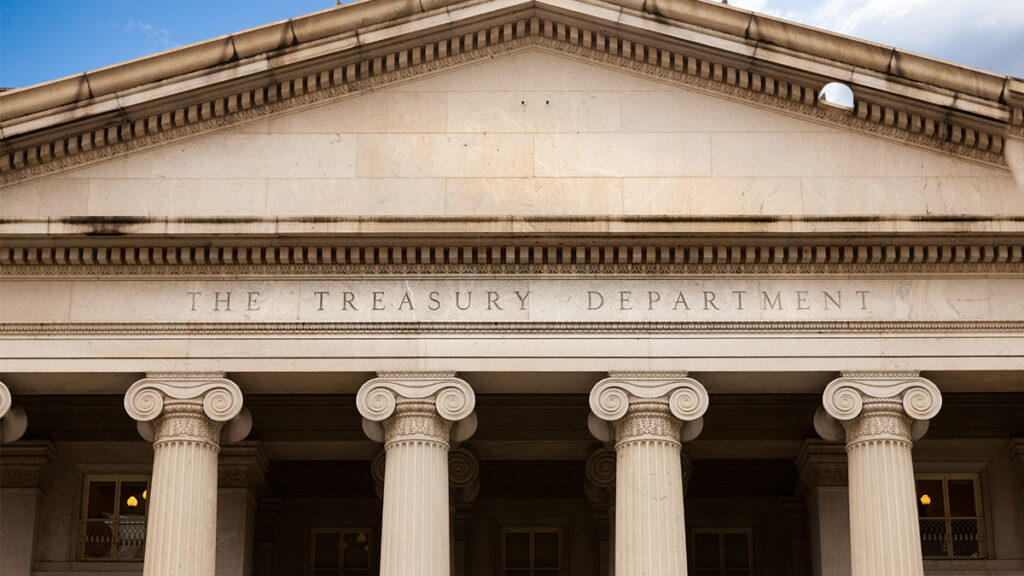
The Congressional Review Act (CRA), enacted in 1996, gives Congress an expedited path to repeal administrative regulations that lawmakers believe are in defiance of legislative intent. In this case, the regulation at issue is Notice 2025-28, which the Treasury Department drafted last year to weaken the Corporate Alternative Minimum Tax (CAMT).
The CAMT, enacted as part of the Inflation Reduction Act under President Biden, is an important tax backstop designed to ensure that the largest and most profitable corporations pay at least some federal income tax. But Republicans in Congress and the Trump administration, as part of their full-court assault on the corporate tax, have sought to weaken the CAMT both through legislated tax cuts and aggressive regulation since the beginning of 2025.
Treasury regulations are supposed to implement the laws as Congress designed them. But an estimate from the Joint Committee on Taxation (JCT) shows clearly that Notice 2025-28 is doing something else entirely. JCT finds that the proposed regulation would, if fully implemented, slash the federal income tax by an average of $1 billion a year over the next decade.
The proposed regulations would give large corporations organized as partnerships a variety of options for choosing how to measure and report their income for CAMT purposes. Sen. Wyden sensibly describes these regs as giving large corporations a “choose your own tax rate’ adventure” that could give these corporations enough latitude to entirely avoid the CAMT.
Properly done, tax regulations should implement the laws as written. Even conservative tax experts are beginning to admit that the administration “has clearly been enacting unlegislated tax cuts” as one recently put it.
The Senate’s failure to ratify Wyden’s resolution may be only the opening salvo for members of Congress who want to retake the power given them under the Constitution to make tax law. The regulation in question is not the first, and surely not the last, attempt by President Trump to unilaterally cut corporate taxes.