Update: Gov. Bob Ferguson signed this bill into law on March 30, 2026. You can see our press release about that here.
Washington is on its way to making history after the legislature approved the “millionaires’ tax,” a 9.9 percent tax on income over $1 million. The bill, which makes significant investments in public education and child care, will also expand the Working Families Tax Credit – the state’s EITC – to reach an additional 460,000 households.
Not since 1932, when voters endorsed an initiative to enact a state income tax only to see it overturned by the state Supreme Court a year later, has the Evergreen State come so close to bringing more balance to its tax system.
Washington’s tax structure is woefully unequal, with its lack of an income tax helping to earn its place as the second most regressive state and local tax system in the country. While lawmakers have made progress in recent years by creating and later enhancing their Capital Gains Excise Tax, families in the bottom 20 percent still pay an effective tax rate over three times what those in the top 1 percent pay.
Figure 1
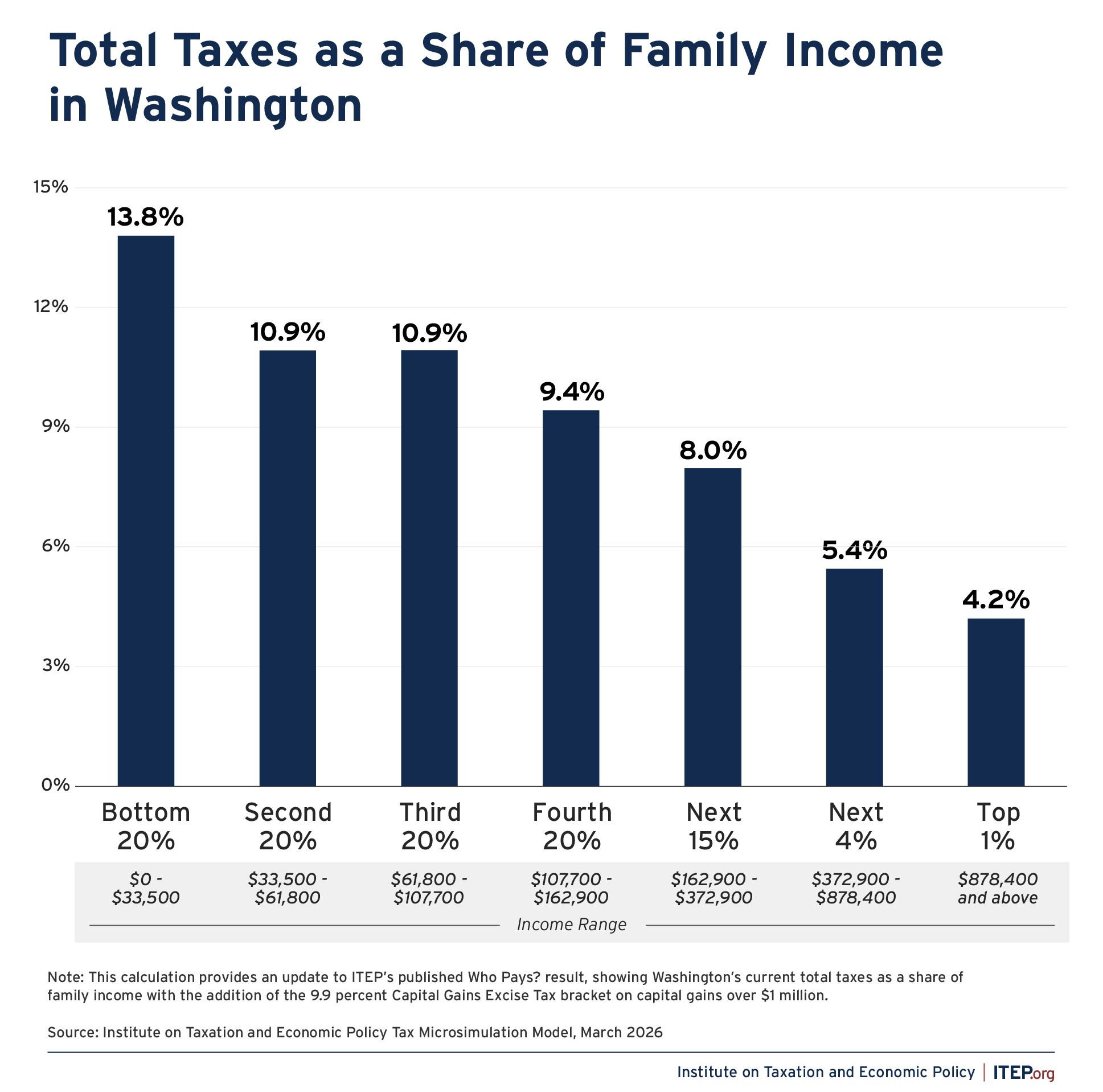
Washington’s millionaires’ tax is an important step toward making the state’s tax system more equitable. The state joins a growing list of others like Connecticut, Maryland, Massachusetts, Minnesota, and Rhode Island that have recently taxed, or are considering taxing, high-income households to help responsibly support state budgets. And this has happened as state-level tax policy faces an epidemic of inequity, as roughly 40 states tax high-income families at rates lower than everyone else.
Figure 2
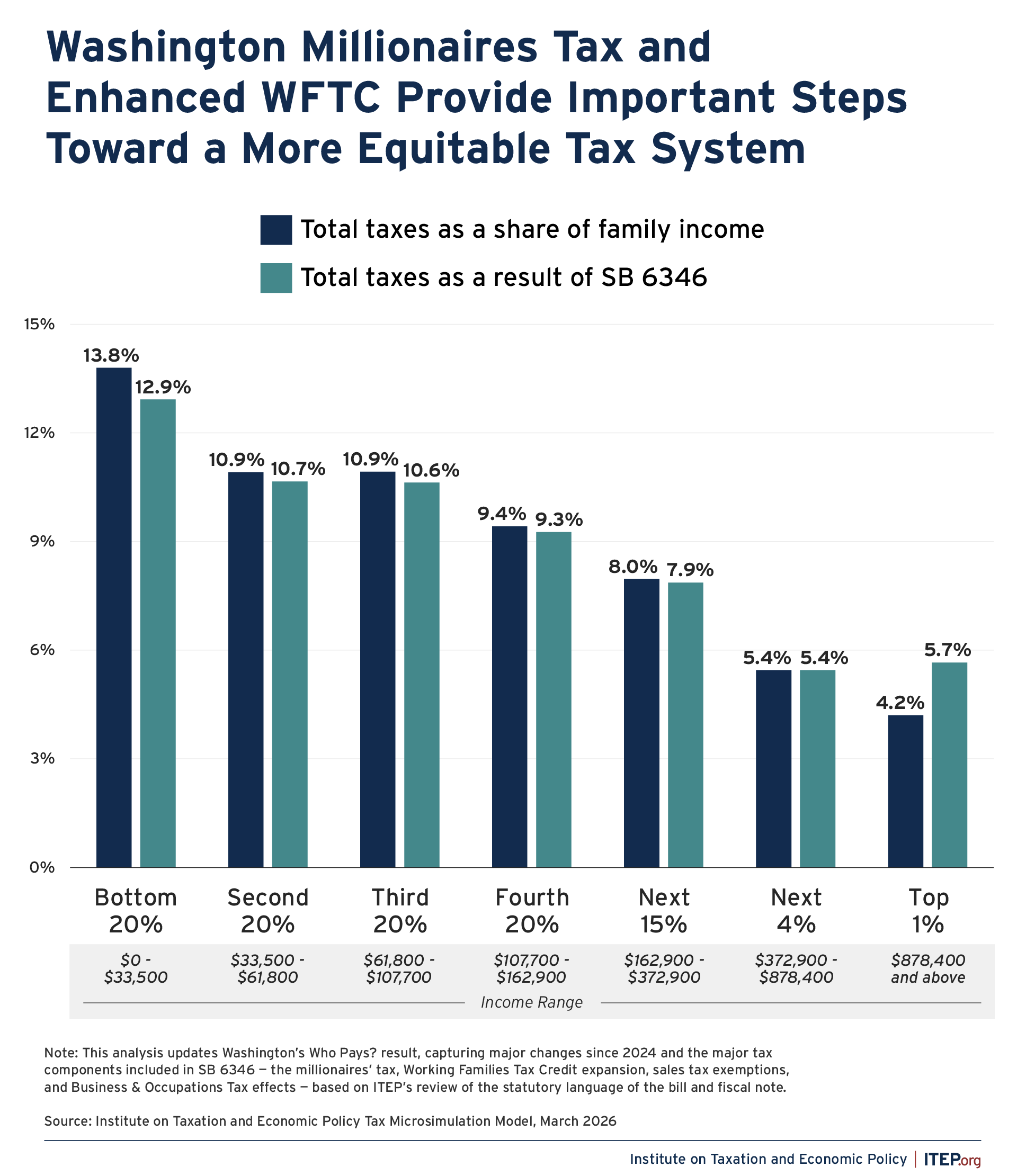
The new tax is projected to raise up to $3 billion in 2029 after it goes into effect in 2028. Not only will this injection of revenue fund vital services, but it will also provide much-needed support for low- and middle-income families at a time when federal lawmakers have made far-reaching cuts to programs like SNAP and Medicaid. It will also help balance out the effects of the new Trump tax law on the wealthiest Washingtonians, who will, on average, receive an annual tax cut of more than $90,000.
Meanwhile, changes to the Working Families Tax Credit will boost economic security for lower-paid Washingtonians. By making the credit available to young workers without children in the home and working seniors living on lower incomes, and by increasing income eligibility thresholds, Washington is prioritizing investing in households that are more economically vulnerable.
Washington lawmakers are leading the way by responsibly raising revenue from those receiving the biggest gains at the federal level. Investing in children, education, and working families will build robust communities and make Washington a place where everyone can thrive.