
24 posts
Audio: ITEP’s Carl Davis Talks About the Tax Contributions of Utah’s Undocumented Immigrants
July 31, 2024
A new study describes states that the tax contributions of undocumented immigrants equate to almost $100 billion, both federally and statewide. Read more or listen here.
States Newsroom: Study Says Undocumented Immigrants Paid Almost $100 Billion in Taxes
July 31, 2024
A new study shows that undocumented immigrants paid nearly $100 billion in federal, state and local tax revenue in 2022 while many are shut out of the programs their taxes fund. The findings run counter to anti-immigrant rhetoric that undocumented immigrants are “destroying” social programs. Read more.
Video: ITEP’s Marco Guzman on the Tax Contribution of Maine’s Undocumented Immigrants
July 31, 2024
A new national study is shedding light on the economic contributions made by undocumented immigrants in Maine and throughout the United States, WMTW-TV in Maine reports. Watch the clip or read the story here.
Immigration Research Initiative: People Who Are Undocumented: Occupations, Taxes Paid, and Long-Term Economic Benefits
• By ITEP Staff
As a July 2024 report from the nonpartisan Institute on Taxation and Economic Policy (ITEP) shows, people who are undocumented paid $97 billion in taxes in 2022. A total of $34 billion comes from payroll taxes to cover programs that exclude people who are undocumented from getting benefits: $25.6 billion paid to Social Security, $6.4 billion to Medicare, and, through contributions of their employers, $1.8 billion to unemployment insurance (which is a joint federal and state…
McClatchy DC: Undocumented Immigrants in California Are Paying Billions in Taxes. Here’s How Much.
July 30, 2024
Amid pledges for mass deportations of undocumented immigrants by presidential candidate Donald Trump, a new study has highlighted the increasingly positive economic effects of this community. The report from the Institute on Taxation and Economic Policy, a Washington-based progressive research group, found undocumented immigrants nationwide paid an estimated $96.7 billion in taxes in 2022. About $37.3 billion was spent on state and local taxes, and the rest went to federal taxes.
Bloomberg: Undocumented Immigrants in US Pay Nearly $100 Billion in Taxes
July 30, 2024
Undocumented immigrants paid almost $100 billion of taxes, underscoring the importance of border policies on the country’s tax collections, according to a new report. Read more.
Study: Undocumented Immigrants Contribute Nearly $100 Billion in Taxes a Year
• By ITEP Staff
Contact: Jon Whiten (jon@itep.org) Immigration policies have taken center stage in public debates this year, but much of the conversation has been driven by emotion, not data. A new in-depth study from the Institute on Taxation and Economic Policy aims to help change that by quantifying how much undocumented immigrants pay in taxes – both […]

Tax Payments by Undocumented Immigrants
• By ITEP Staff
Undocumented immigrants paid $96.7 billion in federal, state, and local taxes in 2022. Providing access to work authorization for undocumented immigrants would increase their tax contributions both because their wages would rise and because their rates of tax compliance would increase.
Which States Improved Child Tax Credits and EITCs in 2024?
• By Neva Butkus
Four states expanded or boosted refundable tax credits for children and families, and the District of Columbia is poised to create a new Child Tax Credit. These actions — in Colorado, Illinois, New York, Utah, and D.C. — continue the recent trend of improving the well-being of children and families with refundable tax credits.
State Rundown 7/25: Summertime Hits Different in Different States
• By ITEP Staff
State lawmakers will have a lot to discuss when they compare notes on how they spent their summer vacations this year...
USA Today: America’s Billionaires Are Worth a Record $6T. Where Does That Leave the Rest of Us?
July 19, 2024
America’s billionaires are now collectively worth a record $6 trillion. Their wealth has more than doubled since the passage of the landmark Tax Cuts and Jobs Act in 2017. Is that good news, or bad? It depends on whom you ask. Read more.

Five Tax Takeaways from 2024 State Legislative Sessions
• By Aidan Davis
Major tax cuts were largely rejected this year, but states continue to chip away at income taxes. And while property tax cuts were a hot topic across the country, many states failed to deliver effective solutions to affordability issues.
Improving Refundable Tax Credits by Making Them Immigrant-Inclusive
• By Emma Sifre, Marco Guzman
Undocumented immigrants who work and pay taxes but don't have a valid Social Security number for either themselves or their children are excluded from federal EITC and CTC benefits. Fortunately, several states have stepped in to ensure undocumented immigrants are not left behind by the gaps in the federal EITC and CTC. State lawmakers should continue to ensure that immigrants who are otherwise eligible for these tax credits receive them.
Quartz: ‘Trump Trade’ Is Back in Focus
July 16, 2024
The world’s financial markets are growing increasingly open to the likelihood that former President Donald Trump will make his way to a second term in the White House. All it took was outperforming President Joe Biden on a debate stage and surviving an assassination attempt.

Corporate Tax Breaks Contribute to Income and Racial Inequality and Shift Resources to Foreign Investors
• By Emma Sifre, Steve Wamhoff
Corporate tax cuts and corporate tax avoidance worsen income and racial inequality in our country. Most of the benefits flow to foreign investors and the richest 20% of Americans.
Route 50: States, Cities Consider ‘Mansion Taxes’ to Fund Affordable Housing
July 15, 2024
States and cities have been throwing darts at the wall, trying to find dedicated funding to tackle affordable housing needs. Nationwide, tens of millions of families are struggling amid a housing shortage with rent and housing costs. Home prices are up about 60% over the past decade, adjusted for inflation. And about a quarter of renters—some 12 million households—spend more than half their income on housing, which is far above the recommended 30%. To support affordable…
Nonprofit Quarterly: Can Taxes Reduce Inequality? What a Study of State and Local Taxes Tells Us
July 11, 2024
Who pays? Along with its companion question of “who benefits,” “who pays” has long been a central concern of both politics and economics. Earlier this year, the Institute on Taxation and Economic Policy (ITEP) published Who Pays: A Distributional Analysis of the Tax Systems in All 50 States, its seventh study on the topic since 1996 and its first since 2018.
State Rundown 7/11: Mansion Taxes in the Spotlight
• By ITEP Staff
While Massachusetts legislators recently dropped a real estate transfer tax from their major housing bill, the District of Columbia council sent a budget to the mayor that includes a mansion tax that would increase the tax rate on properties valued over $2.5 million. Meanwhile, lawmakers in New Jersey and South Carolina continue to, respectively, raise and reduce needed revenues.
The 19th News: Republicans Want to Kill the Dept. of Ed and Privatize Education. Billionaires Are Helping Them.
July 10, 2024
In the fall, the Department of Education will mark 45 years since its inception, but that anniversary could be its last if Donald Trump gets his way. The federal agency is one of several he’s vowed to slash if reelected president.
Education Week: A State Considers a Future in Which Schools Can’t Rely on Property Taxes
July 10, 2024
What would a world without property taxes look like? In every state, revenue from property taxes is one of the biggest sources of K-12 school funding. But that could change soon as efforts ramp up in a handful of states to abandon property taxes altogether, or at least as a funding source for schools.
Connecticut Mirror: Could CT Fight Homelessness With a ‘Mansion Tax’? Yes, Report Says
July 3, 2024
State government could raise as much as $180 million annually to combat homelessness or address other social needs by boosting its tax on the sale of high-value houses, according to a recent report from two Washington fiscal think tanks.

The Volcker Alliance: Benefit or Burden
• By ITEP Staff
The issue paper addresses how US states hand out massive tax breaks every year to advance policy goals, such as aiding low-income families, spurring business investment and job creation, or mirroring the federal tax code. Known broadly as tax expenditures, these exemptions, credits, abatements, and other measures reduce state revenues by an estimated $1 trillion a year, almost three times their 2021 total state expenditures on education. Such tax expenditures, which often suffer from lax…
The Globalist: Will American Monetocracy Ever Come to an End?
July 3, 2024
It used to be that the United States prided itself on being a meritocracy. No more. It is increasingly a country with a cult of money and rule by moneyed elites. Not so much an oligarchy as a monetocracy.
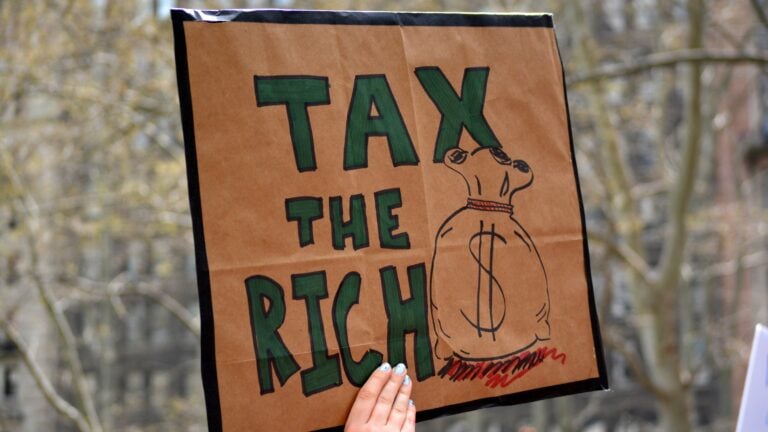
Tax the Wealthy and Reject Austerity for a More Just and Thriving Democracy
• By Amy Hanauer
Two of the last five presidents won office over the objection of the majority of the people; California, with 65 times more people, has the same voting power in the U.S Senate as Wyoming; and the U.S. Supreme Court just permitted South Carolina lawmakers to dilute Black votes in drawing districts. These obvious flaws undermine our claim to be a strong democracy. One less appreciated but similarly undemocratic trend is our extreme inequality that supercharges the power…

Institute on Taxation
and Economic Policy
ITEP is a non-profit, non-partisan tax policy organization. We conduct rigorous analyses of tax and economic proposals and provide data-driven recommendations to shape equitable and sustainable tax systems.
Subscribe to ITEP Emails
Tax research and policy news in your inbox.
Promote Fair Tax Policy
Your gift to ITEP promotes tax justice. With your help, we do research that supports taxing millionaires and billionaires, taxing big corporations and raising revenue for the things our people, our communities and our planet need.
Together, we can create a country with more economic justice, more racial justice, more climate justice… and more tax justice.