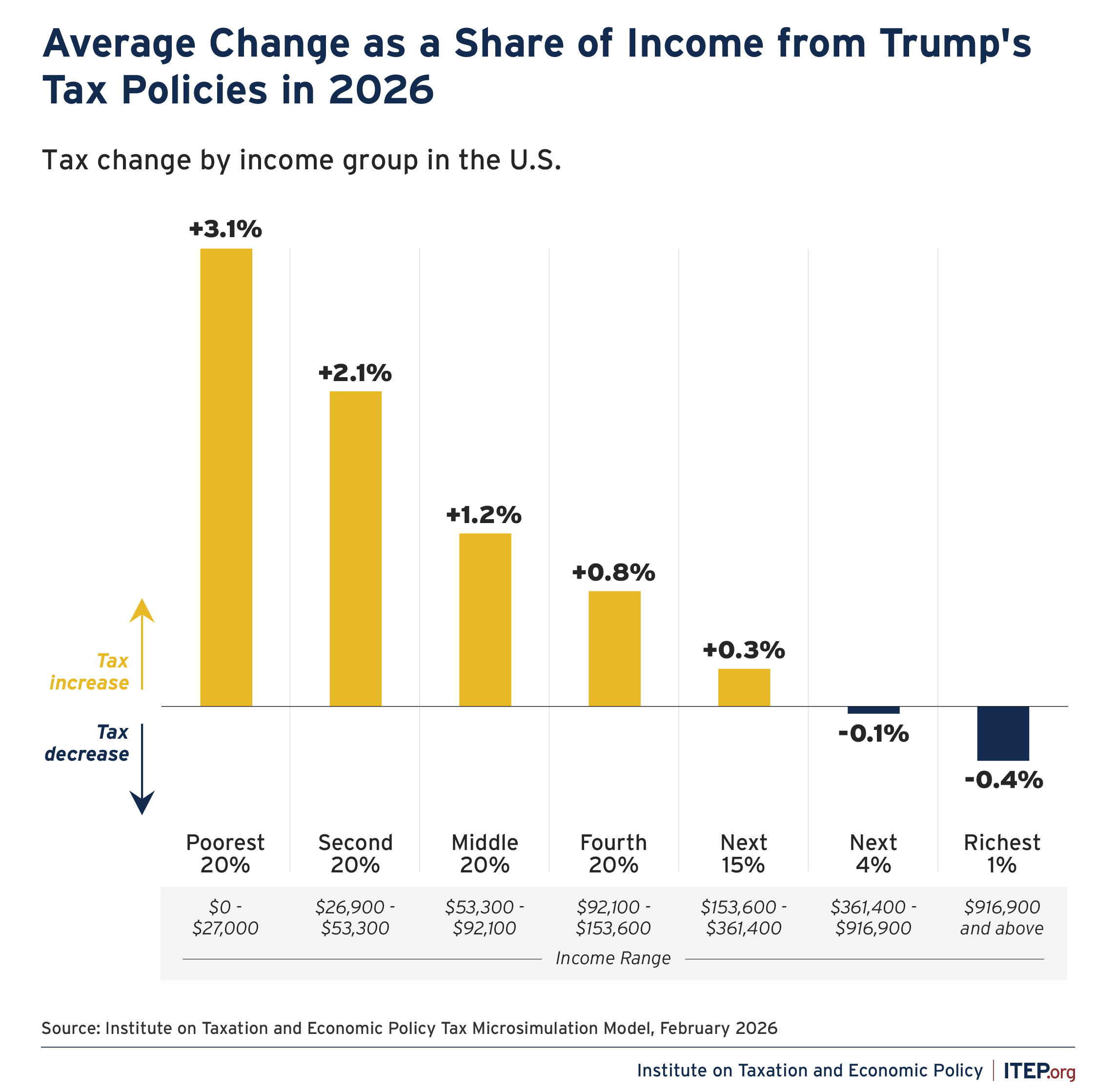
President Trump has raised taxes on most Americans in ways that more than offset the tax cuts he has signed into law. The net effect this year of all his tax policies is to increase taxes on the average American in all income groups aside from the richest 5 percent.
During this year’s filing season he has been trying to focus attention on the tax cuts he has signed into law, which affect income tax returns and refunds for many people, to distract Americans from the tax increases, which are less visible but more significant for most households.
Figure 1
In February, he told his followers on social media:
“Tax Refunds this year, because of ‘THE GREAT BIG BEAUTIFUL BILL,’ are substantially greater than ever before… In some cases, estimates are that over 20% will be returned to the Taxpayer. So, when you get your Tax Refund, think about what a wonderful President you have.”
The tax cuts signed into law by Trump include several provisions that were enacted as part of the One Big Beautiful Bill Act (OBBBA). Trump and OBBBA’s drafters in Congress decided to make these provisions take effect retroactively so that many Americans will notice their impact in the tax refunds they receive this year for their 2025 tax returns.
If taxpayers pay attention only to their personal income tax payments and refunds, many may think that they are paying less than they did before Trump returned to the White House.
But Trump has raised taxes in ways that are more significant while being less visible.
Figure 2
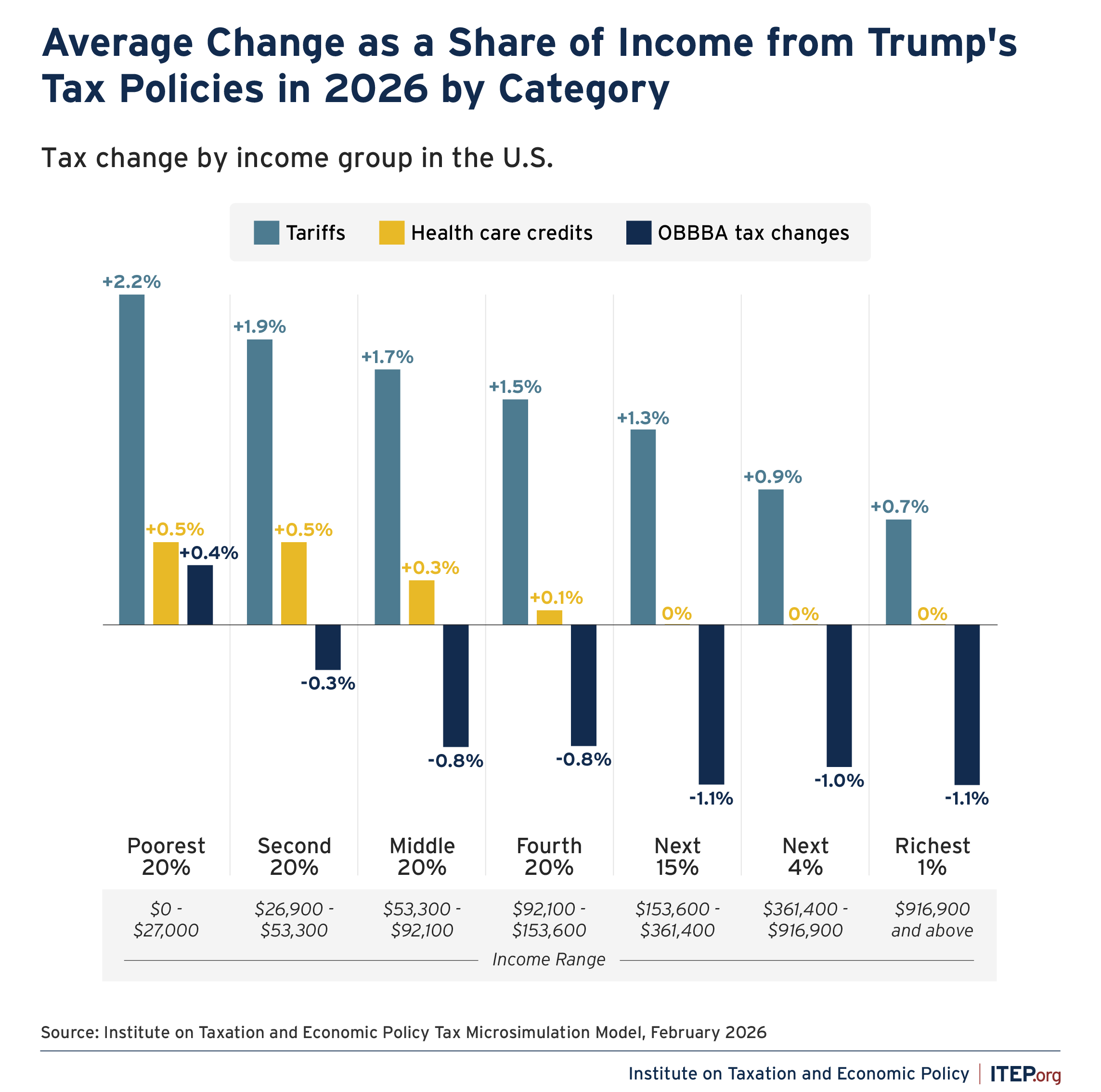
Most importantly, the tariffs he has imposed are taxes on foreign goods, which mainstream economists agree are mostly passed down to consumers as higher prices.
The effects of the tariffs (whether thought of as a tax increase on consumers or an increase in their cost of living) are more significant than the recently enacted personal income tax cuts for most Americans, as shown in the figure above.
Tariffs are a real cost to Americans, but Trump seems to be hoping that they are less noticeable to voters because their impacts are not added up on a form each year as is the case with the personal income tax.
Another significant tax increase under President Trump is one that actually does affect personal income tax returns: the termination of the Expanded Premium Tax Credit (EPTC), which helped many Americans obtain health insurance.
The President, along with OBBBA’s drafters in Congress, made a choice to not extend the EPTC past 2025 despite extending other tax cuts as part of OBBBA. As a result of the EPTC’s expiration, millions of working people face higher taxes and an estimated 4 million will go uninsured. The resulting tax increase is mostly borne by the bottom 60 percent of Americans, as illustrated in the figure above.
For a large majority of Americans, the tax increase resulting from Trump’s tariffs, along with the ending of the health care tax credits, more than offsets any tax cuts provided by OBBBA. The exception is the richest 5 percent of Americans, particularly the richest 1 percent, for whom the net result is a tax cut on average.
For more information, including state-by-state estimates of impacts of Trump’s tax policies, see ITEP’s more detailed report.