
OBBBA
ITEP analysis of the One Big Beautiful Bill Act, also known as OBBBA, OBBA or the Trump tax law. This archive collects research, commentary and data on how the 2025 federal tax and spending law affects working families, low-income households, wealthy taxpayers, corporations, state revenues, Medicaid, SNAP, the Child Tax Credit, the SALT deduction, clean energy tax credits and the federal budget.
Follow ITEP’s latest analysis of who benefits from OBBBA, who pays, and how the law reshapes the tax code. Articles in this archive examine the law’s distributional impact, its effects on inequality and public services, and the choices facing state lawmakers as federal tax changes flow through state tax systems.
Impact of Key Trump Policies on Taxes and Costs: National and State Estimates
October 8, 2026 • By Steve Wamhoff
The major tax and economic policies of President Trump’s second term have increased taxes and household costs for most Americans except the richest 1%.
New Census Data Show Importance of Refundable Tax Credits and Need for Improvements
September 16, 2026 • By Joe Hughes

The Child Tax Credit actually moved fewer children out of poverty in 2025 than it did in 2024 prior to Congress passing the so-called "One Big Beautiful Bill Act" (OBBBA).
A Year Later, Many States Have Decided Not to Double Down on Trump’s Tax Cuts
June 25, 2026 • By Nick Johnson

Nearly one year after the Trump tax law was signed, many of the 42 states with income taxes are declining to incorporate significant parts of the new law into their own tax codes.
The Impact of Proposed New Tax Credit Restrictions for Immigrant Filers: An Analysis of State EITCs
June 16, 2026 • By Neva Butkus

Immigrants and their families in as many as 30 states are at risk of seeing their state tax credits such as the Earned Income Tax Credit (EITC) and Child Tax Credit (CTC) reduced unless state lawmakers act.

If Juneteenth is to mean anything beyond symbolism, it must also be a call to confront the policies that continue to shape racial inequities today. One of the most powerful drivers of that inequity is our tax system.
Corporate tax reforms should be the backbone of any progressive tax agenda and should be counted on to remain if other changes to our tax code are later thwarted by any of the three branches of government.

The next time Congress is serious about making the wealthiest pay their fair share in federal taxes, they will need to make three key changes to the federal corporate income tax so that it applies effectively to all the businesses that generate their income.
Amidst Soaring Tech Earnings, Meta and Qualcomm Disclose a $13.7 Billion Tax Gift from Trump Administration
April 30, 2026 • By Matthew Gardner

Both companies acknowledge that they will save billions because of the Trump administration's weakening of the Corporate Alternative Minimum Tax (CAMT). Meta and Qualcomm are just two of the corporations that will benefit from this corporate tax cut provided unilaterally by the Trump's Treasury Department.
While States Debate New Trump Tax Changes, Equity Must Be at the Core
April 20, 2026 • By Brakeyshia Samms

States continue to debate whether and how to link their state tax codes to the 2025 federal tax law. This is not just a technical debate.
At Least 88 Profitable U.S. Corporations Paid Zero Federal Income Tax in 2025
April 14, 2026 • By Matthew Gardner, Spandan Marasini
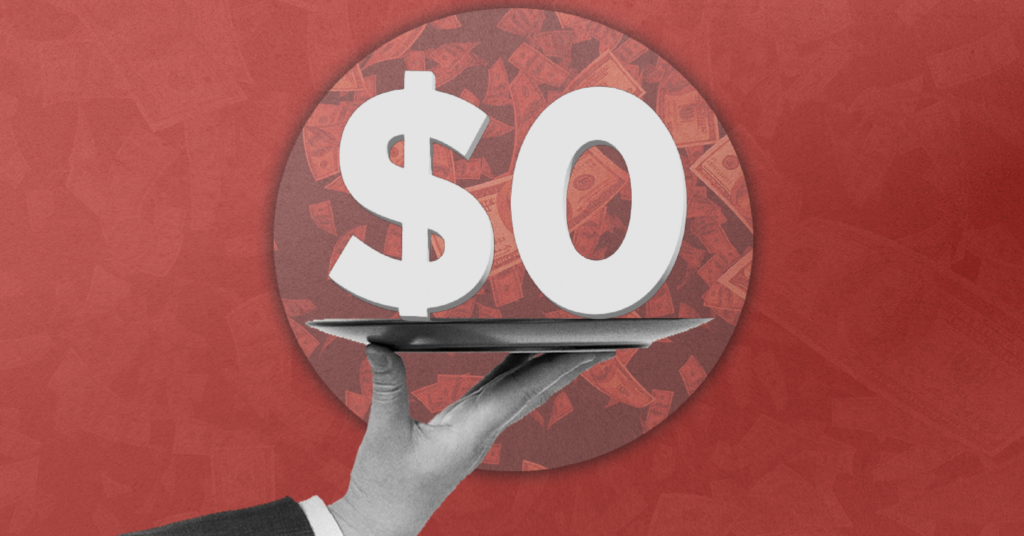
At least 88 of the largest corporations in America paid $0 in federal income tax for 2025. Corporate tax avoidance has increased at least in part due to President Trump's “One Big Beautiful Bill Act” and the 2017 Tax Cuts and Jobs Act.
Despite Any Refunds, You’re Probably Paying More Taxes Under Trump While Richest Pay Less
April 8, 2026 • By Steve Wamhoff
For a large majority of Americans, the tax increase resulting from Trump’s tariffs, along with the ending of the health care tax credits, more than offsets any tax cuts provided by OBBBA. The exception is the richest 5 percent of Americans, for whom the net result is a tax cut on average.
Year One of Trump-Republican Tax Policy: The Consequences
April 6, 2026 • By Michael Ettlinger
President Trump has dramatically increased tariff taxes, enacted large tax cuts that primarily benefit the wealthy and corporations, dramatically curtailed IRS enforcement, and issued legally problematic regulations.
We Must Focus on Black Women to Reduce Inequity in the Tax Code
March 19, 2026 • By Brakeyshia Samms, Francine Lipman

As nice as it is to celebrate Women’s History Month, if we want a brighter future for women, we need to forge public policies that reduce inequity and include all of us.
How Four Big Pro-Trump Tech Companies Avoided Taxes
March 17, 2026 • By Steve Wamhoff, Matthew Gardner

The leaders of Alphabet, Amazon, Meta, and Tesla publicly supported Trump to ensure the most favorable corporate tax policies possible. And Trump delivered for them, both in his 2017 tax bill and again in 2025 with the so-called One Big Beautiful Bill Act.
The Child Tax Credit Leaves Out Millions of Children in 2026. There Are Better Alternatives.
March 10, 2026 • By Joe Hughes

The 2025 Trump tax law slightly increased the Child Tax Credit in a way that benefits virtually none of the children who most need help.
Governor Should Put New Mexico’s Tax Interests First
March 6, 2026 • By Amy Hanauer, Amber Wallin

By decoupling from three misguided federal corporate income tax cuts under the One Big Beautiful Bill, plus taking steps to curb unfair corporate tax avoidance, SB 151 would raise and safeguard more than $120 million annually.
Nvidia’s Tax Bill Shows It’s Not Just Zero-Tax Corporations That Hurt Our Budget Deficit the Most
February 26, 2026 • By Matthew Gardner

Semiconductor giant Nvidia reported avoiding $6.8 billion in federal income taxes last year. The company did this in a year when it reported greater earnings growth than almost any corporation in history, with U.S. pretax income coming in at an astonishing $123 billion.
Yum! Brands’ Recipe for Tax Avoidance: Trump Tax Cuts with a Dash of Malta
February 24, 2026 • By Matthew Gardner

the fast-food multinational that owns KFC, Taco Bell, and Pizza Hut reported this week that it made $1 billion of pretax profits in the U.S. last year—and didn’t pay a dime of federal income taxes on those profits.
State-by-State Estimates of the First Year of Trump’s Tax Policies: All But the Richest Americans Face Higher Taxes
February 23, 2026 • By Steve Wamhoff, Michael Ettlinger
As a result of the tax policies approved by President Trump and the Republican majority in Congress, all but the richest Americans are paying higher taxes on average in 2026 than they did last year.
Despite a Supreme Court Victory for Middle-Class Americans, Trump’s Disastrous Tariff Policies Are Not Over
February 20, 2026 • By Steve Wamhoff
Today the Supreme Court made the right decision in striking down most of the tariffs President Trump has put into motion during his second term.
Live Nation Entertainment Says Trump Tax Law Drove its 2025 Federal Income Tax Bill to Zero
February 20, 2026 • By Matthew Gardner

The company paid zero federal income tax in 2025 despite reporting $145 million of U.S. profits.
Trump Administration Provides Biggest Illegal Tax Cuts Yet for Billion-Dollar Corporations
February 20, 2026 • By Amy Hanauer
The Treasury Department is unilaterally cutting corporate taxes with regulations that ignore the statute they claim to implement, disregarding the separation of powers between the branches of government that has defined how America works for more than two centuries.
Palantir Pays Zero Federal Income Tax Despite Explosive Growth, Largely Due to Trump Tax Law
February 17, 2026 • By Matthew Gardner

Palantir reported $1.5 billion of U.S. income but paid exactly zero federal income tax in 2025. Despite explosive growth, tax breaks from the Trump tax law helped Palantir avoid paying even a dime of federal income tax on its earnings.
NCTI is an Important Part of the Federal Corporate Tax. States Should Adopt It Too.
February 12, 2026 • By Carl Davis
Including NCTI in state corporate tax law is an effective way to neutralize much of the tax avoidance that occurs when multinational companies artificially shift their profits into overseas tax havens.
State Rundown 2/11: This Valentine’s Day, Conscious Decoupling Is Our Love Language
February 11, 2026 • By ITEP Staff
While some may be excited for a romantic Valentine’s Day this weekend, many state lawmakers are breaking up and decoupling from recent federal tax changes that are poised to leave states with revenue shortfalls – much like a bad date who forgets their wallet and asks you to pick up the tab.

Institute on Taxation
and Economic Policy
ITEP is a non-profit, non-partisan tax policy organization. We conduct rigorous analyses of tax and economic proposals and provide data-driven recommendations to shape equitable and sustainable tax systems.
Subscribe to ITEP Emails
Tax research and policy news in your inbox.
Promote Fair Tax Policy
Your gift to ITEP promotes tax justice. With your help, we do research that supports taxing millionaires and billionaires, taxing big corporations and raising revenue for the things our people, our communities and our planet need.
Together, we can create a country with more economic justice, more racial justice, more climate justice… and more tax justice.