In 2025, Amazon received $17.5 billion in tax subsidies by paying just 1.4 percent of its U.S. income in federal corporate income taxes rather than the official 21 percent that is the ostensible tax rate for corporations. This $17.5 billion in tax savings for Amazon was about 10 percent of the $180 billion in federal income tax subsidies for all publicly traded corporations in 2025 that provide enough information in their annual financial reports to make such a determination.
The only U.S. corporation that has disclosed bigger federal corporate tax subsidies last year by this measure was Alphabet, owner of Google, with $18 billion.
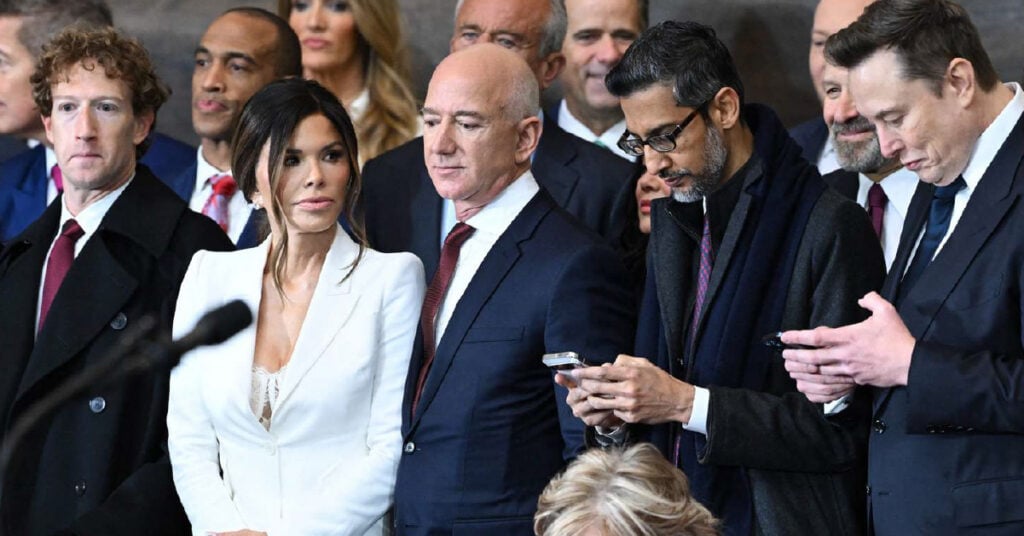
Amazon’s huge share of corporate tax subsidies is noteworthy because Jeff Bezos told CNBC this week that “we have way too much corporate welfare, way too much corporate subsidies…way too much influence in politics from business” and that we should “go back and figure out what is… happening there.”
In fact, it is fairly obvious what is “happening there,” and that companies like Amazon and Alphabet are a huge part of the explanation. ITEP has explained in detail how Amazon and other tech companies first saved billions from Trump’s reduction in the official corporate tax rate from 35 percent to 21 percent and then saved billions more from other breaks that Trump signed into law, including expensing for equipment and even retroactive expensing to reward companies for research they supposedly carried out in the past.
In the same interview, Bezos said that Trump is now “a more mature, more disciplined version of himself than he was in his first term,” which strongly suggests that Amazon’s founder is engineering his public pronouncements to produce whatever political outcome is most beneficial for him.
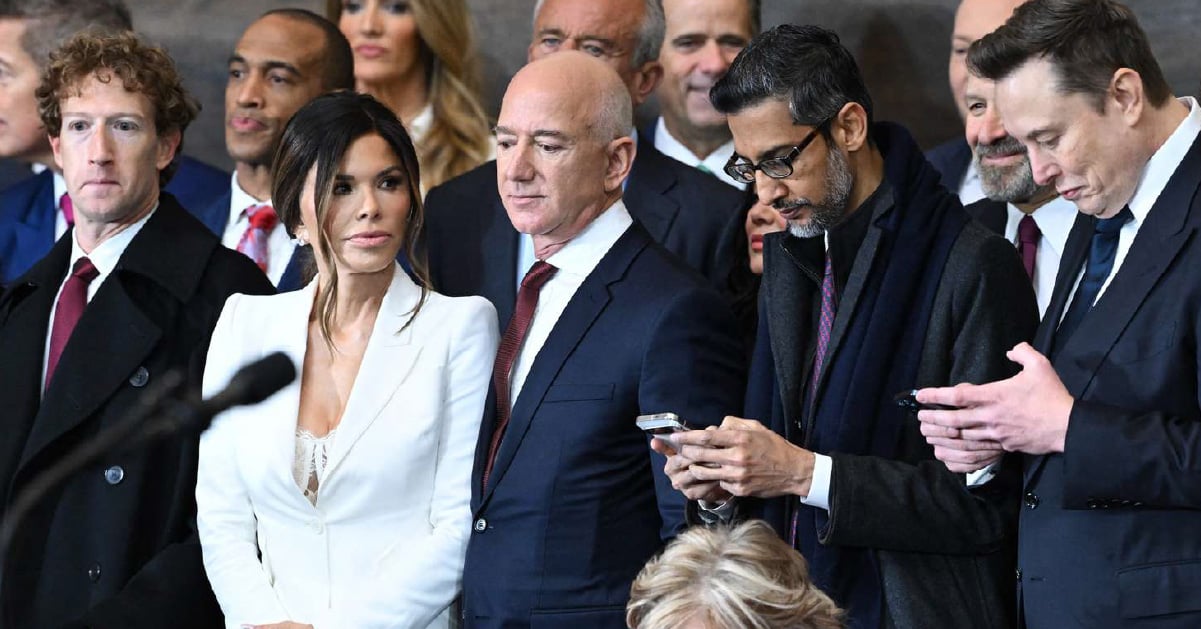
Bezos said plenty of other things about taxes during that interview that were either flat-out wrong or misleading. For example, he complained that the “top 1 percent of taxpayers pay 40 percent of all the tax revenue,” which is not true. ITEP found that when we account for all federal, state, and local taxes that people pay, the richest one percent pay a share of total taxes (24 percent) that is only a little higher than their share of the nation’s income (20 percent).
Even these numbers leave out most of the income that truly flows to people like Bezos, who famously receives most of his income as “unrealized” capital gains that are ignored by the tax code. A few years back, ProPublica found that Jeff Bezos effectively paid about 1 percent of his income in federal tax when accounting for these unrealized capital gains.
Even if Bezos was thinking of only federal taxes and ignoring state and local taxes, he is still wrong. The Congressional Budget Office (CBO) uses different assumptions and methods than ITEP, but CBO estimated that in 2022 the richest 1 percent paid about 27 percent of total federal taxes. That’s higher than the 20 percent of national income that CBO estimates they receive, but it’s not dramatically higher.
It appears that Bezos was referring to only one type of tax — the federal personal income tax — when he stated the richest 1 percent pay 40 percent of it. But earlier in the same interview, he used a different standard when talking about the taxes paid by the middle-class, stating that a person who makes $75,000 pays $12,000 in federal taxes, which is impossibly large if he is only talking about federal personal income taxes and not payroll taxes that fund Social Security and Medicare.
Aside from the various technical points where Bezos erred or misled, his bigger problem is how he dismisses any notion that people like him should pay more in taxes.
He talks about various problems like underperforming schools, overly restrictive zoning laws, and slow bureaucracies as things that will not necessarily be fixed by taxing people like him, and he holds them up as reasons he should not pay more.
This is absurd. The fact that Jeff Bezos paying more in taxes would not solve every single problem is not a reason for Jeff Bezos to keep paying low taxes.
Jeff Bezos founded and still runs one of the most powerful entities on the globe. It is difficult to imagine that he believes what he is saying right now about taxes.