
California

Undocumented immigrants paid $96.7 billion in federal, state, and local taxes in 2022. Providing access to work authorization for undocumented immigrants would increase their tax contributions both because their wages would rise and because their rates of tax compliance would increase.
State Rundown 7/25: Summertime Hits Different in Different States
July 25, 2024 • By ITEP Staff
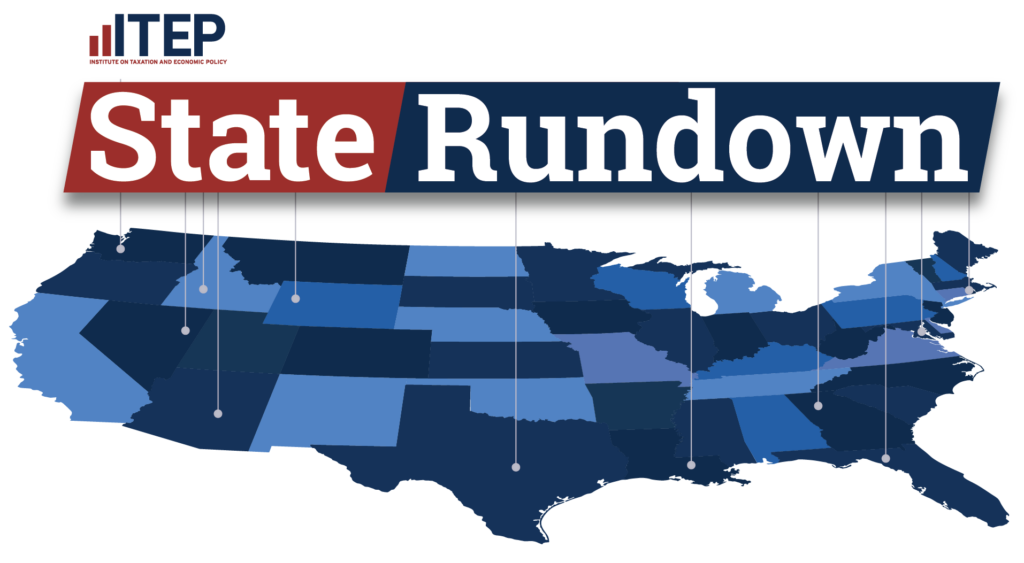
State lawmakers will have a lot to discuss when they compare notes on how they spent their summer vacations this year...
Improving Refundable Tax Credits by Making Them Immigrant-Inclusive
July 17, 2024 • By Emma Sifre, Marco Guzman
Undocumented immigrants who work and pay taxes but don't have a valid Social Security number for either themselves or their children are excluded from federal EITC and CTC benefits. Fortunately, several states have stepped in to ensure undocumented immigrants are not left behind by the gaps in the federal EITC and CTC. State lawmakers should continue to ensure that immigrants who are otherwise eligible for these tax credits receive them.
Tax the Wealthy and Reject Austerity for a More Just and Thriving Democracy
July 1, 2024 • By Amy Hanauer
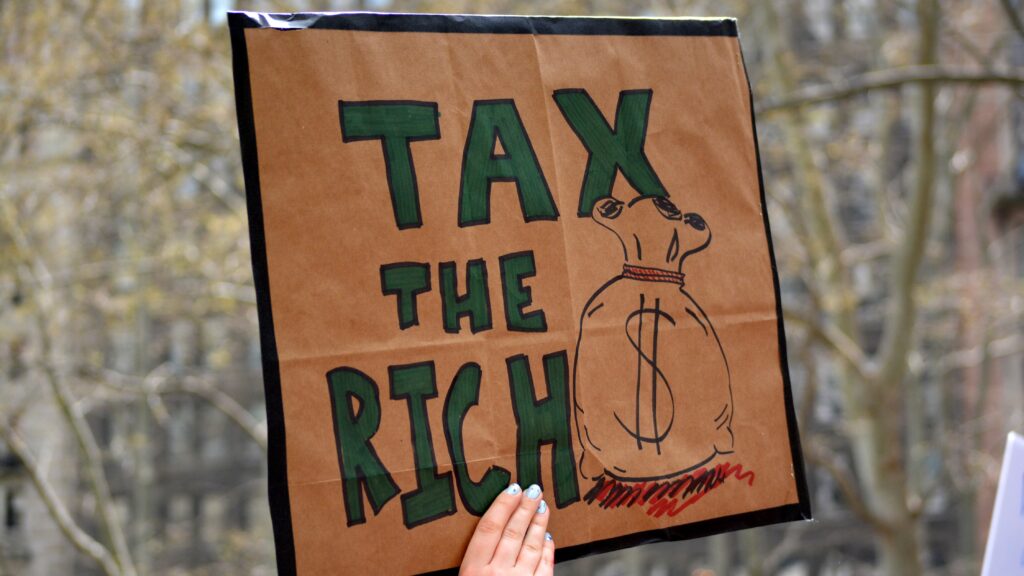
Two of the last five presidents won office over the objection of the majority of the people; California, with 65 times more people, has the same voting power in the U.S Senate as Wyoming; and the U.S. Supreme Court just permitted South Carolina lawmakers to dilute Black votes in drawing districts. These obvious flaws undermine our claim to be a strong democracy. One less appreciated but similarly undemocratic trend is our extreme inequality that supercharges the power and wealth of corporations and the uber-rich, weakens what the public sector can deliver, and often feeds on itself.
New York Times: Newsom Uses Annual State Address to Confront Republicans Across the Nation
June 27, 2024
Gov. Gavin Newsom of California, whose liberal state has been hammered by Republicans for months as a hellscape of homelessness, crime and high taxes, used his annual State of the State address on Tuesday to slam “conservatives and delusional California bashers” and defend “the California way of life.”
State Rundown 6/26: Summer Special Sessions Are In, Anti-tax Ballot Initiatives Out
June 26, 2024 • By ITEP Staff
Many families are heading out on summer vacations, but legislators across the country are heading back to statehouses for special sessions...
Sacramento Bee: Governor Gavin Newsom Claims California Is Not a ‘High-Tax State.’ Is He Correct?
June 26, 2024
“Here’s the truth Republicans never tell you: California is not a high tax state,” Gov. Gavin Newsom declared Tuesday in his taped State of the State address.
States Should Enact, Expand Mansion Taxes to Advance Fairness and Shared Prosperity
June 26, 2024 • By Carl Davis, Erika Frankel

The report was produced in partnership with the Center on Budget and Policy Priorities and co-authored by CBPP’s Deputy Director of State Policy Research Samantha Waxman.[1] Click here to use our State Mansion Tax Estimator A historically large share of the nation’s wealth is concentrated in the hands of a few, a reality glaring in […]
This week, it was the best of times or, in some cases, the worst of times for tax policy in two different states...
Legislative sessions across the country are still very much in for summer, which means more pencils, more budgets, and more tax plans...
States Should Opt Into IRS Direct File as the Program is Made Permanent
May 30, 2024 • By Jon Whiten
While there is plenty of room to expand Direct File at the federal level, states can take matters into their own hands and bring this benefit to their residents by opting into the program.
Yahoo Finance: Jeff Bezos Spent $237 Million On Florida Mansions — Billionaires Flock To ‘Upside Down’ Tax Haven Where Rich Pay Less Than Poor
May 20, 2024
The Sunshine State has become a magnet for billionaires seeking tax relief. Among the latest to join the trend is Amazon founder Jeff Bezos, who has recently expanded his real estate holdings in Miami’s exclusive Billionaire Bunker area. Bezos’ acquisitions include three properties, bringing his total investment in the neighborhood to $237 million.
Forbes: California Is Not Actually a High-Tax State According To New Study
May 17, 2024
Depending on where you fall on the income scale, California may not actually be that high tax of a state. For many in the middle class and below, California may let you keep more of your hard-earned income than many other states, according to a new study, “Who Pays” from the Institute on Taxation and Economic Policy (ITEP). While California has the highest marginal tax rate in the nation at 13.3%, only some households pay this rate on their income. That doesn’t stop so-called low-tax states like Texas and Florida from blasting the tax policy of the Golden State.

There are a variety of factors that affect teacher pay. But one often overlooked factor is progressive tax policies that allow states to raise and provide the funding educators and their students deserve.
Uncertainty abounds in state tax debates lately...
This week, special sessions with major tax implications are in the air...
Iowa Flat Tax Shows Why Such Policies Are a Problem Everywhere
May 9, 2024 • By Eli Byerly-Duke

As Iowa lawmakers change the state’s graduated personal income tax to a single flat rate, they are designing a state tax code where the rich will pay a lower rate overall than families with modest means.
USA Today: Are California’s Taxes Really That High? Not If You’re of ‘Modest Means,’ Report Says
May 1, 2024
Whether it be that all Californians surf, live by the beach or only vote blue, there are a lot of assumptions about residents of the Golden State. Yet a new report is challenging one of the most widely held belief – that Californians shoulder the nation’s highest tax burdens. Read more.
Sacramento Bee: Is California Really a High-Tax State? New Findings Question That Claim
April 25, 2024
Maybe California is not such a high tax state after all — at least for lower income families. “For families of modest means, California is not a high tax state,” says a new study from the Institute on Taxation and Economic Policy, a liberal Washington research group. Read more.
NewsRadio WFLA: Poorest Floridians Taxed at Higher Rate than Richest Californians
April 24, 2024
Florida Policy Institute (FPI) and the Institute for Taxation and Economic Policy (ITEP) released a study today that found California’s tax system is fairer than Florida’s.
Tax History Matters: A Q&A with Professor Andrew Kahrl, Author of ‘The Black Tax’
April 24, 2024 • By Brakeyshia Samms

In his new book, The Black Tax: 150 Years of Theft, Exploitation, and Dispossession in America, Professor Andrew Kahrl walks readers through the history of the property tax system and its structural defects that have led to widespread discrimination against Black Americans.
State Rundown 4/17: Tax Cut Proposals and the Consequences of Bad Tax Cuts
April 17, 2024 • By ITEP Staff
Happy (belated) Tax Day!
Key Findings For families of modest means, California is not a high-tax state. California taxes are close to the national average for families in the bottom 80 percent of the income scale. For the bottom 40 percent of families, California taxes are lower than states like Florida and Texas. The highest earners usually pay higher […]
The Atlantic: The Myth of the Mobile Millionaire
April 15, 2024
In 2010, as California was moving forward with plans to raise taxes sharply on million-dollar earners, opponents issued dire warnings that the hike would drive away entrepreneurs and cripple the state economy. “There’s nothing more portable than a millionaire and his money,” warned the ranking Republican on the state Senate’s budget committee. The tax hike passed anyway—and California’s share of the nation’s million-dollar earners actually grew, reaching 18 percent in 2021. (Californians make up just less than 12 percent of the overall population.) And yet, when California recently considered a proposal to impose a wealth tax on mega-rich households, even some Democrats echoed the same…
Fairness Matters: A Chart Book on Who Pays State and Local Taxes
April 11, 2024 • By ITEP Staff
State and local tax codes can do a lot to reduce inequality. But they add to the nation’s growing income inequality problem when they capture a greater share of income from low- or moderate-income taxpayers. These regressive tax codes also result in higher tax rates on communities of color, further worsening racial income and wealth divides.
