
California
State Rundown 10/12: Tax Policy Debates Don’t Just Happen in the Statehouse
October 12, 2023 • By ITEP Staff
It may be the off-season for state legislatures, but tax policy changes could soon emerge from the ballot box or the courts. Advocates in Arkansas want voters to decide the future of taxing diapers and feminine hygiene products, and supporters of public education in Nebraska are working to make sure voters have a say on the state’s school choice tax credit. Meanwhile, cannabis firms in Missouri are suing the state over cities and counties stacking sales tax on marijuana.
Kyrsten Sinema’s Latest Fight to Protect Tax Breaks for Private Equity
September 15, 2023 • By Steve Wamhoff

Sen. Sinema's bill to stop a seemingly arcane business tax increase that was enacted as part of the 2017 Trump tax law would be hugely beneficial to the private equity industry.
The U.S. Census Bureau released its annual assessment of poverty in America this week...
State Tax Credits Have Transformative Power to Improve Economic Security
September 12, 2023 • By Aidan Davis

The latest analysis from the U.S. Census Bureau provides an important reminder of the compelling link between public investments and families’ economic well-being. Policy decisions can drastically reduce poverty and improve family economic stability for low- and middle-income families alike, as today’s data release shows.
States are Boosting Economic Security with Child Tax Credits in 2023
September 12, 2023 • By Aidan Davis, Neva Butkus

Fourteen states now provide Child Tax Credits to reduce poverty, boost economic security, and invest in children. This year alone, lawmakers in three states created new Child Tax Credits while lawmakers in seven states expanded existing credits. To maximize impact, lawmakers should consider making their credits fully refundable, not including an earnings requirement, setting a maximum amount per child instead of per household, setting state-specific phase-out ranges that target low- and middle-income families, indexing to inflation, and offering the option of advanced payments.
Boosting Incomes, Improving Equity: State Earned Income Tax Credits in 2023
September 12, 2023 • By Aidan Davis, Neva Butkus

Nearly two-thirds of states (31 plus the District of Columbia and Puerto Rico) have an Earned Income Tax Credit, an effective tool that boosts low-paid workers’ incomes and helps lower-income families achieve greater economic security. This year, 12 states expanded and improved EITCs.
While a number of state tax laws are debated, approved, and vetoed in any given year, many go unnoticed...
States and Localities are Making Progress on Curbing Unjust Fees and Fines
July 18, 2023 • By Andrew Boardman

Too many state and local governments tap legal-system collections, rather than adequate tax systems, to fund shared essentials like public safety and education. But a growing number of states and localities are choosing a better approach. Momentum for change has continued to build in 2023, with no fewer than seven states enacting substantial improvements.

We can make modest reforms to better tax those who are taking a larger share of our wealth and income in order to reinforce a major pillar of our promise to Americans.
State Rundown 6/28: Movement on Refundable Credits Remains Hot Topic in 2023
June 28, 2023 • By ITEP Staff
The trend of state lawmakers taking big steps on important tax credits like the Child Tax Credit and Earned Income Tax Credit is coming out in full force this week...
The Sacramento Bee: Fact Check: Does California’s Middle Class Pay Less in Taxes Than in Other States?
June 21, 2023
“The American people don’t know this. We have the highest tax rate for the 1%, but middle-class families actually paid less than the majority of states in America in California,” Gov. Gavin Newsom told Fox News host Sean Hannity last week. The governor was half-right. Read more.
Los Angeles Times: As IRS Funding Shrinks, California’s Wealthiest Can Breathe a Bit Easier
June 9, 2023
California millionaires and billionaires who were set to face the full auditing firepower of a revamped Internal Revenue Service can breathe a bit easier, thanks to congressional Republicans. Read more.
Across the country, the marathon budget season has held pace, with a steady stream of bills continuing to cross the finish line...
Short-sighted tax cuts continue to make their way to Governors’ desks this week. In Florida, Gov. DeSantis signed a $1.3 billion tax cut package with $550 million of the tax cuts from sales tax holidays, alone. The Nebraska legislature also sent $6.4 billion in tax cuts to Gov. Pillen’s desk which includes an enormous personal income tax cut that will reduce taxes on the top 1 percent by tens of thousands of dollars.
Washington Post: How California’s Wild Weather Brought the Debt-Ceiling ‘X Date’ Closer
May 22, 2023
As President Biden and lawmakers scramble to strike a debt ceiling deal before the government runs out of money, each day counts — to the tune of about $17 billion. That’s how much the U.S. Treasury spends daily, on average, to keep the government functioning. Read more.
Extending Temporary Provisions of the 2017 Trump Tax Law: National and State-by-State Estimates
May 4, 2023 • By Joe Hughes, Matthew Gardner, Steve Wamhoff
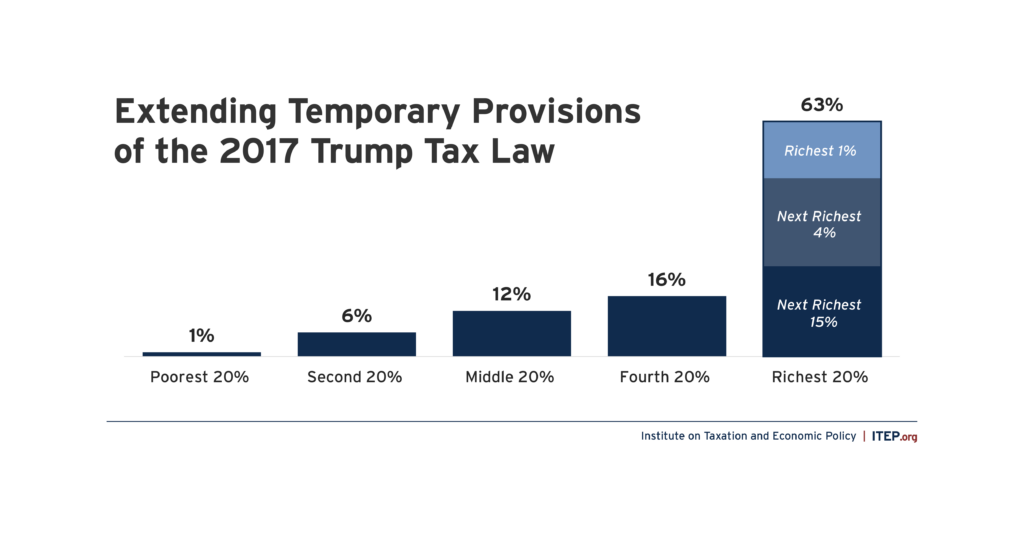
The push by Congressional Republicans to make the provisions of the 2017 Tax Cuts and Jobs Act permanent would cost nearly $300 billion in the first year and deliver the bulk of the tax benefits to the wealthiest Americans.
While the conversations on the debt ceiling heat up in the nation's capital, debates on state tax policy also continue to unfold in capitol buildings across the nation...
Testimony of ITEP’s Amy Hanauer Before the D.C. Tax Revision Commission
May 3, 2023
The written testimony of ITEP Executive Director Amy Hanauer is below the embedded video of the hearing. Dear D.C. Tax Revision Commission, Thank you for inviting me to testify last week on the research of my colleagues at the Institute on Taxation and Economic Policy. We’re grateful to have our perspective included and as a […]
Over the past week Washington state saw a major victory for tax fairness after the state Supreme Court held the state’s capital gains tax—passed in 2021—constitutional...
From dedicating new taxes to fund climate action and public health to vacancy and “mansion” taxes, many local leaders are already exploring ways to make their tax systems more progressive and sustainable. ITEP is committed to helping local leaders and advocates build on this work by advancing knowledge about local tax solutions.
Contact: Jon Whiten ([email protected]) For decades, the Institute on Taxation and Economic Policy (ITEP) has played a role in shaping equitable and sustainable tax systems at the federal and state level. From the beginning, we have collaborated with advocates, policymakers, and others to advance policies that can foster expansive, inclusionary, and racially equitable tax systems. […]
State Rundown 3/9: The Whirlwind 2023 Legislative Session Continues
March 9, 2023 • By ITEP Staff
State 2023 legislative sessions are proving to be eventful ones. With many states eager to make use of their budget surpluses, major tax changes are still being proposed and others signed into law. Michigan residents will soon see an increase to their state Earned Income Tax Credit (from 6 percent to 30 percent) after the […]

The word “tax” appears 97 times and counting in one recent summary of governors’ addresses to state legislators so far this year. The policy visions that governors are bringing, however, vary enormously. While there's good reason to worry about tax cuts for wealthy families and the flattening or elimination of income taxes, there are at least five great tax ideas coming directly out of governors’ offices this year.

Lawmakers in seven states will introduce legislation this week to tax wealth in a new coordinated effort to combat ever-increasing income and wealth inequality. The bills couldn’t come at a better time, as those at the very top continue to pull apart from the rest of us and far too many states contemplate piling on to this runaway inequality with seemingly endless tax cuts for those at the top.
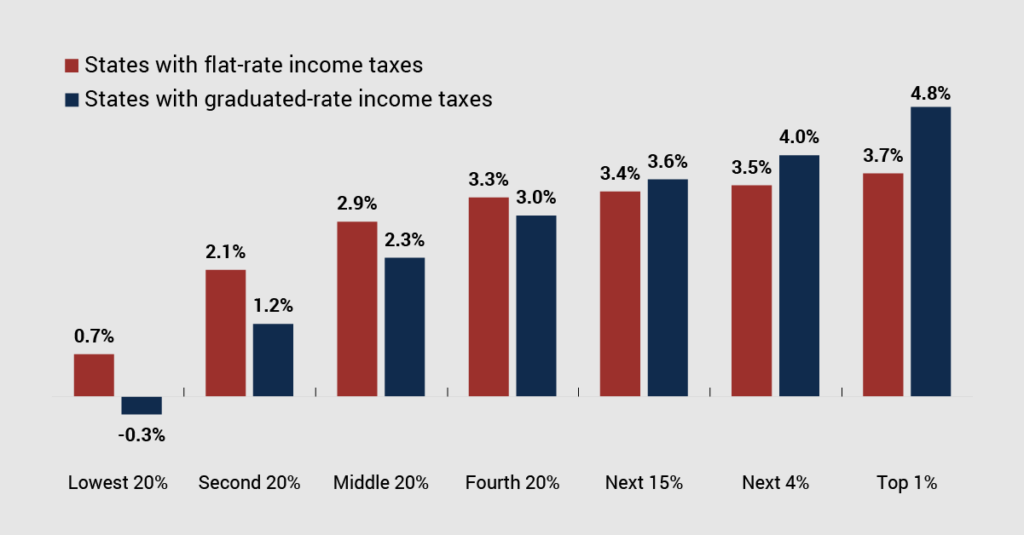
Flat taxes have some surface appeal but come with significant disadvantages. Critically, a flat tax guarantees that wealthy families’ total state and local tax bill will be a lower share of their income than that paid by families of more modest means.
