
Blog

Tax Justice Now
• By Amy Hanauer
Affordability, corruption, and inequality topped the list of what most enraged Americans in last week's election. Tax policy is key to fixing these issues and to addressing looming threats that would make inequality and affordability worse.
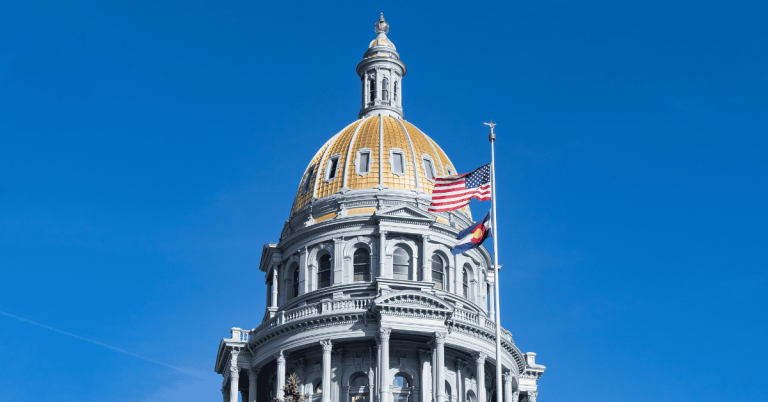
Colorado Voters Ditch Flat Tax, Opt to Tax the Rich and Corporations
• By Aidan Davis, Dylan Grundman O'Neill
Colorado voters approved Amendment 87, also known as Initiative 195, which will give the vast majority of Coloradans an income tax cut. Only households in the richest 5 percent will pay more. The state will raise approximately $2 billion a year in new revenue to fund K-12 education, healthcare, and childcare.
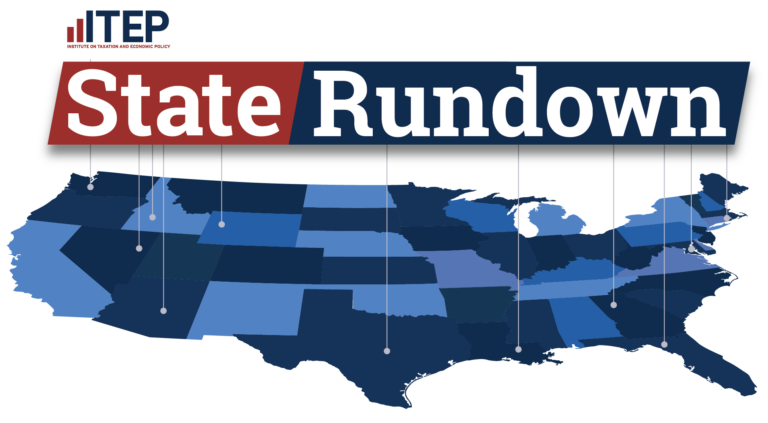
State Rundown 11/5: Election Day Put Taxes on the Ballot
• By ITEP Staff
While voters delivered an historic rebuke of the economic and tax policies of the Trump administration as affordability concerns became a flashpoint, voters also decided on major tax ballot questions that will raise and protect revenue and do more to tax the rich in Washington, California, and Colorado.
Voters Pass Ballot Measures to Raise and Protect Revenue, Tax the Rich
• By Aidan Davis, Jon Whiten
Voters in states across the country on Tuesday passed critical ballot measures to raise and protect revenue and increase tax fairness. In three of four cases, voters showed their support for taxing the rich.
State Rundown 10/22: Despite Obstacles, Progressive Taxes Define 2026
• By ITEP Staff
As more states move to raise revenue and tax the rich, anti-tax lobbyists and lawmakers are hard at work to undo that progress. Despite pushback, important conversations around needed revenue continue.
New State Taxes on the Wealthy Raise Revenue and Rebalance Tax Codes, Advancing Racial Justice
• By Brakeyshia Samms
Taxing the rich is proven fiscal policy – it raises revenue for vital public services and makes tax codes fairer. But a part of the debate that rarely gets enough attention: taxing the rich is also one of the most effective tools available for advancing racial equity.
State Rundown 9/24: States Reckon with Tightening Fiscal Futures
• By ITEP Staff
States across the nation are reckoning with their tightening fiscal futures as inflation and economic woes continue to eat into their budgets.
2026 State Tax Ballot Measures to Watch
• By Aidan Davis
This fall, voters across the country will consider a host of ballot measures that could reshape the fairness and adequacy of their states’ tax systems. Here’s some of what we’re following.
State Rundown 6/25: Trending This Summer? New Revenue!
• By ITEP Staff
It's the first official week of summer, and while many of us are planning vacations, state lawmakers remain busy finalizing and debating tax proposals.
State Rundown 6/11: Taxing the Rich Heats Up
• By ITEP Staff
As we head into summer, many state legislatures are in the final stretches of their sessions. Rhode Island moved another step closer to joining the ranks of Washington, Maine, and Hawai’i in enacting a new high-income surcharge this year.
As Inequality Grows, More States Look to Tax the Rich
• By Alex Welch
From surcharges on the income of high-earners to higher taxes on second homes, here are recent steps states have taken to tax the rich.

Pioneer Institute Criticizes ITEP For Not Writing the Paper They Would Have Written
• By Eli Byerly-Duke
Voters, lawmakers, researchers, and advocates frequently disagree about ideal tax policy. But the facts here speak for themselves.
State Rundown 1/28: State Tax Cutting Plans Face Scrutiny
• By ITEP Staff
As state legislative sessions ramp up across the country, property taxes are one of many issues dominating tax policy conversations in statehouses.

States Can Push Back Against Reckless Federal Tax Policy. Here’s How.
• By Aidan Davis, Wesley Tharpe
They should take steps to protect and boost their own revenues. And they should take a second look at their own tax cuts.

Local Governments Are Increasingly Strapped: 2026 Will Bring New Challenges and New Opportunities
• By Kamolika Das
2025 saw an intensification of state and local tax fights across the country, as well as growing experimentation with local-option taxes, levies, fees, and tourism taxes aimed at keeping budgets afloat while also navigating political constraints imposed by state legislatures.
Texas Property Tax Plan Mimics California’s Damaging Prop 13
• By Neva Butkus, Rita Jefferson
This proposal would disrupt the state’s housing market and jeopardize local revenues while doing very little to help workers and families struggling to pay their property tax bills – just as Prop 13 did in California.
State Rundown 10/1: State and Local Governments Doing the Opposite of Shutting Down
• By ITEP Staff
State and local officials are staying very busy by considering a dizzying amount of reversals.
State Rundown 9/18: Lawmakers Confront Revenue Loss from Federal Policy Changes
• By ITEP Staff
Some states are trying to avoid revenue loss while others are welcoming it and doubling down.
Trump’s Tax Law Clobbers State Budgets. Now’s the Time to Prepare.
• By ITEP Staff
The Trump megabill hands the richest 1% a trillion-dollar windfall while gutting funding for health care, education, and disaster relief — leaving communities to pick up the pieces. State and local leaders must step up, tax the wealthiest fairly, and safeguard the essentials that keep America healthy, educated, and safe.
How Much Would Every Family in Every State Get if the Megabill’s Tax Cuts Given to the Rich Had Instead Been Evenly Divided?
• By Michael Ettlinger
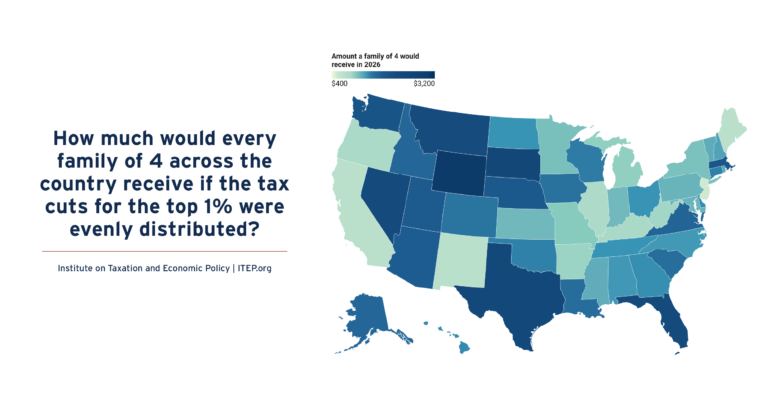
If instead of giving $117 billion to the richest 1 percent, that money had been evenly divided among all Americans, we'd each get $343 - or nearly $1,400 for a family of four.

Trump Megabill Will Give $117 Billion in Tax Cuts to the Top 1% in 2026. How Much In Your State?
• By Michael Ettlinger
The predominant feature of the tax and spending bill working its way through Congress is a massive tax cut for the richest 1 percent — a $114 billion benefit to the wealthiest people in the country in 2026 alone.

How Much Do the Top 1% in Each State Get from the Trump Megabill?
• By Carl Davis
The Senate tax bill under debate right now would bring very large tax cuts to very high-income people. In total, the richest 1 percent would receive $114 billion in tax cuts next year alone. That would amount to nearly $61,000 for each of these affluent households.
State Rundown 5/15: State Tax Debates Carry On in the Midst of Chaotic Federal Tax Landscape
• By ITEP Staff
Even as most major headlines have been about the ever-changing landscape of federal tax policy, the latest “ideas of the week," and now the House tax bill, state tax policy continues to be a priority for lawmakers.

IRS Cooperation with ICE Will Damage Public Trust, Putting Tax Revenues in Jeopardy
• By Marco Guzman
Attempts by the Department of Homeland Security to secure private information from the IRS on people who file taxes with an Individual Taxpayer Identification Number is a violation of federal privacy laws that protect taxpayers. It is also a change that could seriously damage public trust in the IRS, which could jeopardize billions of dollars in tax payments by hardworking immigrant families.
State Rundown 3/20: It’s March, Welcome to Tax Policy Madness
• By ITEP Staff
March Madness kicks off today and the pressure is on as many states’ legislative sessions are nearing the final buzzer. Some state lawmakers are seemingly competing for the title of most regressive state tax policies while others are looking to lift up best practices for more equitable outcomes. The Mississippi legislature landed on a […]

Institute on Taxation
and Economic Policy
ITEP is a non-profit, non-partisan tax policy organization. We conduct rigorous analyses of tax and economic proposals and provide data-driven recommendations to shape equitable and sustainable tax systems.
Subscribe to ITEP Emails
Tax research and policy news in your inbox.
Promote Fair Tax Policy
Your gift to ITEP promotes tax justice. With your help, we do research that supports taxing millionaires and billionaires, taxing big corporations and raising revenue for the things our people, our communities and our planet need.
Together, we can create a country with more economic justice, more racial justice, more climate justice… and more tax justice.