
Blog
135 posts
2026 Sessions in Review: States Fund Tax Credits by Preserving, Raising Revenue
July 2, 2026 • By Aidan Davis

In a year of cautious uncertainty around current and ongoing revenues, many state lawmakers strengthened their tax credits for families and children.
2026 Sessions in Review: States Move to Tax the Rich and Corporations
June 29, 2026 • By Aidan Davis
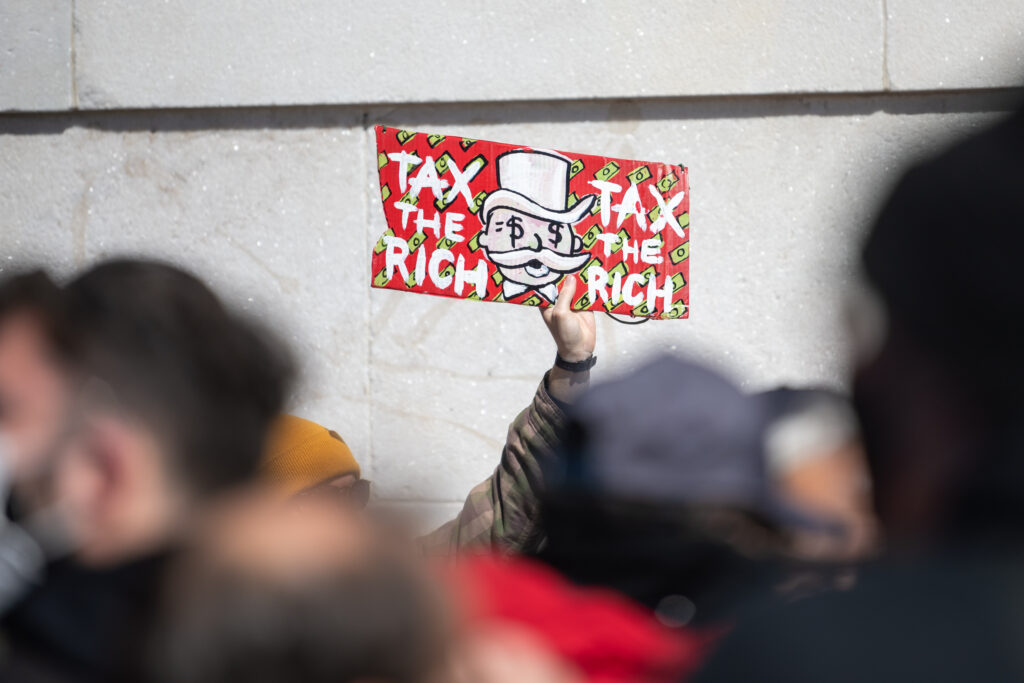
This year several states raised income tax rates on high-income people to fund crucial services and make progress toward remedying the regressive tilt of their tax codes.
It's the first official week of summer, and while many of us are planning vacations, state lawmakers remain busy finalizing and debating tax proposals.
Rhode Island Budget Bets on Tax Fairness with Millionaires’ Tax and New Child Tax Credit
June 12, 2026 • By Miles Trinidad
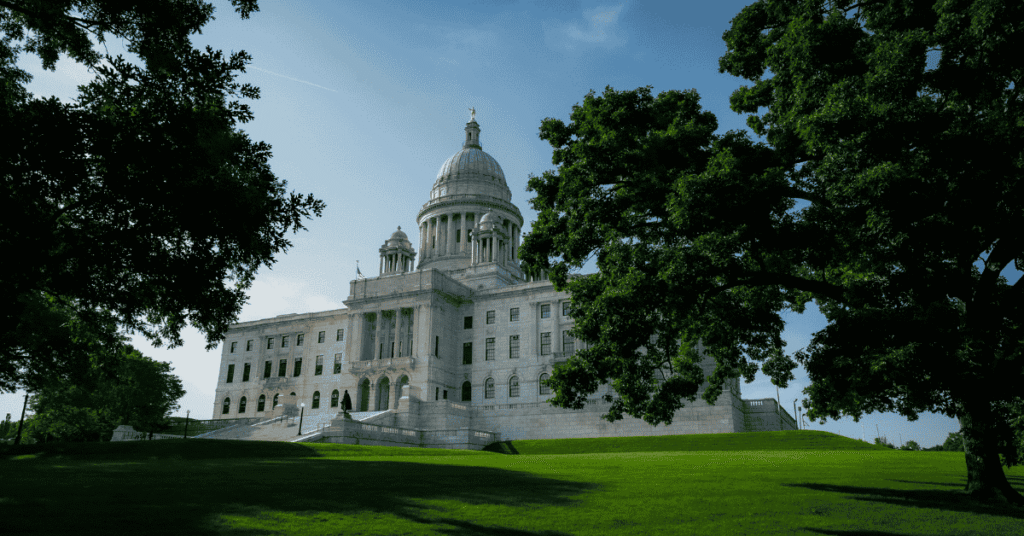
The spending plan, signed into law by Gov. Dan McKee today, features a new millionaires’ tax, the state’s first permanent child tax credit, expanded eligibility for its Social Security exemption , and strategic decoupling from federal business tax provisions.
As we head into summer, many state legislatures are in the final stretches of their sessions. Rhode Island moved another step closer to joining the ranks of Washington, Maine, and Hawai’i in enacting a new high-income surcharge this year.

We estimate that by 2032, QSBS will be costing states $1.1 billion a year, and since states must balance their budgets, that’s money they can’t use for public services.
A veritable superbloom of tax and budget policies occurred over these last few weeks, including both flowers worth admiring and weeds worth fighting back.

Second home taxes make a lot of sense for communities struggling with housing costs for full-time residents. They can raise real revenues too, which can be used to support further affordable housing development.

From surcharges on the income of high-earners to higher taxes on second homes, here are recent steps states have taken to tax the rich.
As many legislative sessions end, lawmakers are revealing their priorities.
State Rundown 3/12: Washington Lawmakers Pass Millionaires’ Tax, Expand Working Families Tax Credit
March 12, 2026 • By ITEP Staff
Washington is on its way to making history after the legislature approved the “millionaires’ tax,” a 9.9 percent tax on income over $1 million. The bill, which is expected to raise more than $3 billion a year, making significant investments in public education and childcare, will also expand the Working Families Tax Credit – the […]
What Did 2025 State Tax Changes Mean for Racial and Economic Equity?
February 9, 2026 • By Brakeyshia Samms

The results are a mixed bag, with some states enacting promising policies that will improve tax equity and others going in the opposite direction.
State Rundown 1/22: Cautious Tone Noticeable in Most Statehouses
January 22, 2026 • By ITEP Staff
Most states are adopting a very cautious approach so far this year as legislators begin their sessions and governors make their annual addresses, thanks to ongoing economic uncertainty and federal retrenchment.
States Can Push Back Against Reckless Federal Tax Policy. Here’s How.
January 22, 2026 • By Aidan Davis, Wesley Tharpe

They should take steps to protect and boost their own revenues. And they should take a second look at their own tax cuts.
State Rundown 1/14: New Year Brings New Resolutions for Funding Key Priorities
January 14, 2026 • By ITEP Staff
State governors are beginning to lay out their top priorities as legislatures reconvene in statehouses around the country.
State Rundown 1/7: New Year, New Opportunities for Progressive Revenue
January 7, 2026 • By ITEP Staff
As we kick off a new year, several states are facing revenue shortfalls. Some lawmakers are approaching the challenge with sustainable and equitable solutions.
property tax debates are taking place throughout the nation.
State Rundown 11/13: States Tackle Impending Deficits, Pennsylvania Secures an EITC
November 13, 2025 • By ITEP Staff
Revenue forecasts look increasingly grim as states anticipate shortfalls due to the slowing economy and impacts of the new federal tax law.
State and Local Policymakers Can Resist Austerity Even Amid Historic Federal Retreat
November 6, 2025 • By Kamolika Das

The progressivity of the federal tax code has been waning. State and local policymakers should respond by protecting their revenue bases, promoting equity, and safeguarding vulnerable communities from harmful budget cuts.
State Rundown 10/1: State and Local Governments Doing the Opposite of Shutting Down
October 1, 2025 • By ITEP Staff
State and local officials are staying very busy by considering a dizzying amount of reversals.
Making the Wealthy Pay their Fair Share is the Way to Preserve Vacation Towns
September 10, 2025 • By Rita Jefferson

Rhode Island lawmakers created a new surcharge on second homes worth more than $1 million as part of the budget enacted this spring.
State Tax Action in 2025: Amid Uncertainty, Tax Cuts and New Revenue
July 28, 2025 • By Aidan Davis, Neva Butkus, Marco Guzman

Federal policy choices on tariffs, taxes, and spending cuts will be deeply felt by all states, which will have less money available to fund key priorities. This year some states raised revenue to ensure that their coffers were well-funded, some proceeded with warranted caution, and many others passed large regressive tax cuts that pile on to the massive tax cuts the wealthiest just received under the federal megabill.
How Much Would Every Family in Every State Get if the Megabill’s Tax Cuts Given to the Rich Had Instead Been Evenly Divided?
July 14, 2025 • By Michael Ettlinger
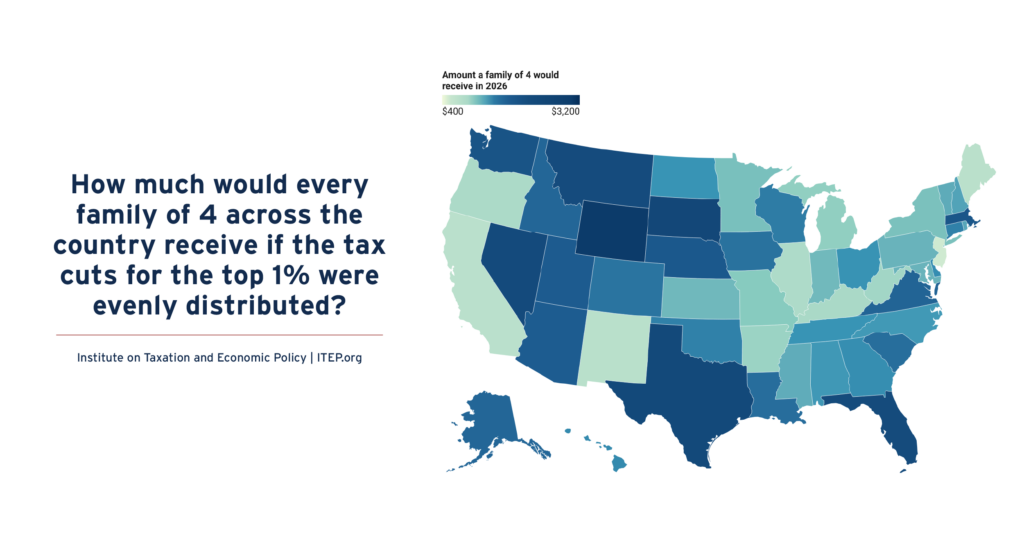
If instead of giving $117 billion to the richest 1 percent, that money had been evenly divided among all Americans, we'd each get $343 - or nearly $1,400 for a family of four.
Trump Megabill Will Give $117 Billion in Tax Cuts to the Top 1% in 2026. How Much In Your State?
June 30, 2025 • By Michael Ettlinger

The predominant feature of the tax and spending bill working its way through Congress is a massive tax cut for the richest 1 percent — a $114 billion benefit to the wealthiest people in the country in 2026 alone.
How Much Do the Top 1% in Each State Get from the Trump Megabill?
June 30, 2025 • By Carl Davis

The Senate tax bill under debate right now would bring very large tax cuts to very high-income people. In total, the richest 1 percent would receive $114 billion in tax cuts next year alone. That would amount to nearly $61,000 for each of these affluent households.
Blog Categories

Institute on Taxation
and Economic Policy
ITEP is a non-profit, non-partisan tax policy organization. We conduct rigorous analyses of tax and economic proposals and provide data-driven recommendations to shape equitable and sustainable tax systems.
Subscribe to ITEP Emails
Tax research and policy news in your inbox.
Promote Fair Tax Policy
Your gift to ITEP promotes tax justice. With your help, we do research that supports taxing millionaires and billionaires, taxing big corporations and raising revenue for the things our people, our communities and our planet need.
Together, we can create a country with more economic justice, more racial justice, more climate justice… and more tax justice.