
Hawaii

State Rundown 4/13: Recent State Budgets Prove Not All Tax Cuts are the Same
• By ITEP Staff
Two prominent blue states made headlines this past week when they passed budget agreements that include relief for taxpayers, and fortunately, the budget plans don’t include costly tax cuts that primarily benefit the wealthy...
State Rundown 3/23: Spring Brings More Tax Happenings
• By ITEP Staff
Spring is around the corner and like those pesky allergies that come along with it, equally pesky tax proposals continue to pop up in states across the U.S....
Hawai’i Budget & Policy Center: Expanding Economic Opportunity with the Hawai’i EITC
• By ITEP Staff
Hawai’i’s working families continue to struggle with the nation’s highest gap between median earnings and the cost of living, and this difficult reality has only been made harsher by the COVID-19 pandemic. In fact, more than a third of Hawai’i households had at least some difficulty paying for their monthly expenses in December of 2021. […]
State Rundown 1/26: States Offering Preview of Tax Themes and Trends for 2022
• By ITEP Staff
Governors and legislators are beginning to settle on and advance tax bills that could drastically shape the future of their states and several trends and themes are beginning to emerge...
State Rundown 1/20: Governors Eyeing Tax Cuts in Yearly Addresses
• By ITEP Staff
A common theme is emerging out of states, as governors around the U.S. begin the year with their annual state speeches, and the news does not bode well for long-term growth and sustainable budgets...
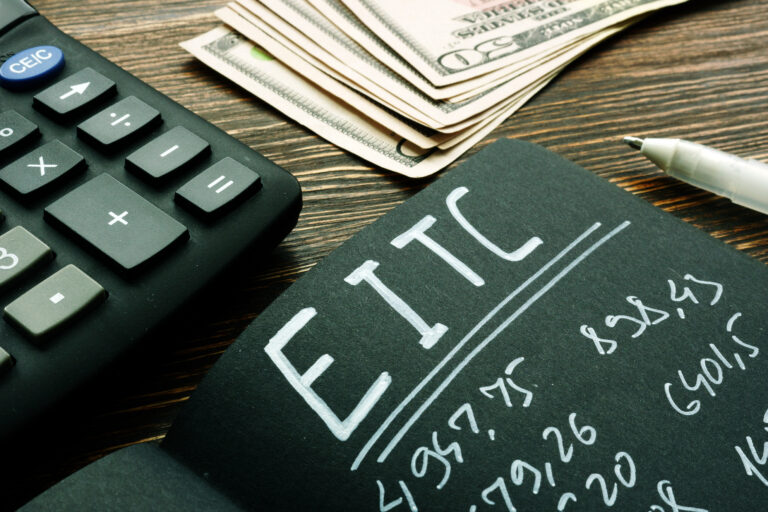
Boosting Incomes and Improving Tax Equity with State Earned Income Tax Credits in 2021
• By Aidan Davis
The EITC benefits low-income people of all races and ethnicities. But it is particularly impactful in historically excluded Black and Hispanic communities where discrimination in the labor market, inequitable educational systems, and countless other inequities have relegated a disproportionate share of people to low-wage jobs.
State Income Taxes and Racial Equity: Narrowing Racial Income and Wealth Gaps with State Personal Income Taxes
• By Carl Davis, Jessica Schieder, Marco Guzman
10 state personal income tax reforms that offer the most promising routes toward narrowing racial income and wealth gaps through the tax code.
State Rundown 7/7: The New Fiscal Year Starts off With a Bang, And Not Just Fireworks
• By ITEP Staff
States were busy over the past week despite the Fourth of July holiday. Many are gearing up for upcoming tax and budget clashes that could shape their futures for some time...
State Rundown 5/6: April Showers Bring Weeds As Well As Flowers
• By ITEP Staff
This week’s state fiscal news brings a reminder that even though advocates for great economic and racial justice have won some major progressive victories recently, anti-tax zealots have been hard at work too. Lawmakers advanced or enacted troubling regressive tax cuts or shifts in Idaho, Kansas, and Montana, and are actively debating them in Iowa, […]
State Rundown 4/29: How You Like Them Washington Apples?
• By ITEP Staff
North Carolina lawmakers may have approved a massive tax subsidy giveaway to Apple, but we won’t let that news spoil our barrel this week. Nor will we be discouraged by Connecticut Gov. Ned Lamont’s threats to upset the apple cart full of positive progressive tax reforms state lawmakers recently came together to approve...Why all the optimism? Because the apple of our eye this week is Washington State, where advocates and lawmakers succeeded in a decade-long…

Not Worth Its SALT: Tax Cut Proposal Overwhelmingly Benefits Wealthy, White Households
• By Carl Davis, ITEP Staff, Jessica Schieder
A previous ITEP analysis showed the lopsided distribution of SALT cap repeal by income level. The vast majority of families would not benefit financially from repeal and most of the tax cuts would flow to families with incomes above $200,000. This report builds on that work by using a mix of tax return and survey data within our microsimulation tax model to estimate the distribution of SALT cap repeal across race and ethnicity. It shows…
State Rundown 4/1: Most States Resisting Foolish Tax Cut Games That Tear Revenues Apart
• By ITEP Staff
Supporters of tax fairness and adequate funding for public needs are hoping West Virginia’s income tax elimination effort turns out to be a prank, but most states are not fooling around with such harmful policies this year. For example...
Taxes and Racial Equity: An Overview of State and Local Policy Impacts
• By ITEP Staff
Historic and current injustices, both in public policy and in broader society, have resulted in vast disparities in income and wealth across race and ethnicity. Employment discrimination has denied good job opportunities to people of color. An uneven system of public education funding advantages wealthier white people and produces unequal educational outcomes. Racist policies such as redlining and discrimination in lending practices have denied countless Black families the opportunity to become homeowners or business owners,…
State Rundown 3/10: Federal Pandemic Aid Means States Can Focus on the Big Picture
• By ITEP Staff
State and local policymakers will be preoccupied for a short time with celebrating and deciphering the federal pandemic relief package approved today, but ultimately the federal aid should free them to focus on even bigger concerns such as tax codes that often fail to adequately fund core priorities even in good years and exacerbate the economic and racial inequities that this pandemic has laid bare.
Marketplace: High-income taxpayers help some states stay above water
March 1, 2021
However, in 22 states, tax revenue actually increased, with revenue in four states — Idaho, Utah, South Dakota and Colorado — up more than 5%. Revenue fell in the remaining states, with seven down more than 10% —Texas, Oregon, Florida, Nevada, North Dakota, Hawaii and Alaska. This disparity has a lot to do with the […]
Bloomberg Tax: ‘Sham Transactions’ Trigger States to Crack Down on Tax Havens
February 26, 2021
Some lawmakers in Hawaii want worldwide reporting to become a hard requirement under H.B. 441 and S.B. 1302, which would transition the state beginning Jan. 1, 2022. The preamble of the legislation points to a 2019 report by the Institute on Taxation and Economic Policy that found offshore tax havens cost Hawaii $38 million annually. […]
State Rundown 2/24: State Tax Debates Quickly Thaw Out with Warmer Weather
• By ITEP Staff
Warming temperatures in many parts of the country this week seem to be thawing out state fiscal debates as well. Multiple states including California, Colorado, Maryland, and New Jersey saw movement on efforts to improve tax credits for low- and middle-income families. Mississippi House lawmakers suddenly rushed through a dangerous bill to eliminate the state’s income tax and shift those taxes onto lower-income households. Montana senators also approved regressive income tax cuts and South Dakota…
State Rundown 2/11: Legalizing and Taxing Cannabis Becoming Increasingly Mainstream
• By ITEP Staff
This week, the governors of New Hampshire and West Virginia proposed to eliminate their states’ most progressive revenue sources and shift taxes even more heavily onto the middle- and low-income families who already pay the highest rates in both states. It was also a big week for proponents of legalizing recreational cannabis, as that movement made progress in Hawaii, Virginia, and Wisconsin.
State Rundown 2/4: Some Lawmakers, Governors Rising to Occasion with Progressive Tax Proposals
• By ITEP Staff
States face shifting landscapes as they attempt to deal with both emergent and longstanding issues in their tax codes and budget structures. This is particularly evident in Oklahoma, where lawmakers must adjust to a U.S. Supreme Court decision that literally redraws state boundaries by recognizing the rights of indigenous communities, but is true in every state, and lawmakers in many of them are rising to the challenge. Read below and see our blog posted today…
State Rundown 1/28: EITC Efforts a Welcome Contrast to State Tax Tug-of-War
• By ITEP Staff
Efforts to deliver and improve targeted tax credits to support low- and middle-income families proved to be unifying in Washington and Oregon, welcome developments in an otherwise divisive week in state tax debates. For example, Mississippi advocates hoping to end the state’s regressive grocery tax are up against a governor and many lawmakers pulling in the opposite direction by trying to eliminate its income tax. After Arizona residents approved an income tax increase to improve…
State Rundown 1/22: Somewhere Between a Flurry and a Blizzard of State Tax Activity So Far
• By ITEP Staff
You won’t find any images of Bernie Sanders and his mittens photoshopped into this week’s Rundown, but you will find the latest news on state fiscal debates, including proposals to generate needed funding by raising taxes on high-income households and profiting businesses in California, Delaware, Hawaii, Maryland, and Washington, as well as misguided efforts to slash taxes in Arizona, Iowa, South Carolina, Utah, and West Virginia. Also in the news are thoughtful improvements to targeted…
State Rundown 12/17: New and Old State Tax Debates Await in 2021
• By ITEP Staff
Our last Rundown of 2020 includes news of yet another misguided proposal to eliminate a state income tax, this time in Arkansas. Florida and Missouri, on the other hand, are looking to modernize their tax codes by becoming the last two states to enforce their own sales taxes on online retailers. Leaders in Maryland and Oregon, meanwhile, are working to decouple the state from unnecessary and regressive tax cuts included in the federal CARES Act.…
State Rundown 10/28: Anti-Tax Horror Stories Proving Less Spooky in 2020
• By ITEP Staff
Even with Halloween coming up this weekend, months of dealing with the horrors of the Covid-19 pandemic have made it hard to scare anyone in the closing months of 2020, which state lawmakers and residents are showing by voting in droves and supporting policies they had been more trepidatious about in recent years.

It’s No Secret—To Save State Budgets End Preferential Treatment of Capital Gains
• By Marco Guzman
In an updated policy brief, ITEP explores the flaws in state capital gains tax breaks and highlights how ending special tax breaks provides one of the simplest ways to raise additional revenue and increase equity in the tax system.
State Taxation of Capital Gains: The Folly of Tax Cuts & Case for Proactive Reforms
• By Marco Guzman
The federal tax system and every state treat income from capital gains more favorably than income from work. Preferential capital gains tax treatment includes exclusions and seldom-discussed provisions like deferral and stepped-up basis, as well as more direct tax subsidies for profits realized from local investments and, in some instances, from investments around the world. This policy brief explains state capital gains taxation, examines the flaws in state capital gains tax breaks, and proposes reform…
