
Louisiana
Although most state legislatures are out of session during the summer, the pursuit of better fiscal policy has no "off-season." Here at ITEP, we've been revamping the State Rundown to bring you your favorite summary of state budget and tax news in the new-and-improved format you see here. Meanwhile, leaders in Massachusetts and New Jersey have been hard at work in recent weeks and are already looking ahead their next round of budget and tax debates. Lawmakers in many states are using their summer break to prepare for next year's discussions over how to implement online sales tax legislation. And…
The Fight for Education Funding: State Revenue Needs and Responses in 2018
July 24, 2018 • By Aidan Davis

States’ need for revenue and increased investment in key public services is not unique to this legislative session. But the extent of disinvestment—particularly in education—has been a driving force behind policy discussion and state legislative action this year. In many cases ill-advised tax cuts coupled with persistent school funding cuts led states to this common fate, initiating a powerful and growing trend. Here’s how lawmakers in a handful of state responded:
State Rundown 7/19: Wayfair Fallout and Ballot Preparation Dominate State Tax Talk
July 19, 2018 • By ITEP Staff
In the wake of the U.S. Supreme Court's recent Wayfair decision authorizing states to collect taxes owed on online sales, Utah lawmakers held a one-day special session that included (among other tax topics) legislation to ensure the state will be ready to collect those taxes, and a Nebraska lawmaker began pushing for a special session for the same reason. Voters in Colorado and Montana got more clarity on tax-related items they'll see on the ballot in November. And Massachusetts moves closer toward becoming the final state to enact a budget for the new fiscal year that started July 1 in…
Sales Tax Holidays: An Ineffective Alternative to Real Sales Tax Reform
July 12, 2018 • By Dylan Grundman O'Neill
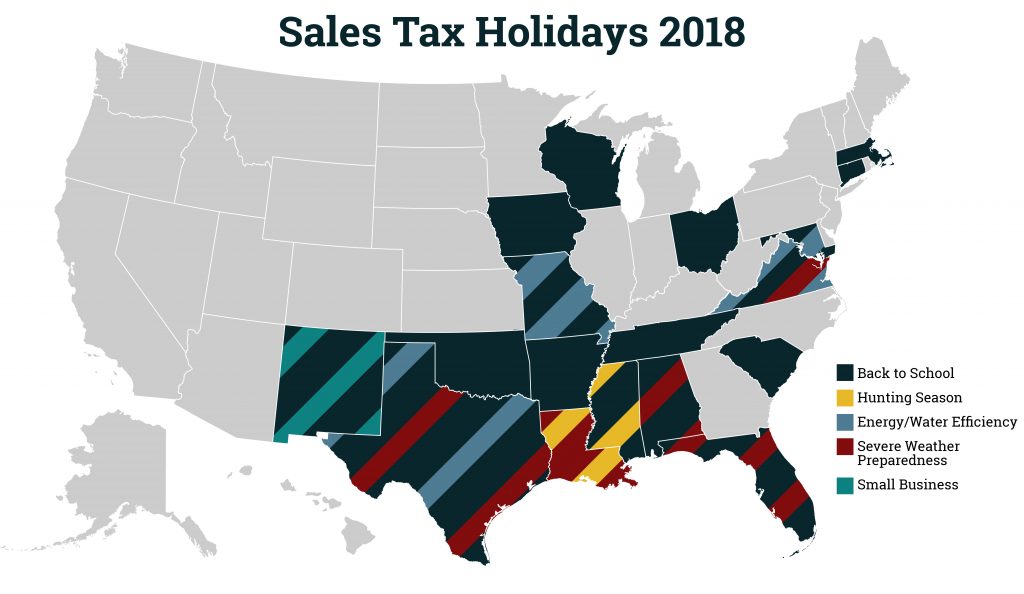
An updated version of this brief for 2019 is available here. Read this report in PDF. Overview Sales taxes are an important revenue source, composing close to half of all state tax revenues.[1] But sales taxes are also inherently regressive because the lower a family’s income, the more the family must spend on goods and […]
Building on Momentum from Recent Years, 2018 Delivers Strengthened Tax Credits for Workers and Families
July 10, 2018 • By Aidan Davis

Despite some challenging tax policy debates, a number of which hinged on states’ responses to federal conformity, 2018 brought some positive developments for workers and their families. This post updates a mid-session trends piece on this very subject. Here’s what we have been following:
New Jersey avoided a second consecutive shutdown and proved that even against staunch opposition, progressive solutions to states' fiscal issues are attainable, and Arizona voters will likely have a chance to solve their education funding crisis in a similar way. Budget and tax debates remain to be resolved, however, in Maine and Massachusetts. Meanwhile, voters are gaining a clearer picture of what questions they will be asked on ballots this fall as signature drives conclude in several states.
The Bond Buyer: Where SALT Workarounds Are Being Promoted
July 5, 2018
he $10,000 federal cap on the deductibility of state and local taxes has led to a flurry of activity in red states to promote tax credits for taxpayers’ efforts to make charitable donations to get around that cap. That’s the finding of a survey by the Institute for Taxation and Economic Policy that highlights the […]
With many state fiscal years beginning July 1, most states that will make decisions this year about federal tax conformity have now done so, so it is now time for an update on how well state policymakers have kept to, or veered from, the path we charted out earlier this year. Most states that have enacted laws in response to the federal changes have adhered to some but not all of the principles we laid out, with a few responding rather prudently and a handful charting a much more treacherous course of unfair, unsustainable policy based on unfounded promises of…
This week, lawmakers in Louisiana, Pennsylvania, Rhode Island, Vermont, and the District of Columbia wrapped up their budgets in time for the new fiscal year that starts July first in most states, with some of these resolutions coming after contentious debates and repeated special sessions. New Jersey's debate is not yet finished as leaders clash over spending priorities and the taxes on millionaires and corporations needed to fund them. Meanwhile, signature drives to put tax-related questions on fall ballots are heating up in several other states. And our "What We're Reading" section includes helpful resources on implications of the Supreme…
Bloomberg BNA: Fix’ for Federal Cap on State Tax Deduction? K-12 Tax Credits
June 27, 2018
But the very same charge can be made against the tax credit programs for private K-12 schools, the Institute on Taxation and Economic Policy said in its report. These programs are now being openly promoted by tax advisers and accountants as a way to sidestep or circumvent the SALT deduction cap, according to ITEP. “In […]
The Other SALT Cap Workaround: Accountants Steer Clients Toward Private K-12 Voucher Tax Credits
June 27, 2018 • By Carl Davis
On May 23, 2018, the IRS and Treasury Department announced that they “intend to propose regulations addressing the federal income tax treatment of certain payments made by taxpayers for which taxpayers receive a credit against their state and local taxes.” They made the announcement in response to new “workaround tax credits” enacted in New York […]
The U.S. Supreme Court made big news this morning by allowing states to collect taxes due on internet purchases, which will help put main-street and online retailers on an even playing field while also improving state and local revenues and the long-term viability of the sales tax as a revenue source. Many states remain focused on more local issues, however, as Louisiana's third special session of the year kicked off, Massachusetts won a living wage battle while losing an opportunity to put a popular millionaires tax proposal before voters, and major fiscal debates continue in Maine, New Jersey, and Vermont.
State Rundown 6/13: Budget Crunch Time Sets in as State Fiscal Years Come to Close
June 13, 2018 • By ITEP Staff
With many state fiscal years ending June 30th, budget negotiations were completed recently in California, Illinois, Michigan, and North Carolina. New Jersey remains a state to watch as a government shutdown looms but leaders continue to disagree about a proposed millionaires tax, corporate taxes, and school funding. In other states looking to wealthy individuals and large corporations for needed revenues, Arizona's teacher pay crisis could be solved with a tax on its highest-income residents and a similar proposal in Massachusetts is polling well, but Seattle's new "head tax" could be on the chopping block.
State Rundown 6/1: Time Is Ripe for Closer Look at Intergovernmental Relations
June 1, 2018 • By ITEP Staff
This week, Virginia lawmakers overcame their budget impasse and approved an expansion of Medicaid, North Carolina's behind closed doors budget debate appears to be wrapping up, and Vermont's special session continues in the wake of the governor's vetoes of the state budget and accompanying tax bills. New research highlighted in our What We're Reading section shows that both corporate income tax cuts and business tax subsidies contribute to wider economic inequality. And the possible reconstitution of a federal commission on intergovernmental relations could not come soon enough, as other headlines this week include a state-to-local shift in school funding, governments…
State Rundown 5/23: Special Sessions Abound Amid Budget Vetoes, Stalemates, Federal Tax Bill
May 23, 2018 • By ITEP Staff
This week the governors of Louisiana and Minnesota both vetoed budget bills, leading to another special session in Louisiana and unanswered questions in Minnesota, and Missouri legislators managed to push through a tax shift bill just before adjourning their regular session and heading right into a special session to impeach their governor. Wisconsin and Wyoming localities are both looking at ways to raise revenues as state funding drops. And our What We're Reading section contains helpful pieces on changing demographics, the effects of wealth inequality on families with children, and the impacts of the Supreme Court sports gambling and online…
SALT/Charitable Workaround Credits Require a Broad Fix, Not a Narrow One
May 23, 2018 • By Carl Davis

The federal Tax Cuts and Jobs Act (TCJA) enacted last year temporarily capped deductions for state and local tax (SALT) payments at $10,000 per year. The cap, which expires at the end of 2025, disproportionately impacts taxpayers in higher-income states and in states and localities more reliant on income or property taxes, as opposed to sales taxes. Increasingly, lawmakers in those states who feel their residents were unfairly targeted by the federal law are debating and enacting tax credits that can help some of their residents circumvent this cap.
Louisiana Budget Project: Black households would bear disproportionate burden of sales tax renewal
May 18, 2018
Lawmakers can address this imbalance by expanding Louisiana’s EITC. An increase of the state EITC from 3.5 percent to 7 percent of the federal EITC would offset a half-cent cent sales tax renewal for families in the bottom 40 percent of income earners. An EITC increase from 3.5 percent to 10 percent would offset a […]
State Rundown 5/17: Don’t Bet on Legal Sports Betting Solving State Budget Woes
May 17, 2018 • By ITEP Staff
This week the U.S. Supreme Court opened the door to legal sports gambling in the states (see our What We're Reading section), which will surely be a hot topic in state legislative chambers, but most states currently have more pressing matters before them. The teacher pay crisis made news in North Carolina, Alabama, and nationally. Louisiana, Oregon, and Vermont lawmakers are headed for special sessions over tax and budget issues. And several other states have recently reached or are very near the end of their legislative sessions.
State Rundown 5/9: Iowa Digs a New Hole as Other States Try to Avoid or Climb Out of Theirs
May 9, 2018 • By ITEP Staff
This week we have news of a destructive tax cut plan finally approved in Iowa just as one was narrowly avoided in Kansas. Tax debates in Minnesota and Missouri will go down to the wire. And residents of Arizona and Colorado are considering progressive revenue solutions to their states' education funding crises.
Business Insider: The Trump Org Just Quietly Announced It Is Collecting Sales Tax in a New State
May 4, 2018
New York’s addition to the list of states where TrumpStore.com collects sales tax, which previously included Louisiana, Florida, and Virginia, was first spotted Thursday by the Institute on Taxation and Economic Policy, a nonpartisan think tank. “Refusing to collect sales tax in New York was a risky move, and it’s not surprising that they’ve reversed course,” […]
Politico Morning Tax: Yeah, That’s a Nexus
May 4, 2018
The Trump Store has started collecting sales tax on online purchases from customers in New York, a state where it most certainly seemed to have the physical presence required for collection — a Manhattan flagship store. The liberal Institute on Taxation and Economic Policy noted that update on the store’s website. In all, the store […]
State Rundown 12/31/9999: IRS Glitch and Legislative Impasses Extend Tax Season
April 20, 2018 • By ITEP Staff
This week the IRS website asked some would-be tax filers to return after December 31, 9999. State legislators don't have quite that much time, but are struggling to wrap up their tax debates on schedule as well. Iowa legislators, for example, are ironically still debating tax cuts despite having run out of money to cover their daily expenses for the year. Nebraska's session wrapped up, but its tax debate continues in the form of a call for a special session and the threat of an unfunded tax cut going before voters in November. Mississippi's tax debate has been revived by…
State Rundown 4/13: Teacher Strikes, Special Sessions, Federal Cuts Haunting States
April 13, 2018 • By ITEP Staff
This Friday the 13th is a spooky one for many state lawmakers, as past bad fiscal decisions have been coming back to haunt them in the form of teacher strikes and walk-outs in Arizona, Kentucky, and Oklahoma. Meanwhile, policymakers in Maryland, Nebraska, New Jersey, Oregon, and Utah all attempted to exorcise negative consequences of the federal tax-cut bill from their tax codes. And our What We're Reading section includes yet another stake to the heart of the millionaire tax-flight myth and other good reads.

The U.S. Supreme Court is scheduled to consider a case next week (South Dakota v. Wayfair, Inc.) that has the potential to significantly improve states and localities’ ability to enforce their sales tax laws on Internet purchases.
Is the Trump Organization’s Sales Tax Avoidance More Aggressive Than Amazon’s?
April 6, 2018 • By Carl Davis
In recent weeks, President Trump has been raking Amazon over the coals for failing to collect state and local sales taxes on many of the company’s sales—a criticism that has some merit. But a new story first reported by James Kosur at RedStateDisaster, and then picked up today by the Wall Street Journal, provides fascinating insight into the sales tax collection habits of the Trump Organization’s “official retail website,” TrumpStore.com.
