
Maine
Boosting Incomes, Improving Equity: State Earned Income Tax Credits in 2023
September 12, 2023 • By Aidan Davis, Neva Butkus

Nearly two-thirds of states (31 plus the District of Columbia and Puerto Rico) have an Earned Income Tax Credit, an effective tool that boosts low-paid workers’ incomes and helps lower-income families achieve greater economic security. This year, 12 states expanded and improved EITCs.
Most state legislatures have adjourned for 2023, and that means it’s a perfect time to look at the tax policy trends that have formed thus far...

Nearly one-third of states took steps to improve their tax systems this year by investing in people through refundable tax credits, and in a few notable cases by raising revenue from those most able to pay. But another third of states lost ground, continuing a trend of permanent tax cuts that overwhelmingly benefit high-income households and make tax codes less adequate and equitable.

State lawmakers continue to make groundbreaking progress on state tax credits, with 17 states creating or enhancing Child Tax Credits or Earned Income Tax Credits so far this year. These policies have the potential to boost family economic security and dramatically reduce the number of children living below the poverty line.
State Rundown 7/6: Tax Policy Keeping Governors Busy from Coast to Coast
July 6, 2023 • By ITEP Staff
From coast to coast, state governors have been busy inking their signature on a growing list of consequential budget and tax bills...
State Rundown 6/28: Movement on Refundable Credits Remains Hot Topic in 2023
June 28, 2023 • By ITEP Staff
The trend of state lawmakers taking big steps on important tax credits like the Child Tax Credit and Earned Income Tax Credit is coming out in full force this week...
States are Talking About the Wrong Kind of Property Tax Cuts
May 11, 2023 • By Brakeyshia Samms, Carl Davis

Concerns over property tax affordability have been at the forefront this year as housing prices have climbed and property tax bills have often increased along with them. As lawmakers mull a range of property tax cuts, circuit breakers are the best possible approach—and these policies are receiving far too little attention in the states.
Preventing an Overload: How Property Tax Circuit Breakers Promote Housing Affordability
May 11, 2023 • By Brakeyshia Samms, Carl Davis

Circuit breaker credits are the most effective tool available to promote property tax affordability. These policies prevent a property tax “overload” by crediting back property taxes that go beyond a certain share of income. Circuit breakers intervene to ensure that property taxes do not swallow up an unreasonable portion of qualifying households’ budgets.
State Rundown 5/10: Momentum on State Tax Credits Continues to Build
May 10, 2023 • By ITEP Staff
This week, in states across the country the momentum to center improvements to family economic security remains strong...
Congress Should Raise Taxes on the Rich, But That’s a Totally Separate Issue from the Debt Ceiling
May 9, 2023 • By Steve Wamhoff
Congress absolutely should raise taxes on the rich and on corporations to generate revenue and improve the fairness of our tax code. President Biden has several proposals to do exactly that. But this is an entirely separate question from whether we should raise the debt ceiling to honor the debts the nation has already incurred and avoid an economic apocalypse.
Extending Temporary Provisions of the 2017 Trump Tax Law: National and State-by-State Estimates
May 4, 2023 • By Joe Hughes, Matthew Gardner, Steve Wamhoff
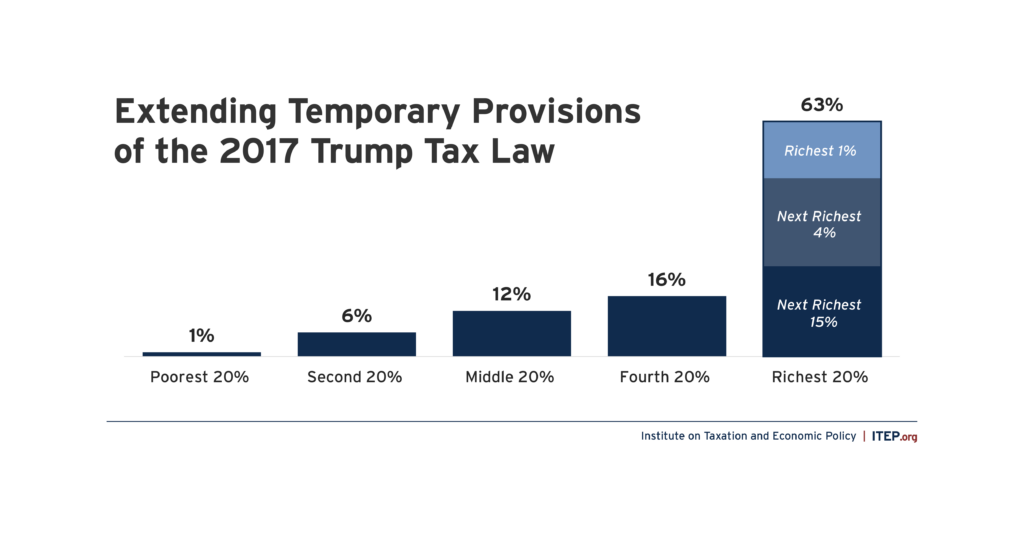
The push by Congressional Republicans to make the provisions of the 2017 Tax Cuts and Jobs Act permanent would cost nearly $300 billion in the first year and deliver the bulk of the tax benefits to the wealthiest Americans.
Maine Center for Economic Policy: Impacts of Proposed Income Tax Rate Reduction
March 30, 2023
House and Senate Republicans are demanding income tax cuts be part of the budget, and Democrats in the legislature were right to make sure they didn’t have the tools to threaten a state shutdown to get them. As the legislature prepares to pass a current services budget to avoid a stalemate in June that could […]
State Rundown 1/11: Governors Ready to Talk Tax in 2023 State Addresses
January 11, 2023 • By ITEP Staff
Governors have begun their annual trek to the podium in statehouses across the U.S. to lay out their visions for 2023, and so far, taxes look like they will play a major role in debates throughout state legislative sessions...
State Child Tax Credits and Child Poverty: A 50-State Analysis
November 16, 2022 • By Aidan Davis

Regardless of future Child Tax Credit developments at the federal level, state policies can supplement the federal credit to deliver additional benefits to children and families. State credits can be specifically tailored to meet the needs of local populations while also producing long-term benefits for society as a whole
ITEP Policy Briefs: More and More States Are Helping Low-Income Families with New and Expanded Tax Credits
September 15, 2022 • By ITEP Staff
13 states plus D.C. created or expanded state CTCs or EITCs this year, helping create more equitable state tax systems WASHINGTON, D.C.: In 2022’s state legislative sessions, lawmakers across the country advanced tax policies that will bolster the economic security of millions of low- and moderate-income working families through new and enhanced Child Tax Credits […]
Boosting Incomes and Improving Tax Equity with State Earned Income Tax Credits in 2022
September 15, 2022 • By Aidan Davis
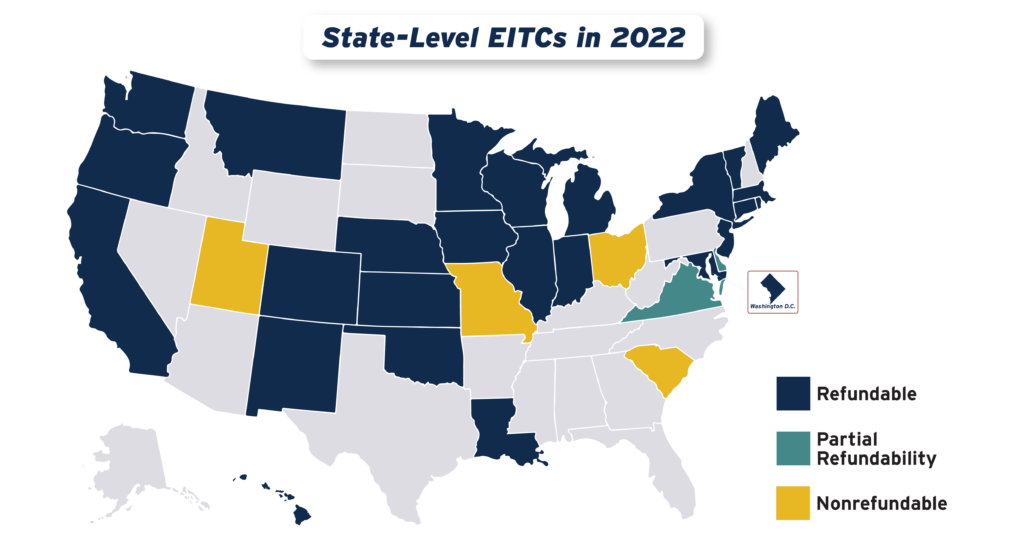
States continued their recent trend of advancing EITCs in 2022, with nine states plus the District of Columbia either creating or improving their credits. Utah enacted a 15 percent nonrefundable EITC, while the District of Columbia, Hawaii, Illinois, Maine, Vermont and Virginia expanded existing credits. Meanwhile, Connecticut, New York and Oregon provided one-time boosts to their EITC-eligible populations.
More States are Boosting Economic Security with Child Tax Credits in 2022
September 15, 2022 • By Aidan Davis

After years of being limited in reach, there is increasing momentum at the state level to adopt and expand Child Tax Credits. Today ten states are lifting the household incomes of families with children through yearly multi-million-dollar investments in the form of targeted, and usually refundable, CTCs.
Maine Center for Economic Policy: New Tax Relief Plan Will Disproportionately Benefit Wealthy Seniors
August 30, 2022
This year, lawmakers included a tax change in the state’s budget that will significantly expand tax benefits for pension recipients in Maine. Beginning in 2023, pension recipients will be allowed to exempt up to $25,000 in pension income from state income taxes, and that amount will increase to $35,000 for tax years 2025 and after. […]
Legislative Momentum in 2022: New and Expanded Child Tax Credits and EITCs
July 22, 2022 • By Neva Butkus
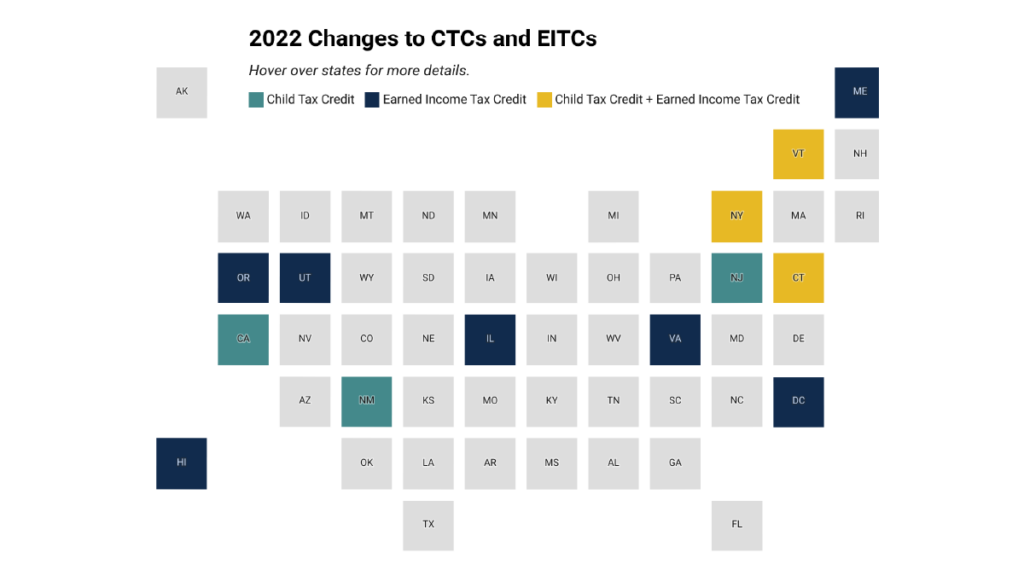
State legislatures across the country made investments in their future, centering children, families, and workers by enacting and expanding state Earned Income Tax Credits (EITCs), Child Tax Credits (CTCs), and other refundable credits this session. In total, seven states either expanded or created CTCs this session. Connecticut, New Mexico, New Jersey, Rhode Island and Vermont […]
From the Bay State to the Golden State, lawmakers across the nation are making deals and negotiating budgets with major tax implications...
This Spring looks to be bringing a mix of showers and flowers as states around the nation continue to act on a range of tax proposals...
Cannabis Taxes Outraised Alcohol by 20 Percent in States with Legal Sales Last Year
April 19, 2022 • By Carl Davis

In 2021, the 11 states that allowed legal sales within their borders raised nearly $3 billion in cannabis excise tax revenue, an increase of 33 percent compared to a year earlier. While the tax remains a small part of state budgets, it’s beginning to eclipse other “sin taxes” that states have long had on the books.
Last week we highlighted how several states were pushing through regressive tax cuts as their legislative sessions are coming to a close. Well, this week many of those same states took further actions on those bills and it’s safe to say we’re even less impressed than before...
Several states have dropped a few late-session surprises, and from the looks of it, they’re not the good kind...
Spring is around the corner and like those pesky allergies that come along with it, equally pesky tax proposals continue to pop up in states across the U.S....
