
Maine
Maine Center for Economic Policy: Impacts of Proposed Income Tax Rate Reduction
March 30, 2023 • By ITEP Staff
House and Senate Republicans are demanding income tax cuts be part of the budget, and Democrats in the legislature were right to make sure they didn’t have the tools to threaten a state shutdown to get them. As the legislature prepares to pass a current services budget to avoid a stalemate in June that could […]
State Rundown 1/11: Governors Ready to Talk Tax in 2023 State Addresses
January 11, 2023 • By ITEP Staff
Governors have begun their annual trek to the podium in statehouses across the U.S. to lay out their visions for 2023, and so far, taxes look like they will play a major role in debates throughout state legislative sessions...
State Child Tax Credits and Child Poverty: A 50-State Analysis
November 16, 2022 • By Aidan Davis

Regardless of future Child Tax Credit developments at the federal level, state policies can supplement the federal credit to deliver additional benefits to children and families. State credits can be specifically tailored to meet the needs of local populations while also producing long-term benefits for society as a whole
ITEP Policy Briefs: More and More States Are Helping Low-Income Families with New and Expanded Tax Credits
September 15, 2022 • By ITEP Staff
13 states plus D.C. created or expanded state CTCs or EITCs this year, helping create more equitable state tax systems WASHINGTON, D.C.: In 2022’s state legislative sessions, lawmakers across the country advanced tax policies that will bolster the economic security of millions of low- and moderate-income working families through new and enhanced Child Tax Credits […]
Boosting Incomes and Improving Tax Equity with State Earned Income Tax Credits in 2022
September 15, 2022 • By Aidan Davis
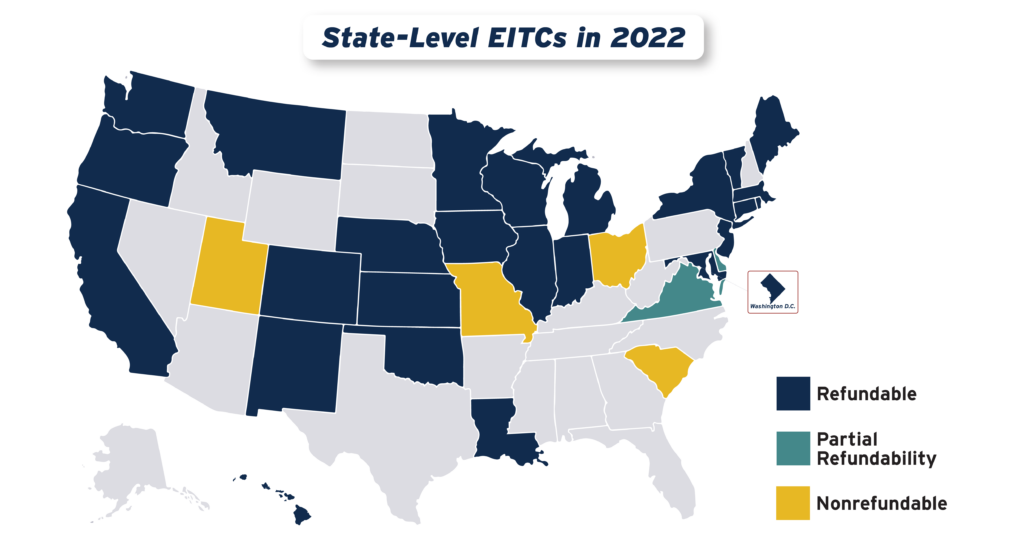
States continued their recent trend of advancing EITCs in 2022, with nine states plus the District of Columbia either creating or improving their credits. Utah enacted a 15 percent nonrefundable EITC, while the District of Columbia, Hawaii, Illinois, Maine, Vermont and Virginia expanded existing credits. Meanwhile, Connecticut, New York and Oregon provided one-time boosts to their EITC-eligible populations.
More States are Boosting Economic Security with Child Tax Credits in 2022
September 15, 2022 • By Aidan Davis

After years of being limited in reach, there is increasing momentum at the state level to adopt and expand Child Tax Credits. Today ten states are lifting the household incomes of families with children through yearly multi-million-dollar investments in the form of targeted, and usually refundable, CTCs.
Maine Center for Economic Policy: New Tax Relief Plan Will Disproportionately Benefit Wealthy Seniors
August 30, 2022 • By ITEP Staff
This year, lawmakers included a tax change in the state’s budget that will significantly expand tax benefits for pension recipients in Maine. Beginning in 2023, pension recipients will be allowed to exempt up to $25,000 in pension income from state income taxes, and that amount will increase to $35,000 for tax years 2025 and after. […]
Legislative Momentum in 2022: New and Expanded Child Tax Credits and EITCs
July 22, 2022 • By Neva Butkus
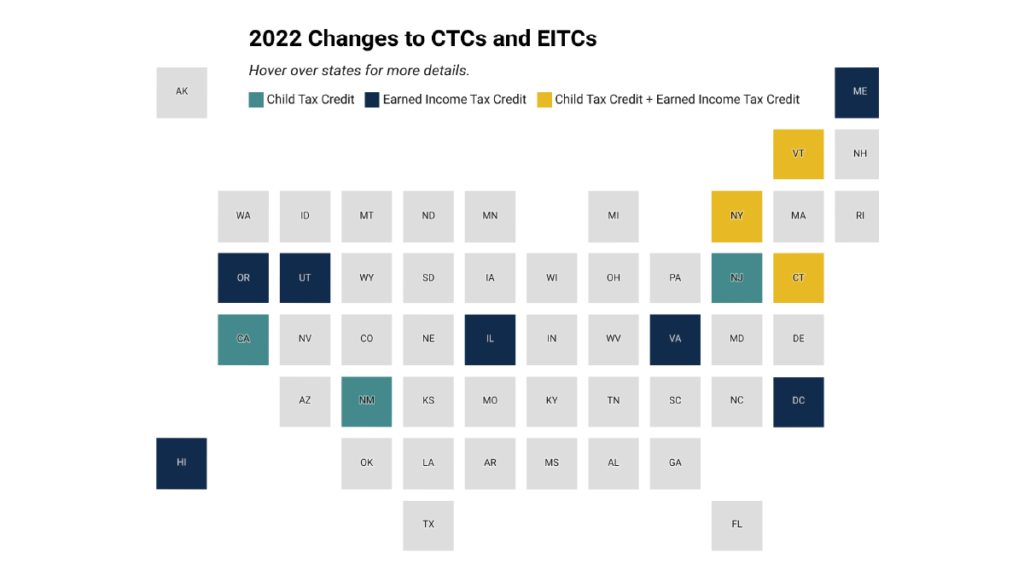
State legislatures across the country made investments in their future, centering children, families, and workers by enacting and expanding state Earned Income Tax Credits (EITCs), Child Tax Credits (CTCs), and other refundable credits this session. In total, seven states either expanded or created CTCs this session. Connecticut, New Mexico, New Jersey, Rhode Island and Vermont […]
From the Bay State to the Golden State, lawmakers across the nation are making deals and negotiating budgets with major tax implications...
This Spring looks to be bringing a mix of showers and flowers as states around the nation continue to act on a range of tax proposals...
Cannabis Taxes Outraised Alcohol by 20 Percent in States with Legal Sales Last Year
April 19, 2022 • By Carl Davis

In 2021, the 11 states that allowed legal sales within their borders raised nearly $3 billion in cannabis excise tax revenue, an increase of 33 percent compared to a year earlier. While the tax remains a small part of state budgets, it’s beginning to eclipse other “sin taxes” that states have long had on the books.
Last week we highlighted how several states were pushing through regressive tax cuts as their legislative sessions are coming to a close. Well, this week many of those same states took further actions on those bills and it’s safe to say we’re even less impressed than before...
Several states have dropped a few late-session surprises, and from the looks of it, they’re not the good kind...
Spring is around the corner and like those pesky allergies that come along with it, equally pesky tax proposals continue to pop up in states across the U.S....
State Rundown 3/9: One State Stands Out Amid the Avalanche of Tax Cuts
March 9, 2022 • By ITEP Staff
The avalanche of regressive tax-cut proposals coming out of state legislatures has not slowed over the course of the winter months, but one state has provided a shot of hope to advocates of tax equity...
State Rundown 2/16: Spending Priorities Emerge as the Votes Are Counted
February 16, 2022 • By ITEP Staff
State lawmakers have been busy working out deals and negotiating how best to use excess revenues, and as the votes are beginning to come in, spending priorities are becoming clearer...
Federal EITC Enhancements Help More Than One in Three Young Workers
February 8, 2022 • By Aidan Davis
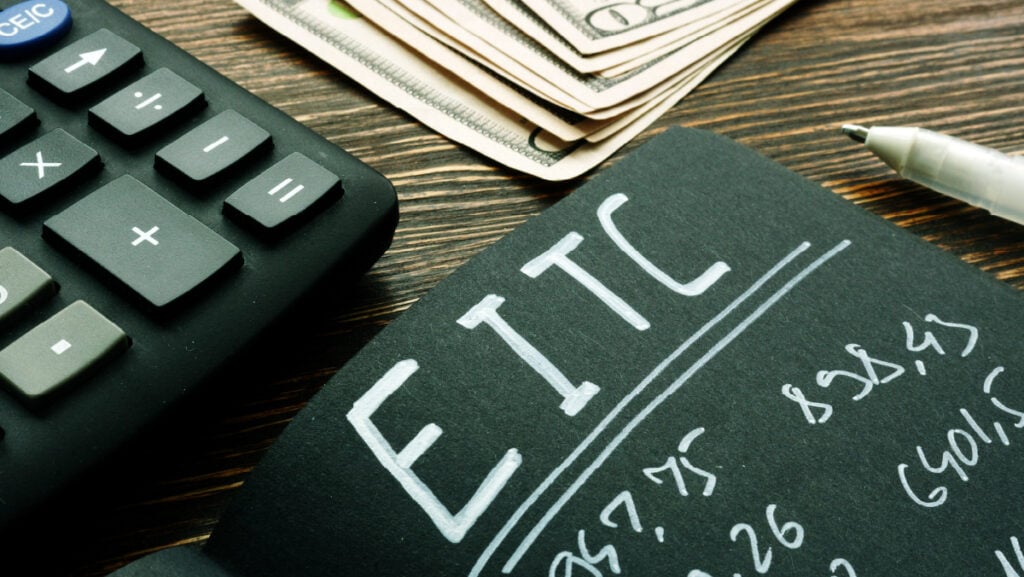
More than one in three young adults would benefit from workers without children being eligible to receive the federal EITC. This policy change would bolster young adults’ economic security.

Rather than resorting to tax cuts, which can eventually create revenue shortfalls, lawmakers should determine whether they have adequately invested in people and communities. There are better ways to leverage tax systems to help those who need it most.
The new year often brings with it a reinvigorated commitment to new goals and a fresh perspective on how to accomplish them, but it seems like lawmakers in states around the country are giving up already...
Boosting Incomes and Improving Tax Equity with State Earned Income Tax Credits in 2021
October 21, 2021 • By Aidan Davis

The EITC benefits low-income people of all races and ethnicities. But it is particularly impactful in historically excluded Black and Hispanic communities where discrimination in the labor market, inequitable educational systems, and countless other inequities have relegated a disproportionate share of people to low-wage jobs.
State Income Taxes and Racial Equity: Narrowing Racial Income and Wealth Gaps with State Personal Income Taxes
October 4, 2021 • By Carl Davis, Jessica Schieder, Marco Guzman
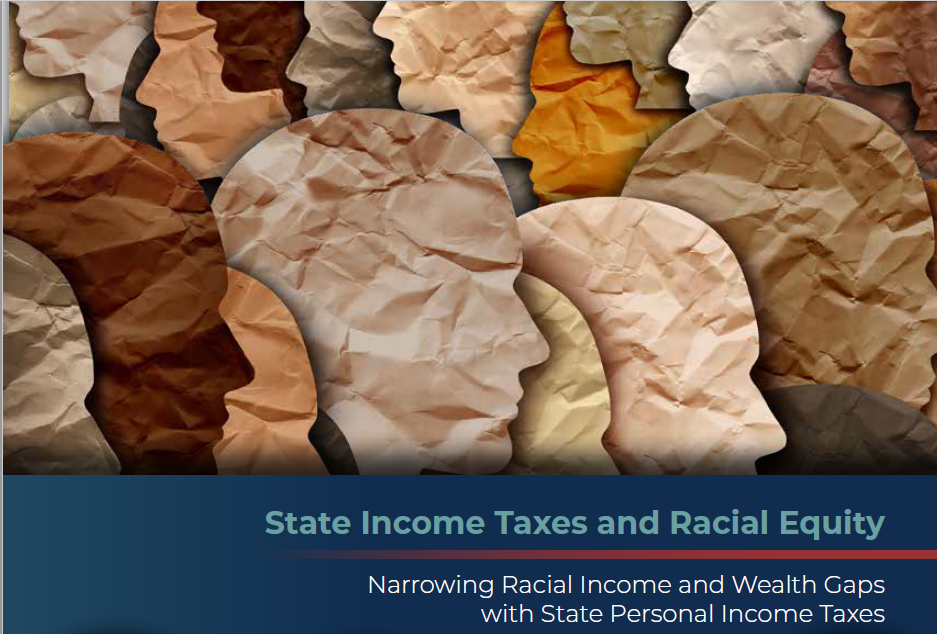
10 state personal income tax reforms that offer the most promising routes toward narrowing racial income and wealth gaps through the tax code.
Maine Beacon: Analysis: Dems’ budget plan would raise taxes on rich, cut rates for 80% of Mainers
September 25, 2021
A report released this week by a national policy group found that proposed changes to the tax code advanced by the House Ways and Means Committee to pay for the sweeping expansion of the social safety net within Democrats’ $3.5 trillion budget bill could result in a tax cut for 80% of Mainers while only […]
Extending Federal EITC Enhancements Would Bolster the Effects of State-Level Credits
September 13, 2021 • By Aidan Davis

The EITC expansion targets workers without children in the home. In 2022 it would provide a $12.4 billion boost, benefiting 19.5 million workers who on average would receive an income boost of $730 dollars.
State Rundown 7/7: The New Fiscal Year Starts off With a Bang, And Not Just Fireworks
July 7, 2021 • By ITEP Staff
States were busy over the past week despite the Fourth of July holiday. Many are gearing up for upcoming tax and budget clashes that could shape their futures for some time...
State Rundown 6/30: Resolutions Are in Order for the New Fiscal Year
June 30, 2021 • By ITEP Staff
Today is the last day of the fiscal year in many states, and some lawmakers might want to take the opportunity to make some new fiscal year resolutions. Legislators in Arizona, New Hampshire, Ohio, North Carolina, and Wisconsin, for example, should really cut back on the trickle-down tax-cut Kool-Aid, which may make parties with rich donors more fun but tends to be both harmful and habit-forming...
