
New York
It’s a new year, and state legislatures across the country are resolved to write new tax policy. Tax debates are heating up nearly everywhere in the early days of 2025, but states’ fiscal situations vary dramatically. New York is considering expanding the state’s Child Tax Credit following Gov. Hochul’s proposed expansion. On the other side […]
Trump’s Plan to Extend His 2017 Tax Provisions: Updated National and State-by-State Estimates
January 8, 2025 • By Steve Wamhoff
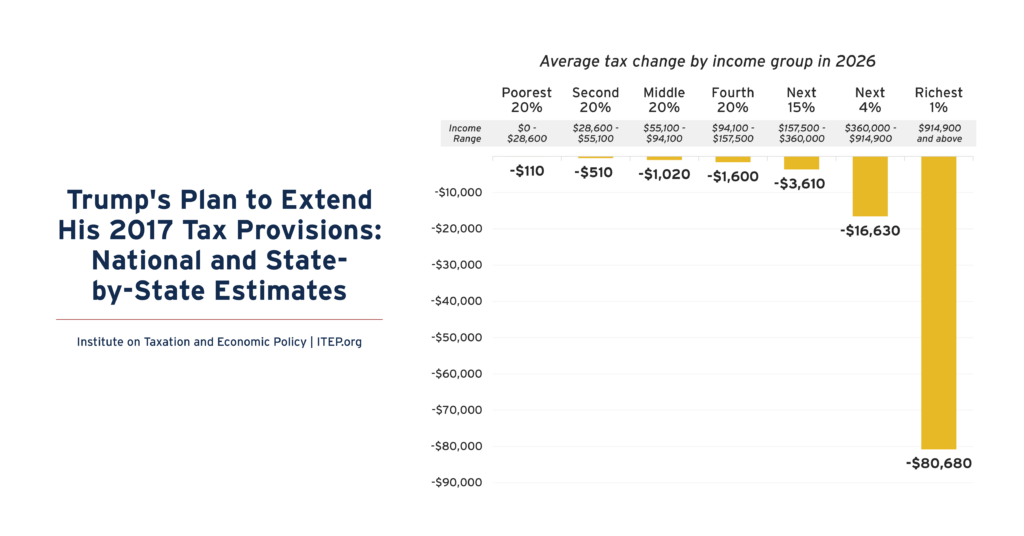
Trump’s plan to make most of the temporary provisions of his 2017 tax law permanent would disproportionately benefit the richest Americans. This includes all major provisions except the $10,000 cap on deductions for state and local taxes (SALT) paid.
State Rundown 11/20: Some Budgets and Tax Proposals Fail to Defy Gravity, Fall Short
November 20, 2024 • By ITEP Staff
This week, there are high-profile budget and tax debates at both the state and local levels. The Louisiana legislature continues to debate Gov. Jeff Landry’s deeply regressive tax package in a special session focused on replacing corporate and personal income tax revenue with additional sales taxes, but some efforts to find offsets for the cuts […]
State Tax Policy Should Adopt the Principles of ‘Black Women Best’
November 20, 2024 • By Brakeyshia Samms

Focusing policy analysis on Black women illustrates how Black women have long shouldered the shortcomings of the economy and clearly points to solutions that work for all. Black women are at their best when they are financially secure, healthy, and free – and our economy is at its best when all people can thrive and benefit.
On Election Day, Voters Across the Country Chose to Invest in Their States & Communities
November 19, 2024 • By Kamolika Das
On election day, voters across the country — in states red and blue and communities rural and urban — approved a wide range of state and local ballot measures on taxation and public investment. The success of these measures clearly shows that voters are willing to invest in public priorities that feel tangible and close to home.
Taxing Transportation Is One Great Way to Reduce Carbon Emissions
November 12, 2024 • By Amy Hanauer

Federal, state, and local tax codes are important but underused tools that can create a more climate-resilient, less carbon-emitting America. A modernized tax code would stop subsidizing emissions and instead encourage lower-carbon design. Because cars and trucks produce roughly one-fourth of US greenhouse gas emissions, transportation taxation is a great starting point.
New York Times: Trump’s Closing Argument: Lies, Distortions and Inaccuracies
November 4, 2024
Former President Donald J. Trump, in the closing days of the 2024 election, continues to be a font of exaggerations, misleading claims and outright lies.
New York Times: Trump Flirts With the Ultimate Tax Cut: No Income Taxes at All
October 24, 2024
Former President Donald J. Trump has spent much of the presidential campaign brainstorming new, and sometimes untested, ways to cut taxes. In the election’s final stretch, he raised the possibility of going even further: eliminating income taxes entirely.
Louisiana Gov. Jeff Landry is proposing a regressive tax reform package that would enact a flat personal and corporate income tax while expanding the state’s sales tax base and eliminating certain exemptions to make up for a portion of the lost revenue. West Virginia continues to chip away at its personal income tax, one of the state’s few progressive revenue options. And advocates in New York are rallying around a package of progressive tax legislation that would tax capital gains at higher rates, enact higher income tax brackets on multi-millionaires, and tax unrealized capital gains of billionaires.
New York Times: How Trump’s Radical Tariff Plan Could Wreck Our Economy
October 18, 2024
As a result, tariffs would raise the cost of living more for middle- and lower-income families than the average. An estimate by the Institute on Taxation and Economic Policy, which assumes a 20 percent tariff, finds that it would reduce the real income of families in the bottom fifth of earners by 5.7 percent, of middle-income families by 4.6 percent, but of the top 1 percent by only 1.4 percent. An analysis by the Peterson Institute for International Economics arrives at similar numbers. In other words, Trump’s 2.0 tariffs would in effect be a strongly regressive tax increase, imposing a…
2024 Local Tax Ballot Measures: Voters in Dozens of Communities Will Shape Local Policy
October 17, 2024 • By Rita Jefferson
Next month, voters across the country will weigh in on many local ballot measures that will have a profound effect on the adequacy of our local tax systems and whether cities and communities can fund public needs. These are in addition to statewide ballot questions, many of which have local implications this year.
New York Times: Trump and Harris Both Like a Child Tax Credit, but With Different Aims
October 16, 2024
Vice President Kamala Harris has made an expanded child tax credit central to her campaign, and former President Donald J. Trump boasts, “I doubled the child tax credit.” With a quick look, voters might think the child-rearing subsidy the rare matter on which the rival candidates agree.
State Rundown 10/10: More Special Sessions, More Proposed Tax Cuts
October 10, 2024 • By ITEP Staff
This week several states are getting an early start at writing new tax policy in special sessions. In West Virginia, the legislature has come to an agreement with Gov. Justice on an additional tax cut—on top of already-planned cuts. The 2 percent cut will cost the state $49 million a year and come from spending […]
New York Times: Trump’s Plans Could Increase U.S. Debt While Raising Costs for Most Americans
October 7, 2024
Former President Donald J. Trump’s economic proposals could inflame the nation’s debt burden while ultimately raising costs for a vast majority of Americans, according to a pair of new economic analyses that are among the most in-depth studies to date of the Republican nominee’s plans. Read more.
Extending Temporary Provisions of the 2017 Trump Tax Law: Updated National and State-by-State Estimates
September 13, 2024 • By Steve Wamhoff

The TCJA Permanency Act would make permanent the provisions of the Tax Cuts and Jobs Act of 2017 that are set to expire at the end of 2025. The legislation would disproportionately benefit the richest Americans. Below are graphics for each state that show the effects of making TCJA permanent across income groups. See ITEP’s […]
State Earned Income Tax Credits Support Families and Workers in 2024
September 12, 2024 • By Neva Butkus
Nearly two-thirds of states (31 plus the District of Columbia and Puerto Rico) have an Earned Income Tax Credit. These credits boost low-paid workers’ incomes and offset some of the taxes they pay, helping lower-income families achieve greater economic security.
State Child Tax Credits Boosted Financial Security for Families and Children in 2024
September 12, 2024 • By Neva Butkus
Fifteen states plus the District of Columbia provide Child Tax Credits to reduce poverty, boost economic security, and invest in children. This year alone, lawmakers in three states – Colorado, New York, and Utah – expanded their Child Tax Credits while lawmakers in the District of Columbia created a new credit that will take effect in 2025.
The IRS has opened its free tax filing service called Direct File to every state for the 2025 tax filing season. Direct File was made possible by President Biden’s Inflation Reduction Act, which provided new resources for the IRS to improve customer service and ensure taxpayers claim the benefits and deductions for which they are […]

Many cities, counties, and townships across the country are in a difficult, or at least unstable, budgetary position. Localities are responding to these financial pressures in a variety of ways with some charging ahead with enacting innovative reforms like short-term rental and vacancy taxes, and others setting up local tax commissions to study the problem.
State Rundown 8/8: States Laying the Groundwork for Future Tax Battles
August 8, 2024 • By ITEP Staff
Whether they’re in a special session, gearing up for one, or prepping for 2025, states around the country are focusing on important tax fights...
New York Times: A Walzonomics Primer
August 7, 2024
It’s been nearly 24 hours since Kamala Harris announced Gov. Tim Walz of Minnesota as her running mate, catapulting him into the national spotlight. Unlike other candidates for the position, including Gov. Josh Shapiro of Pennsylvania and Senator Mark Kelly of Arizona, the Midwestern politician hasn’t been closely scrutinized — until now. Here’s where he stands on some key business issues.
Sales Tax Holidays Miss the Mark When it Comes to Effective Sales Tax Reform
August 6, 2024 • By Marco Guzman

Nineteen states have sales tax holidays on the books in 2024. These suspensions combined will cost states and localities over $1.3 billion in lost revenue this year. Sales tax holidays are poorly targeted and too temporary to meaningfully change the regressive nature of a state’s tax system.
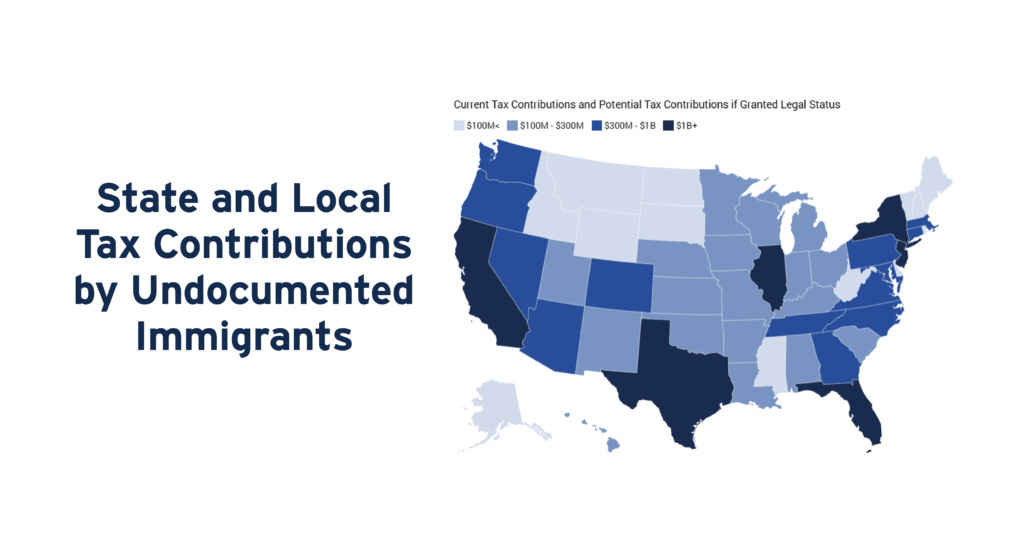
Undocumented immigrants pay taxes that help fund public infrastructure, institutions, and services in every U.S. state. Nearly 39 percent of the total tax dollars paid by undocumented immigrants in 2022 ($37.3 billion) went to state and local governments.
Study: Undocumented Immigrants Contribute Nearly $100 Billion in Taxes a Year
July 30, 2024 • By ITEP Staff
Contact: Jon Whiten ([email protected]) Immigration policies have taken center stage in public debates this year, but much of the conversation has been driven by emotion, not data. A new in-depth study from the Institute on Taxation and Economic Policy aims to help change that by quantifying how much undocumented immigrants pay in taxes – both […]

Undocumented immigrants paid $96.7 billion in federal, state, and local taxes in 2022. Providing access to work authorization for undocumented immigrants would increase their tax contributions both because their wages would rise and because their rates of tax compliance would increase.
