
Recent Work by ITEP
A Gas Tax Hike Is the Obvious Answer to Infrastructure Funding
February 14, 2018 • By Steve Wamhoff

As part of his budget plan released Monday, President Trump offered an infrastructure proposal that he describes as a $1.5 trillion 10-year surge in infrastructure investments. The details of the proposal explain that the federal government would put up only $200 billion of this total, which the administration claims will be offset with cuts in other spending. Even this relatively meager funding amount is illusory because it would clearly be financed by cutting other federal spending — including infrastructure investments.
GOP Dilemma: Love the Tax Cut, Hate the Agency that Administers It
February 14, 2018 • By Matthew Gardner
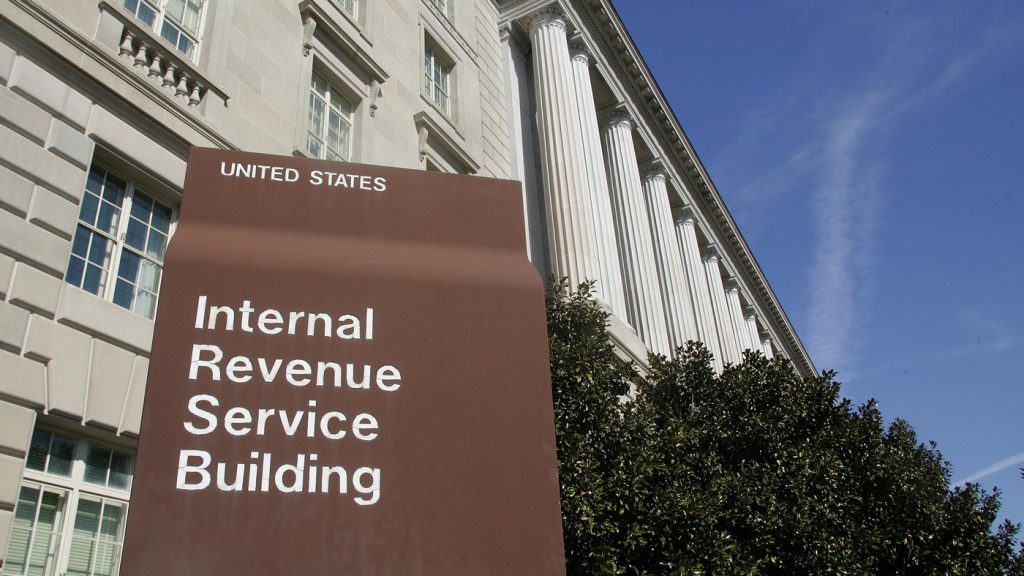
The president’s budget proposal would cut the agency’s baseline funding from $12 billion to $11.1 billion this year. This is almost a quarter less, in inflation-adjusted terms, than the $14.4 billion the agency received in fiscal year 2010. Not surprisingly, the long, steady decline of IRS funding during this period has led to a reduction in staffing: the agency’s 2016 employee total of 77,000 was 17,000 lower than at the beginning of the decade.
Amazon Inc. Paid Zero in Federal Taxes in 2017, Gets $789 Million Windfall from New Tax Law
February 13, 2018 • By Matthew Gardner

The online retail giant has built its business model on tax avoidance, and its latest financial filing makes it clear that Amazon continues to be insulated from the nation’s tax system. In 2017, Amazon reported $5.6 billion of U.S. profits and didn’t pay a dime of federal income taxes on it. The company’s financial statement suggests that various tax credits and tax breaks for executive stock options are responsible for zeroing out the company’s tax this year.
The More Things Change: PG&E Records a Tenth Straight Year of No Federal Income Taxes
February 9, 2018 • By Matthew Gardner
In the runup to last fall’s tax debate, it was commonly observed that corporate tax reform is both easy and hard: the easy part is cutting the rate, and the hard part is paying for it by closing loopholes. The real test of Congress’ determination to achieve tax reform would be whether they would stand up to corporate lobbyists and shut down loopholes like accelerated depreciation that allow profitable companies to pay little or no income tax. As is now widely known, Congress was not especially determined: lawmakers aggressively cut the corporate rate from 35 to 21 percent, but then…
How the Latest Budget Deals Expose the Failure of “Tax Reform”
February 9, 2018 • By Richard Phillips

If there was one thing that tax reform legislation was supposed to accomplish, it was to put an end to the scandalous semiannual ritual of extending and expanding the list of the temporary provisions in the tax code, known as tax extenders. During the passage of the last tax extenders bill at the end of December 2015, lawmakers on both sides of the aisle agreed that it was critical to have a tax code that provides “permanency and certainty” and to move forward with comprehensive tax reform that would decide the fate of the extenders once and for all. Unfortunately,…
State Rundown 2/8: State Responses to Federal Bill Gaining Steam
February 8, 2018 • By ITEP Staff
Several states this week are looking at ways to revamp their tax codes in response to the federal tax cut bill, with Georgia, Idaho, Maryland, Nebraska, and Vermont all actively considering proposals. Meanwhile, Connecticut, Louisiana, and Pennsylvania are working on resolving their budget shortfalls. And transportation funding is getting needed attention in Mississippi, Utah, and Wisconsin.
How Much Will Typical Middle-Class Workers Really See Their Paychecks Change?
February 3, 2018 • By Steve Wamhoff

The campaign by Republican leaders in Congress to promote their new tax law has two prongs. One is the claim that corporate income tax cuts are already trickling down to workers, which, as we have explained, is believed by basically no economists anywhere. The other prong of their campaign is to argue that the personal income tax cuts will provide a noticeable decline in withholding from paychecks that middle-class people will notice soon. At this point, it’s helpful to look at some actual data and see how small the boost in take-home pay will really be for most Americans.

Sometimes, ranking near No. 1 in the world is not a badge of pride. According to the Financial Secrecy Index released by the Tax Justice Network (TJN), the United States is the second largest contributor to financial secrecy in the world, placing it in the company of infamous tax havens such as Switzerland (ranked No. 1) and the Cayman Islands (ranked No. 3). Financial secrecy is enabling people to hide income from the authorities to evade taxes or financial regulation, launder profits from crime, finance terrorism, or otherwise break the law.
State Rundown 1/31: Low-Income Families’ Taxes Getting Some Much-Needed Attention
January 31, 2018 • By ITEP Staff
This week was promising for advocates of Earned Income Tax Credits (EITCs) and other tax breaks for workers and their families, which are making headway in Alabama, Maine, Massachusetts, Missouri, Utah, and Wisconsin. The week also saw the unveiling of a tax cut plan in Missouri, a budget-balancing tax increase package in Oklahoma, the end of an unproductive film tax credit in West Virginia, and a very busy week for tax policy in Utah.
How Exxon’s Empty $50 Billion Promise Made Its Way into Trump’s SOTU
January 31, 2018 • By Matthew Gardner

Never one to let the truth get in the way of a good story, House Speaker Paul Ryan immediately published a press release with the headline, “ExxonMobil to Invest an Additional $50 Billion in the U.S. Due to Tax Reform.” The statement was completely faithful to ExxonMobil’s statement, except for the words “additional” and “due to tax reform.” Not to be outdone, President Trump implied during his State of the Union address that the company was investing $50 billion in response to the new tax law. But a closer examination of ExxonMobil’s recent history of domestic spending finds that the…
ITEP in the News
CBS News: The One Big Beautiful Bill Act is 1 year old. Here are the winners and losers.
Yahoo News: Hawaii’s new ‘millionaire tax’ rivals top tax rate among other states
Lexington Herald-Leader: How are gas prices set in KY? From oil to the pump, here’s what to know
Wall Street Journal: Coke Takes on IRS With $20 Billion at Stake
Reuters: Hawaii Considers Gasoline Tax Suspension as Pump Prices Soar
ITEP Work in Action
Senator Chris Van Hollen: Van Hollen, Pettersen Lead Lawmakers in Introducing Legislation to Bring Transparency to Corporate Abuse of Tax Havens, Job Offshoring
Center on Budget and Policy Priorities: Missouri Tax Amendment Likely to Seriously Harm Services, Shift Taxes Onto Working Families
California Budget and Policy Center: Should Voters Approve Prop. 3? How Top Tax Rates Have Helped Californians
Migration Policy Institute: Rooted in the Valley: Immigrants in Napa County’s Communities and Economy
The Bell Policy Center: Colorado Ballot Guide 2026

Institute on Taxation
and Economic Policy
ITEP is a non-profit, non-partisan tax policy organization. We conduct rigorous analyses of tax and economic proposals and provide data-driven recommendations to shape equitable and sustainable tax systems.
Subscribe to ITEP Emails
Tax research and policy news in your inbox.
Promote Fair Tax Policy
Your gift to ITEP promotes tax justice. With your help, we do research that supports taxing millionaires and billionaires, taxing big corporations and raising revenue for the things our people, our communities and our planet need.
Together, we can create a country with more economic justice, more racial justice, more climate justice… and more tax justice.