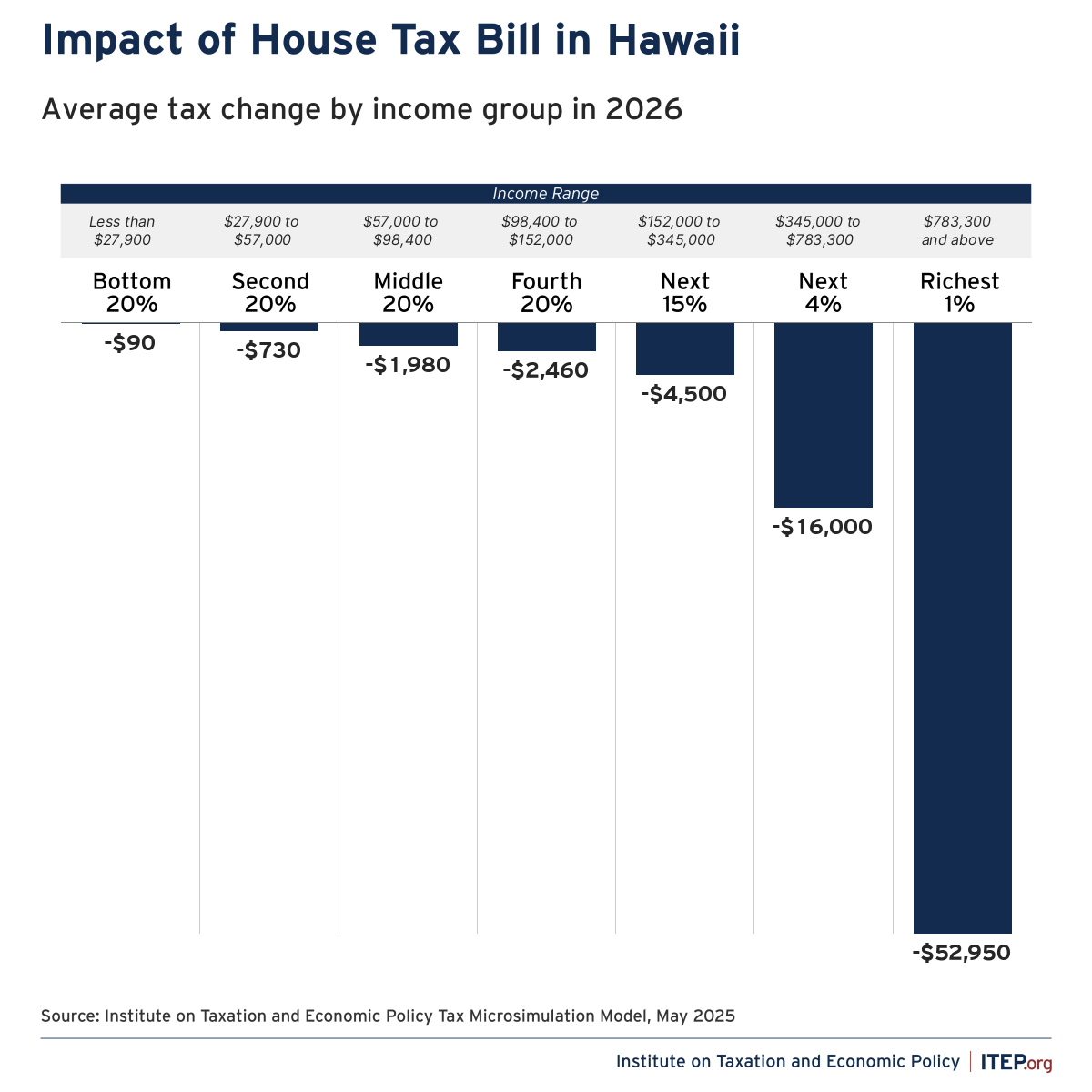
This week Hawai’i policymakers are considering scaling back previously passed tax cuts in the face of a significant revenue shortfall. Up for debate is a plan to reclaim up to $1.8 billion in lost revenue by curtailing tax cuts for high earners, a group that overwhelmingly benefited from the new federal tax law.
Meanwhile, there are property tax debates taking place throughout the nation, with lawmakers in Texas, Florida, Michigan, and South Dakota proposing limits or cuts that would drain resources from schools and other public services.
Major State Tax Proposals and Developments
- HAWAI’I Gov. Josh Green and the state legislature are considering scaling back previously approved state income tax cuts for high earners due to a looming $3 billion revenue shortfall and significant budget challenges. The governor suggests curtailing tax breaks for wealthier residents to save up to $1.8 billion, which could be redirected to support food and housing security. The tax cuts are estimated to cost the state $1 billion by 2028 and, according to an ITEP analysis, send nearly half of the income tax cuts to the top 20 percent of earners, households with average annual incomes of more than $147,000. – MILES TRINIDAD
- Lt. Gov. Dan Patrick of TEXAS has unveiled a property tax cut plan that competes with Gov. Greg Abbott’s proposal (which included eliminating school property taxes on homesteads). Included in the proposal is an increase to the state’s homestead exemption from the first $140,000 to $180,000 of a home’s value while also lowering the threshold to qualify for the senior homestead exemption, which adds an additional $60,000 to the initial exemption from 65 to 55 years of age. While this plan would likely cost less than Gov. Abbott’s extreme proposal, it remains costly while doing little to nothing for low- to moderate-income Texans and nothing for renters. – NEVA BUTKUS
State Roundup
- Multiple cities and a school district in ALABAMA have joined a lawsuit challenging the state’s internet sales tax law. Tuscaloosa sued the state earlier this year, arguing that the city was receiving much less benefit than its residents were contributing.
- San Francisco, CALIFORNIA Mayor Daniel Lurie released a plan to fund the city’s public transit through a structured parcel tax. The fee structure would charge different rates based on property size and use, collecting an estimated $150 million annually.
- Local officials in FLORIDA are raising concerns over property tax bills that are making their way through the House. The most extreme of these proposals would eliminate all non-school homestead property taxes.
- Public schools in INDIANA are already feeling the impact of property tax legislation that decreased taxable assessed values passed by the state legislature earlier this year. A recent survey published by the Indiana Coalition for Public Education found that 95.3 percent of school corporations are already feeling the negative impact of the legislation.
- MICHIGAN’S House Speaker is pushing for the legislature to adopt a property tax cut proposal alongside an alternative proposal on the ballot for voters to decide between the two. Meanwhile, a MICHIGAN judge denied a request from cannabis businesses to block a new 24 percent wholesale marijuana excise tax, allowing it to take effect on January 1, 2026, as part of the state’s plan to provide $420 million in new road funding. The court ruled the tax does not violate the 2018 voter-approved marijuana law that imposed a 10 percent excise tax. However, a separate trial is scheduled for January focused on if the new tax would harm voters by pushing them to the illegal market.
- Legislation signed by Gov. Kathy Hochul of NEW YORK will increase the amount seniors who meet certain income requirements can forego from their property taxes from 50 to 65 percent of their home’s assessed valuation for property taxes.
- RHODE ISLAND Gov. Dan McKee is moving forward with his 2026 reelection campaign with proposals to provide seniors with tax subsidies by eliminating state taxes on Social Security income. He’s also expressed openness to raising income taxes on high-earners to fund affordability programs and offset potential federal aid cuts.
- SOUTH DAKOTA Gov. Larry Rhoden criticized 19 property tax relief recommendations from a legislative task force, saying most are not feasible, and instead promoted his own plan to allow counties to impose an optional sales tax to offset property taxes. Rising property taxes, which have increased by nearly 40 percent in four years, have fueled debate ahead of the January legislative session, and lawmakers and Rhoden are seeking competing strategies to cut property taxes without harming essential services.
- UTAH Gov. Spencer Cox released his budget proposal and noted that 2026 will be “a tight year,” following the news that the state will lose about $500 million in the next two years due to state tax changes linked to the federal tax bill. The governor, however, did call for property tax reform to rebalance the distribution between residential and commercial property.
- VIRGINIA lawmakers are debating whether to link state tax rules with recent federal tax changes. Provisions to exempt tip and overtime income could cost the state $900 million in lost revenue, and a retroactive rebate for corporate research could cost the state $800 million over the next three years.
What We’re Reading
- ProPublica published an article finding that states that enacted deep tax cuts will now have significantly less revenue due to the federal tax bill shifting the cost of Medicaid and SNAP cuts onto state budgets. The result will likely leave millions of residents without vital social safety-net services.
- ITEP published new research this week on the impact to states who choose to mirror federal law on taxing tipped and overtime income.
- Recent research has identified approaches to help increase access to tax credits. The study explored credit access and reach in Maryland.
- An article from The Triibe examines why the budgeting process in Chicago often relies on increasing regressive taxes and fees.
- New York City Mayor-Elect Zohran Mamdani plans new taxes on the wealthy to fund bold ideas for the city. While some shout that the new taxes will make them leave, the reality is much more complex. In practice, New York’s tax auditors are good at their jobs and it’s challenging for the wealthy to simply claim residency in a tax shelter without actually leaving the city.
If you like what you are seeing in the Rundown (or even if you don’t) please send any feedback or tips for future posts to Aidan Davis at [email protected]. Click here to sign up to receive the Rundown via email.