
Corporate Taxes
President Trump Says His Tariffs Aren’t Paid by Americans. Corporations Are Indicating the Opposite.
December 15, 2025 • By Logan Liguore

Corporations have publicly revealed that they are passing the cost of tariffs on to Americans—the opposite of what the executive branch has said is happening.
Tax Haven Data Demonstrate Need for Global Minimum Tax Despite Opposition from Trump Administration
December 10, 2025 • By Steve Wamhoff

American corporations use accounting gimmicks to make profits appear to be earned in tax havens. This widespread problem could be fixed by Congress enacting legislation to implement a minimum tax on corporations that meets the standards of the global minimum tax that other countries have begun to implement.

State governments are rushing to offer billions of dollars in subsidies to data center construction, apparently without understanding their full costs.
Biden Tax Reforms Take a $16 Billion Bite Out of Trump’s Big Tax Giveaway to Meta
October 30, 2025 • By Matthew Gardner

Meta’s earnings setback is entirely attributable to an important tax reform championed by the Biden administration in 2022.
Oil and Gas Companies Are Paying Less Tax to the U.S. than to Foreign Governments
October 30, 2025 • By Matthew Gardner

Since 2017, these companies paid $135 billion in income taxes to foreign governments, but just $29 billion to the U.S.
Why States Shouldn’t Go Along With OBBBA’s Corporate Tax Breaks: A Practical Guide
October 27, 2025 • By Nick Johnson, Michael Mazerov

States should immediately decouple from four costly corporate tax provisions in the new federal tax law.
Well, That Was Fast: Trump Tax Law’s New Corporate Breaks are Already Worsening the Deficit
October 9, 2025 • By ITEP Staff

Corporate income taxes for the fiscal year that ended in September are $77 billion lower than in the previous year, a 15 percent drop.
Coca-Cola To Shareholders: $18 Billion Tax Bill? What $18 Billion Tax Bill?
October 1, 2025 • By Matthew Gardner

If Coca-Cola only pays 3% of the $18 billion tax bill it's facing, then the rest of us will have to pick up the remaining 97%.
Leaving Billions on the Table: Trump-Induced Brain Drain Leaves the IRS Struggling to Prevent Corporate Tax Avoidance
September 25, 2025 • By Matthew Gardner

The IRS's capacity to prevent big multinational corporations from avoiding income taxes is facing a generational crisis.

What currently stands in the way of better corporate tax transparency.
Who Can Make a Billion Dollar Mistake and Not Lose Their Jobs? Congress
September 5, 2025 • By Matthew Gardner

A drafting error in the 2017 tax law will cost U.S. taxpayers over $1 billion in unintended tax cuts for big multinationals.
Americans Want to Know Which Corporations Aren’t Paying Taxes, but House Republicans Want to Keep this Information Secret
July 23, 2025 • By Matthew Gardner

The appropriations plan released by House Republicans this weekend threatens to withhold funding for an obscure but vital financial oversight board because that board now requires corporations to disclose basic information about their income tax payments (or lack thereof).

This country’s biggest historical challenge has been delivering this progress to all Americans, but Republicans have cut it back for everyone, retreating from many 20th century achievements in ways that will slam doors, rather than opening them, for the next generation.
Five Issues for States to Watch in the Federal Tax Debate
June 3, 2025 • By Dylan Grundman O'Neill, Kamolika Das, Marco Guzman, Miles Trinidad, Neva Butkus

This post covers five particularly notable provisions for states: increasing deductions for state and local taxes (SALT) paid, allowing more generous tax write-offs for businesses, offering new avenues for capital gains tax avoidance to people contributing to private school voucher funds, carving tips and overtime out of the tax base, and re-upping Opportunity Zone tax breaks for wealthy investors.
House Bill’s $164 Billion Giveaway to Multinational Corporations Puts America Last
May 27, 2025 • By Sarah Austin

The House of Representatives’ recently passed tax bill changes course on taxing multinational corporations engaged in shifting U.S. profits overseas, offering massive tax giveaways that weaken American revenues and risk sending more American corporate investment offshore.

Want to know more about the tax and spending megabill that President Trump recently signed into law? We've got you covered.
It’s Tax Day. You’ve Paid Your Share, but the Billionaires Haven’t.
April 15, 2025 • By Amy Hanauer

You likely had most of your federal taxes deducted from your paychecks throughout the year. This is not true, however, for mega-millionaires and billionaires, some of whom are practically running our government right now.
Philadelphia Mayor’s Proposal to Cut Business Taxes is Illogical and Imprudent
April 7, 2025 • By Kamolika Das

Mayor Cherelle L. Parker’s proposal to cut the city’s business income and receipts tax (BIRT), based off the Philadelphia Tax Reform Commission’s recommendation, is illogical and imprudent. This is more than the city spends each year on homelessness services, public health, the streets department, and countless other programs that directly benefit residents.
What the Wall Street Journal Editorial Board Got Wrong About Tesla’s Tax Avoidance
April 4, 2025 • By Matthew Gardner

Tesla’s income tax avoidance is still in the news, and that’s a good thing.
Advantaging Affluence: A Distributional Analysis of Missouri HB 798’s Uneven Tax Cuts for Wealth and Work
March 28, 2025 • By Aidan Davis, Carl Davis, Dylan Grundman O'Neill, Eli Byerly-Duke, Matthew Gardner

Missouri House Bill 798 would reduce personal and corporate income tax rates, fully eliminate taxes on capital gains income from sale of assets, and eliminates the state’s modest Earned Income Tax Credit that assists many working people in lower-paid jobs. HB 798 would radically transform Missouri’s income tax code into a system that privileges income from wealth over income from work, leaving many middle-income families to pay a higher income tax rate than wealthy people living off their investments.
Why Americans Are Right to Be Unhappy About Corporate Tax Avoidance
March 26, 2025 • By Matthew Gardner

If lawmakers wanted to reduce income inequality and racial inequality, shutting down or at least limiting corporate tax breaks would be one option to achieve that goal. Unfortunately, President Trump and the current Congress show little interest in this and may even move in the opposite direction by introducing new corporate tax breaks.

The U.S. needs a tax code that is more adequate, meaning any major tax legislation should increase revenue, not reduce it. The U.S. also needs a tax code that is more progressive, meaning any significant tax legislation should require more, not less, from those most able to pay.
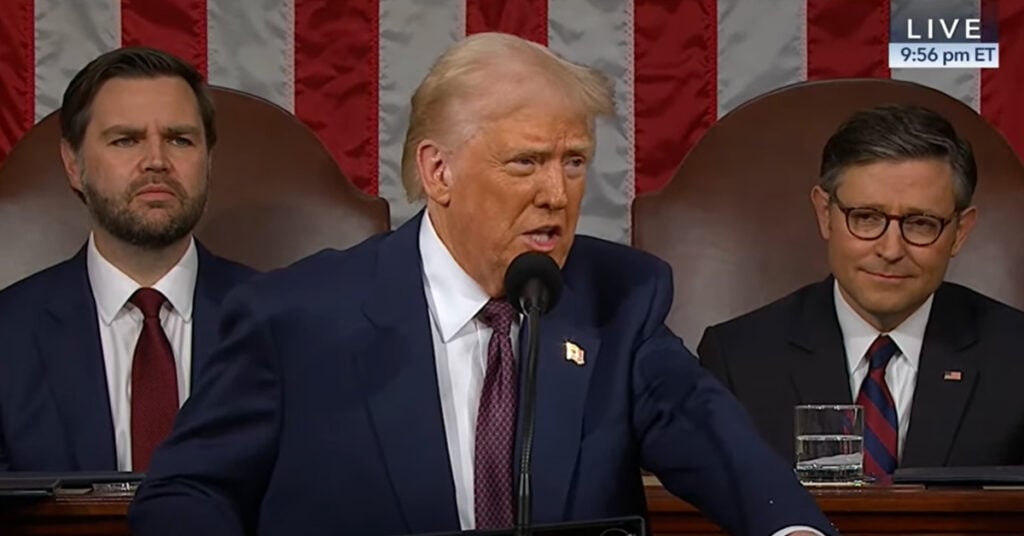
In last night’s address to Congress, President Trump spent more time insulting Americans, lying, and bragging than he did talking about taxes. But regardless of what President Trump and Elon Musk talk about most loudly and angrily, there is one clear policy that they and the corporations and billionaires that support them will try hardest […]
Corporate Income Tax Filing Methods: States with Water’s Edge or Worldwide Combined Reporting
February 21, 2025 • By ITEP Staff
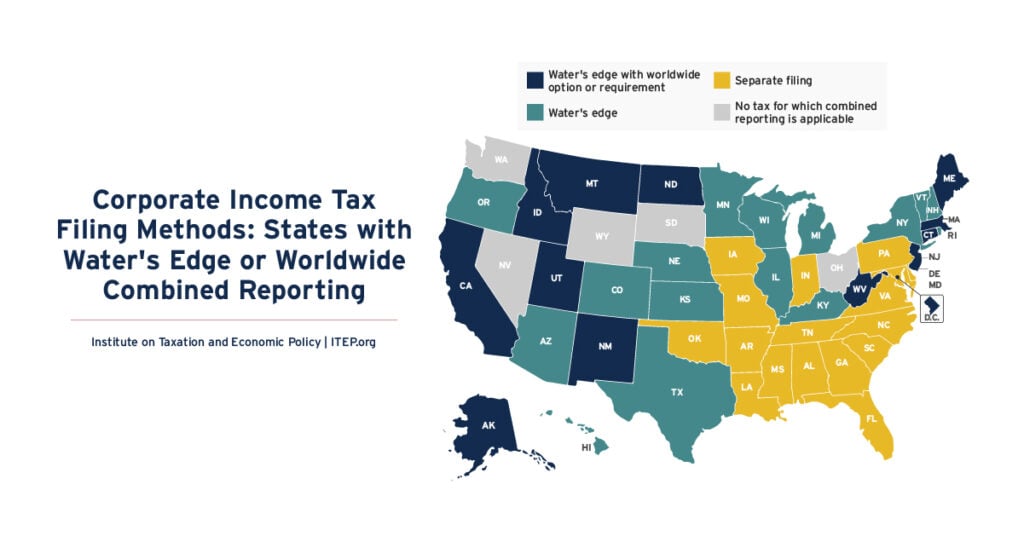
The purpose of state corporate income taxes is to tax the profit, or net income, an incorporated business earns in each state. Ascertaining the state where profits are earned is, however, complicated for companies that conduct business in multiple jurisdictions. Twenty-eight states plus D.C. now require a limited version of combined reporting called “water’s edge” […]
A Revenue Analysis of Worldwide Combined Reporting in the States
February 20, 2025 • By Carl Davis, Matthew Gardner, Michael Mazerov

Universal adoption of mandatory worldwide combined reporting would boost state corporate income tax revenues by roughly 14 percent. Thirty-eight states and the District of Columbia would experience revenue increases totaling $19.1 billion.

Institute on Taxation
and Economic Policy
ITEP is a non-profit, non-partisan tax policy organization. We conduct rigorous analyses of tax and economic proposals and provide data-driven recommendations to shape equitable and sustainable tax systems.
Subscribe to ITEP Emails
Tax research and policy news in your inbox.
Promote Fair Tax Policy
Your gift to ITEP promotes tax justice. With your help, we do research that supports taxing millionaires and billionaires, taxing big corporations and raising revenue for the things our people, our communities and our planet need.
Together, we can create a country with more economic justice, more racial justice, more climate justice… and more tax justice.