
Delaware
State Tax Watch 2024
• By ITEP Staff
Updated July 15, 2024 In 2024, state lawmakers have a choice: advance tax policy that improves equity and helps communities thrive, or push tax policies that disproportionately benefit the wealthy, drain funding for critical public services, and make it harder for low-income and working families to get ahead. Despite worsening state fiscal conditions, we expect […]
Delaware: Who Pays? 7th Edition
• By ITEP Staff
Delaware Download PDF All figures and charts show 2024 tax law in Delaware, presented at 2023 income levels. Senior taxpayers are excluded for reasons detailed in the methodology. Our analysis includes nearly 100 percent of state and local tax revenue collected in Delaware. State and local tax shares of family income Top 20% Income Group […]
Hidden in Plain Sight: Race and Tax Policy in 2023 State Legislative Sessions
• By Brakeyshia Samms
Race was front and center in a lot of state policy debates this year, from battles over what’s being taught in schools to disagreements over new voting laws. Less visible, but also extremely important, were the racial implications of tax policy changes. What states accomplished this year – both good and bad – will acutely affect people and families of color.

Abortion-Restricting States Skimp on Funding for Children
• By Amy Hanauer
States differ dramatically in how much they allow families to make choices about whether and when to have children and how much support they provide when families do. But there is a clear pattern: the states that compel childbirth spend less to help children once they are born.

State Rundown 9/13: The (Policy) Choices We Make
• By ITEP Staff
The U.S. Census Bureau released its annual assessment of poverty in America this week...

Boosting Incomes, Improving Equity: State Earned Income Tax Credits in 2023
• By Aidan Davis, Neva Butkus
Nearly two-thirds of states (31 plus the District of Columbia and Puerto Rico) have an Earned Income Tax Credit, an effective tool that boosts low-paid workers’ incomes and helps lower-income families achieve greater economic security. This year, 12 states expanded and improved EITCs.

States and Localities are Making Progress on Curbing Unjust Fees and Fines
• By Andrew Boardman
Too many state and local governments tap legal-system collections, rather than adequate tax systems, to fund shared essentials like public safety and education. But a growing number of states and localities are choosing a better approach. Momentum for change has continued to build in 2023, with no fewer than seven states enacting substantial improvements.

Minnesota’s Tax Battle of 2023 Signals a Turning of the Tide Against Corporate Tax Avoidance
• By Matthew Gardner
The qualified success of Minnesota’s GILTI conformity—to say nothing of the state’s serious dalliance with the game-changing worldwide combined reporting--sends a clear signal that the days may be coming to an end when big multinationals can scare state lawmakers into allowing them to game the tax system.
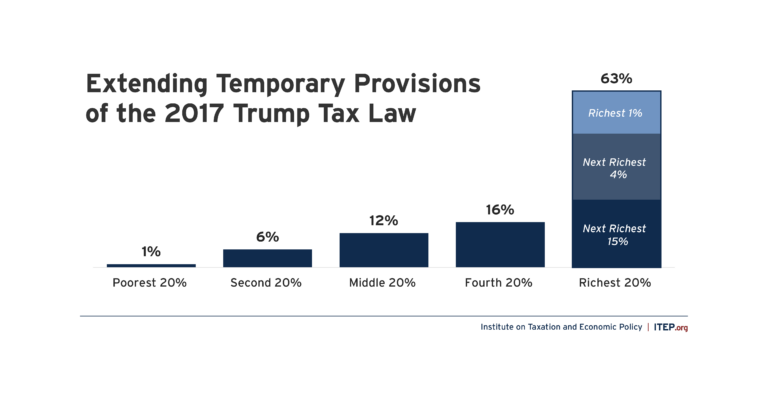
Extending Temporary Provisions of the 2017 Trump Tax Law: National and State-by-State Estimates
• By Joe Hughes, Matthew Gardner, Steve Wamhoff
The push by Congressional Republicans to make the provisions of the 2017 Tax Cuts and Jobs Act permanent would cost nearly $300 billion in the first year and deliver the bulk of the tax benefits to the wealthiest Americans.
State Rundown 4/27: Health, Wealth, and State Tax Policy
• By ITEP Staff
This week the importance of state tax policy is center stage once again...

The Five Best Tax Ideas Coming from Governors This Year
• By Carl Davis
The word “tax” appears 97 times and counting in one recent summary of governors’ addresses to state legislators so far this year. The policy visions that governors are bringing, however, vary enormously. While there's good reason to worry about tax cuts for wealthy families and the flattening or elimination of income taxes, there are at least five great tax ideas coming directly out of governors’ offices this year.

State Child Tax Credits and Child Poverty: A 50-State Analysis
• By Aidan Davis
Regardless of future Child Tax Credit developments at the federal level, state policies can supplement the federal credit to deliver additional benefits to children and families. State credits can be specifically tailored to meet the needs of local populations while also producing long-term benefits for society as a whole
Boosting Incomes and Improving Tax Equity with State Earned Income Tax Credits in 2022
• By Aidan Davis
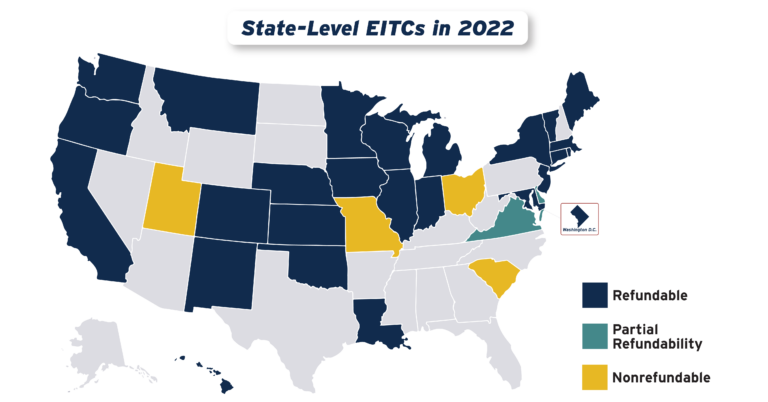
States continued their recent trend of advancing EITCs in 2022, with nine states plus the District of Columbia either creating or improving their credits. Utah enacted a 15 percent nonrefundable EITC, while the District of Columbia, Hawaii, Illinois, Maine, Vermont and Virginia expanded existing credits. Meanwhile, Connecticut, New York and Oregon provided one-time boosts to their EITC-eligible populations.

Creating Racially and Economically Equitable Tax Policy in the South
• By Kamolika Das
The South's negative outcomes on measures of wellbeing are the result of a century and a half of policy choices. Lawmakers have many options available to make concrete improvements to tax policy that would raise more revenue, do so equitably, and generate resources that could improve schools, healthcare, social services, infrastructure, and other public resources.

State Rundown 6/15: States on Alert as Inflation Concerns Rise
• By ITEP Staff
With inflation dominating headlines both nationally and locally, state lawmakers around the U.S. are searching for ways to put their revenues to good use, and not surprisingly, some options are better than others...
State Rundown 5/25: Tax Discussions Heating Up as Summer Begins
• By ITEP Staff
While the temperature ticks up outside, the temperature in state legislatures around the country has fallen slightly. But with several states still dealing with ongoing tax and budget issues, this summer could be a hot one...
State Rundown 4/20: New Tax Changes in Full Bloom
• By ITEP Staff
This Spring looks to be bringing a mix of showers and flowers as states around the nation continue to act on a range of tax proposals...
State Rundown 4/13: Recent State Budgets Prove Not All Tax Cuts are the Same
• By ITEP Staff
Two prominent blue states made headlines this past week when they passed budget agreements that include relief for taxpayers, and fortunately, the budget plans don’t include costly tax cuts that primarily benefit the wealthy...
State Rundown 3/30: Late-Session Surprises Leave Us Unimpressed
• By ITEP Staff
Several states have dropped a few late-session surprises, and from the looks of it, they’re not the good kind...
State Rundown 2/10: Dems Also Set Sights on Tax Cuts
• By ITEP Staff
While record state revenue surpluses have led to big pushes in red states to make unnecessary permanent income and corporate tax cuts, Democrats are also getting in on the tax-cut mania...
State Rundown 1/26: States Offering Preview of Tax Themes and Trends for 2022
• By ITEP Staff
Governors and legislators are beginning to settle on and advance tax bills that could drastically shape the future of their states and several trends and themes are beginning to emerge...
State Rundown 1/20: Governors Eyeing Tax Cuts in Yearly Addresses
• By ITEP Staff
A common theme is emerging out of states, as governors around the U.S. begin the year with their annual state speeches, and the news does not bode well for long-term growth and sustainable budgets...
State Rundown 12/15: Making Our State Tax Naughty or Nice List & Checking it Twice
• By ITEP Staff
As the holiday season kicks into full gear, we’re putting the finishing touches on our State Tax Naughty or Nice list, and it looks like some late entrants are making a good case to be included...

Boosting Incomes and Improving Tax Equity with State Earned Income Tax Credits in 2021
• By Aidan Davis
The EITC benefits low-income people of all races and ethnicities. But it is particularly impactful in historically excluded Black and Hispanic communities where discrimination in the labor market, inequitable educational systems, and countless other inequities have relegated a disproportionate share of people to low-wage jobs.
State Rundown 10/13: Haven Sent Edition
• By ITEP Staff
The release of the ‘Pandora Papers’ showed once again that states and their tax systems play an important role in wealth inequality, and in this case, worsening it...

Institute on Taxation
and Economic Policy
ITEP is a non-profit, non-partisan tax policy organization. We conduct rigorous analyses of tax and economic proposals and provide data-driven recommendations to shape equitable and sustainable tax systems.
Subscribe to ITEP Emails
Tax research and policy news in your inbox.
Promote Fair Tax Policy
Your gift to ITEP promotes tax justice. With your help, we do research that supports taxing millionaires and billionaires, taxing big corporations and raising revenue for the things our people, our communities and our planet need.
Together, we can create a country with more economic justice, more racial justice, more climate justice… and more tax justice.