
Ohio

Boosting Incomes and Improving Tax Equity with State Earned Income Tax Credits in 2021
• By Aidan Davis
The EITC benefits low-income people of all races and ethnicities. But it is particularly impactful in historically excluded Black and Hispanic communities where discrimination in the labor market, inequitable educational systems, and countless other inequities have relegated a disproportionate share of people to low-wage jobs.
State Income Taxes and Racial Equity: Narrowing Racial Income and Wealth Gaps with State Personal Income Taxes
• By Carl Davis, Jessica Schieder, Marco Guzman
10 state personal income tax reforms that offer the most promising routes toward narrowing racial income and wealth gaps through the tax code.
State Rundown 9/1: Labor Day Edition
• By ITEP Staff
Labor Day is around the corner and in the spirit of celebrating the achievements of workers around the country, we here at ITEP want to call attention to the states (and territories) that are using tax policy to support workers and residents alike...

The One Thing Missing From the Qualified Business Income Deduction Conversation: Racial Equity
• By Marco Guzman
When crafting tax policy, lawmakers and bill authors often work backward, using a patchwork of changes to help achieve their stated goal. One important consideration that is routinely left out is what impact the change will have on racial equity. Such is the case with the qualified business income deduction, which is helping to further enrich wealthy business owners, the overwhelming majority of whom are white. At present, white Americans own 88 percent of private…
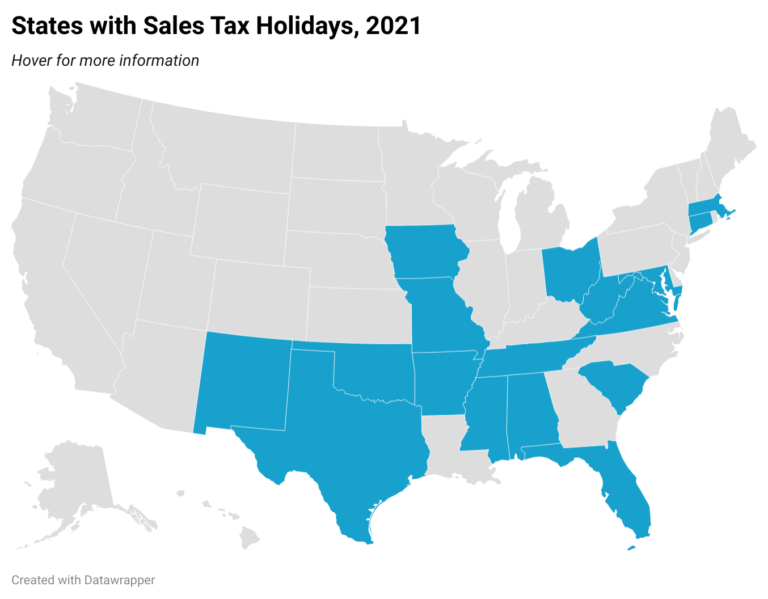
Sales Tax Holidays: An Ineffective Alternative to Real Sales Tax Reform
• By Dylan Grundman O'Neill
Policymakers tout sales tax holidays as a way for families to save money while shopping for “essential” goods. On the surface, this sounds good. However, a two- to three-day sales tax holiday for selected items does nothing to reduce taxes for low- and moderate-income taxpayers during the other 362 days of the year. Sales taxes are inherently regressive. In the long run, sales tax holidays leave a regressive tax system unchanged, and the benefits of…

Why Local Governments Need an Anti-Racist Approach to Property Assessments
• By Ambika Sinha
Property taxes are among the oldest and most relied upon form of local taxes. Revenue raised from these taxes funds education, firefighting, law enforcement, street and infrastructure maintenance, and other essential services. Though all members of the community enjoy these public goods, homeowners of color, especially Black families, pay more as a share of home value in property taxes than their white counterparts.
State Rundown 7/7: The New Fiscal Year Starts off With a Bang, And Not Just Fireworks
• By ITEP Staff
States were busy over the past week despite the Fourth of July holiday. Many are gearing up for upcoming tax and budget clashes that could shape their futures for some time...

In Drive to Cut Taxes, States Blow an Opportunity to Invest in Underfunded Services
• By Marco Guzman
Many states find themselves in a peculiar fiscal situation right now: federal pandemic relief money has been dispersed to states and revenue projections have exceeded expectations set during the pandemic. Meanwhile, more and more workers are returning to jobs as vaccines roll out and typical economic activity resumes. Some states, however, have decided to squander their unexpected fiscal strength on tax cuts.
CNN.com: States are so flush with funds, many are cutting taxes
July 1, 2021
This means that the state’s wealthiest 5% of taxpayers will receive nearly 60% of the benefits, while the bottom 80% will get only 23%, according to an analysis for Policy Matters Ohio by the left-leaning Institute on Taxation and Economic Policy. Read more
State Rundown 6/30: Resolutions Are in Order for the New Fiscal Year
• By ITEP Staff
Today is the last day of the fiscal year in many states, and some lawmakers might want to take the opportunity to make some new fiscal year resolutions. Legislators in Arizona, New Hampshire, Ohio, North Carolina, and Wisconsin, for example, should really cut back on the trickle-down tax-cut Kool-Aid, which may make parties with rich donors more fun but tends to be both harmful and habit-forming...
Policy Matters Ohio: Ohio Tax Cuts Would Go Mostly to the Very Affluent
• By ITEP Staff
Instead of using Ohio’s public resources to build strong, resilient communities, the General Assembly approved income-tax cuts that would favor the very wealthiest Ohioans, while providing only modest benefits for moderate-income Ohioans and nothing at all to the state’s poorest. Benefiting especially from the elimination of the top bracket of the tax, the most affluent […]
Policy Matters Ohio: Ohio Income-tax Cuts Would Reward the Wealthiest
• By ITEP Staff
Income-tax cuts approved by the General Assembly in the budget bill would favor the very wealthiest Ohioans, while providing only modest benefits for moderate-income Ohioans and nothing at all to the state’s poorest. Benefiting especially from the elimination of the top bracket of the tax, the most affluent 1% of Ohioans would see an average […]
State Rundown 6/7: Remaining State Legislative Sessions Are Heating up as Budget Deadlines Loom
• By ITEP Staff
Just as an early summer heatwave brought soaring temperatures this past weekend through much of the lower 48 states, several state legislative sessions are heating up as legislators scramble to make tough budget decisions. Massachusetts lawmakers are voting on a fiery new "millionaires' tax" that would support transportation and education revenue needs, and Connecticut will likely restore its state Earned Income Tax Credit (EITC) back to 30 percent. Illinois’s decision to cut back corporate tax…
Toledo Blade: Ohio urged to spend surplus on children, pregnant women
May 11, 2021
A study by the Institute on Taxation and Economic Policy for Policy Matters estimates that those making between $40,000 and $61,000 a year would on average see a $7 reduction in their annual tax bills from the latest proposal. Those earning at least $490,000 would average a $612 break. Through April, with just two months […]
State Rundown 4/29: How You Like Them Washington Apples?
• By ITEP Staff
North Carolina lawmakers may have approved a massive tax subsidy giveaway to Apple, but we won’t let that news spoil our barrel this week. Nor will we be discouraged by Connecticut Gov. Ned Lamont’s threats to upset the apple cart full of positive progressive tax reforms state lawmakers recently came together to approve...Why all the optimism? Because the apple of our eye this week is Washington State, where advocates and lawmakers succeeded in a decade-long…

Alvin Schorr and the Policy Relay Race
• By Amy Hanauer
Sometimes a good idea takes a while. Alvin Schorr, who would have turned 100 this month, helped draft a 1972 bill “to provide for a system of children’s allowances.” He continued to push (in a 1977 congressional testimony and in a 1983 New York Times op-ed) for a refundable tax credit for all families and a children’s allowance, among other laudable ideas. A half-century later, these ideas—which many others have championed—are becoming reality.
State Rundown 4/21: Spring Has Sprung, or Has It?
• By ITEP Staff
Just as a recent cold snap reminded us that spring has not fully sprung yet, this week’s news has been full of reminders that state fiscal debates aren’t quite finished either...
Policy Matters Ohio: House Budget chooses tax cuts over more support for key public programs
• By ITEP Staff
The 2022-23 state budget presents Ohio lawmakers with an opportunity to rebuild communities so all people, no matter what they look like or how much money they have, can thrive and succeed. But instead of using all available options to support communities, the Ohio House Republican majority proposed a budget that would cut income taxes […]
State Rundown 4/14: More Progressive Wins in the Headlines this Week, but Mind the Fine Print
• By ITEP Staff
Two significant victories headlined state tax debates in the past week, as New Mexico leaders improved existing targeted tax credits to give bigger boosts and reach more families in need, and West Virginia lawmakers unanimously shut down a destructive effort to eliminate the state’s progressive income tax. These developments follow last week’s major wins for progressive taxation and targeted assistance in New York, and more good news is likely soon as Washington legislators continue to…
(Ohio) ABC News 5: Three Ohio Energy Giants Haven’t Paid Federal Income Taxes in Three Years
April 7, 2021
In fact, Akron-based FirstEnergy, Columbus-based AEP and Charlotte, N.C.-based Duke Energy had negative effective tax rates, according to the report by the Institute on Taxation and Economic Policy, a nonprofit, non-partisan think tank. The paper, which analyzed tax disclosures in the corporations’ annual reports, found that 55 profitable companies didn’t pay any federal income tax […]
Taxes and Racial Equity: An Overview of State and Local Policy Impacts
• By ITEP Staff
Historic and current injustices, both in public policy and in broader society, have resulted in vast disparities in income and wealth across race and ethnicity. Employment discrimination has denied good job opportunities to people of color. An uneven system of public education funding advantages wealthier white people and produces unequal educational outcomes. Racist policies such as redlining and discrimination in lending practices have denied countless Black families the opportunity to become homeowners or business owners,…
The Hill: Ohio AG Sues Biden Administration Over Pandemic Bill
March 17, 2021
Carl Davis, the research director for the left-leaning Institute on Taxation and Economic Policy, said that the rhetoric from the conservative attorneys general has been overblown. “There’s a lot of potential very positive uses for this money that states and localities could find in this moment,” Davis told The Hill. “It’s not intended to be […]
Yahoo News: ‘Helping the Country Prosper’: Undocumented Immigrants Pay Billions in US Taxes Each Year — and Have Been for Decades
March 16, 2021
A report from the office shows that 50% to 75% of undocumented immigrants pay billions in taxes each year — and have been since the Internal Revenue Service created a program 25 years ago allowing people without a Social Security number to file taxes. When it comes to state and local taxes, undocumented immigrants pay […]
The Columbus Dispatch: Undocumented Immigrants Pay Billions in Taxes Each Year — and Have Been for 25 Years
March 15, 2021
When it comes to state and local taxes, undocumented immigrants pay more than $11 billion a year, according to a 2017 report from the Institute on Taxation and Economic Policy, a nonpartisan nonprofit based in Washington, D.C. In Ohio, they paid $83.2 million in state and local taxes in 2017, according to the institute. Read more
Comparing Flat-Rate Income Tax Options for Alaska
• By Carl Davis
Alaska lawmakers are facing an unprecedented fiscal crisis. The state is more dependent than any other on oil tax and royalty revenues but declines in oil prices and production levels have sapped much of the vitality of these revenue sources. One way of diversifying the state’s revenue stream and narrowing the yawning gap between state revenues and expenses would be to reinstitute a statewide personal income tax. Alaska previously levied such a tax until 1980.…

Institute on Taxation
and Economic Policy
ITEP is a non-profit, non-partisan tax policy organization. We conduct rigorous analyses of tax and economic proposals and provide data-driven recommendations to shape equitable and sustainable tax systems.
Subscribe to ITEP Emails
Tax research and policy news in your inbox.
Promote Fair Tax Policy
Your gift to ITEP promotes tax justice. With your help, we do research that supports taxing millionaires and billionaires, taxing big corporations and raising revenue for the things our people, our communities and our planet need.
Together, we can create a country with more economic justice, more racial justice, more climate justice… and more tax justice.