
Pennsylvania

Tax Payments by Undocumented Immigrants
• By ITEP Staff
Undocumented immigrants paid $96.7 billion in federal, state, and local taxes in 2022. Providing access to work authorization for undocumented immigrants would increase their tax contributions both because their wages would rise and because their rates of tax compliance would increase.

State Rundown 7/25: Summertime Hits Different in Different States
• By ITEP Staff
State lawmakers will have a lot to discuss when they compare notes on how they spent their summer vacations this year...
Improving Refundable Tax Credits by Making Them Immigrant-Inclusive
• By Emma Sifre, Marco Guzman
Undocumented immigrants who work and pay taxes but don't have a valid Social Security number for either themselves or their children are excluded from federal EITC and CTC benefits. Fortunately, several states have stepped in to ensure undocumented immigrants are not left behind by the gaps in the federal EITC and CTC. State lawmakers should continue to ensure that immigrants who are otherwise eligible for these tax credits receive them.

States Should Enact, Expand Mansion Taxes to Advance Fairness and Shared Prosperity
• By Carl Davis, Erika Frankel
The report was produced in partnership with the Center on Budget and Policy Priorities and co-authored by CBPP’s Deputy Director of State Policy Research Samantha Waxman.[1] Click here to use our State Mansion Tax Estimator A historically large share of the nation’s wealth is concentrated in the hands of a few, a reality glaring in […]
WTAE: Commitment 2024: Fact-checking Former President Trump’s Claims in Interview
May 13, 2024
PITTSBURGH — During an interview with WTAE's sister station WGAL, former President Donald Trump made claims of getting record-breaking votes in Pennsylvania's 2024 primary, about the future of abortion in the courts, and concerning who benefited most from his tax cuts.
State Rundown 5/9: Special Sessions in the Air
• By ITEP Staff
This week, special sessions with major tax implications are in the air...
Iowa Flat Tax Shows Why Such Policies Are a Problem Everywhere
• By Eli Byerly-Duke
As Iowa lawmakers change the state’s graduated personal income tax to a single flat rate, they are designing a state tax code where the rich will pay a lower rate overall than families with modest means.
State Rundown 5/2: Vetoes and New Major Tax Proposals
• By ITEP Staff
This week, many states took steps toward enacting tax cuts...
Fairness Matters: A Chart Book on Who Pays State and Local Taxes
• By ITEP Staff
State and local tax codes can do a lot to reduce inequality. But they add to the nation’s growing income inequality problem when they capture a greater share of income from low- or moderate-income taxpayers. These regressive tax codes also result in higher tax rates on communities of color, further worsening racial income and wealth divides.
Capital & Main: Extreme Wealth Is on the Ballot This Year — Will Americans Vote to Tax the Rich?
April 3, 2024
On March 7, President Joe Biden reintroduced proposals to increase taxes on the wealthiest Americans and the nation’s most profitable corporations. The move virtually ensures that the nation’s extreme wealth inequality — more than one in four dollars in the country is held by a tiny sliver of households with a net worth over $30 million — will be part of the national election debate. But excessive wealth may take center stage in at least 10 states, ranging from…
State Rundown 3/6: Tax Cuts Aren’t Forever, or for Evers
• By ITEP Staff
Anti-tax interests finally found the end of the tax cutting appetite in a few states this week...
ITEP’s Kamolika Das Testifies on Pennsylvania’s Upside-Down Tax Code
• By Kamolika Das
Below is written testimony delivered by ITEP Local Policy Director Kamolika Das before the Pennsylvania House Finance Subcommittee on Tax Modernization & Reform on March 1, 2024. Good afternoon and thank you for this opportunity to testify. My name is Kamolika Das, I live in South Philly, and I’m the Local Tax Policy Director at […]
Pittsburgh Post-Gazette: PNC Bank, PPG Industries Among Companies Paying Less Than the Federal Tax Rate
March 4, 2024
WASHINGTON — More than a dozen Pennsylvania companies — including a handful in the Pittsburgh area — paid less than the 21% federal corporate income tax rate from 2018 to 2022, according to a study released Thursday by a progressive research group.
State Rundown 2/22: Some Top-Heavy Tax Cut Proposals are Getting the Chop
• By ITEP Staff
With many state legislatures now in full swing with activity heating up, some tax cut proposals have lost steam...
State Rundown 2/8: Flowers, Chocolates, and Tax Cuts for the Wealthy?
• By ITEP Staff
While we were hoping to get progressive tax policy wins for Valentine’s Day, many state lawmakers have another idea in mind...

Tax Policy to Reduce Racial Retirement Wealth Inequality
• By Brakeyshia Samms, Carl Davis
Historic and ongoing discrimination have created stark racial disparities in the US, and the racial retirement wealth gap is one such example.
State Tax Watch 2024
• By ITEP Staff
Updated July 15, 2024 In 2024, state lawmakers have a choice: advance tax policy that improves equity and helps communities thrive, or push tax policies that disproportionately benefit the wealthy, drain funding for critical public services, and make it harder for low-income and working families to get ahead. Despite worsening state fiscal conditions, we expect […]

How the Fairness of State Tax Codes Affects Public Education
• By Carl Davis
The findings of Who Pays? go a long way toward explaining why so many states are failing to raise the amount of revenue needed to provide full and robust support for our public schools.
Worthwhile Ideas for a Stronger and Fairer D.C. Tax Code
• By Andrew Boardman, Kamolika Das, Marco Guzman
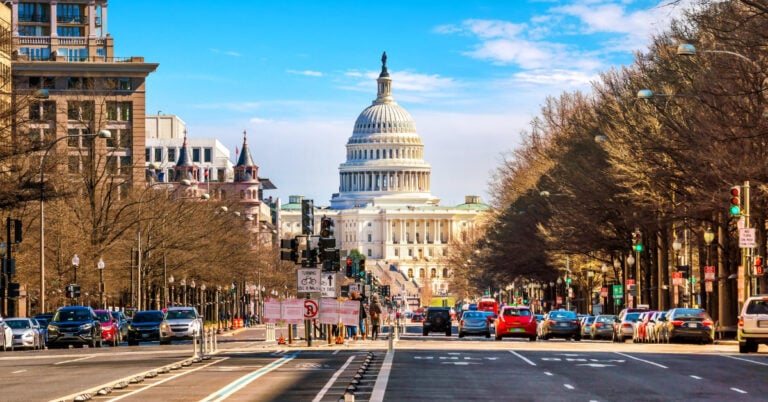
The nation’s capital has a once-in-a-decade opportunity to advance a stronger and fairer local tax code. New draft recommendations from a key advisory panel will help leaders make the most of the moment.
In Most States, the Tax Code Makes Inequality Worse
• By Carl Davis
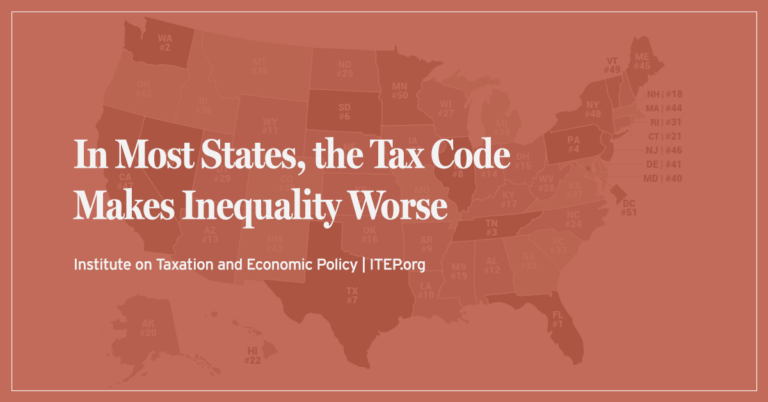
The vast majority of state and local tax systems are upside-down, with the wealthy paying a far lesser share of their income in taxes than low- and middle-income families. Yet a few states have made strides to buck that trend and have tax codes that are somewhat progressive and therefore do not worsen inequality.
Tax Systems in 44 States Exacerbate Inequality, In-Depth ‘Who Pays?’ Study Finds
• By ITEP Staff
The vast majority of state and local tax systems are upside-down, with the wealthy paying a far lesser share of their income in taxes than low- and middle-income families. That’s according to the latest edition of the Institute on Taxation and Economic Policy’s Who Pays?, the only distributional analysis of tax systems in all 50 states and the District of Columbia.
Pennsylvania: Who Pays? 7th Edition
• By ITEP Staff
Pennsylvania Download PDF All figures and charts show 2024 tax law in Pennsylvania, presented at 2023 income levels. Senior taxpayers are excluded for reasons detailed in the methodology. Our analysis includes nearly all (99.6 percent) state and local tax revenue collected in Pennsylvania. State and local tax shares of family income Top 20% Income Group […]
State Rundown 1/4: New Year, New Opportunities, Same Tax Cut Proposals
• By ITEP Staff
The year may be new, but state lawmakers seem to have the same old resolution: slashing state income taxes...
Keystone Research Center: Fair Taxation Can Help Achieve a More Just Pittsburgh
• By ITEP Staff
Over the past several years, federal funding via the American Rescue Plan (ARP) has temporarily boosted City of Pittsburgh revenues and allowed increased investment in affordable housing, workforce training, healthy and accessible food programs, public safety, and public transportation. ARP funds, however, will expire in 2024, leaving a $30.6 million shortfall in the city budget. This […]
America Used to Have a Wealth Tax: The Forgotten History of the General Property Tax
• By Carl Davis, Eli Byerly-Duke
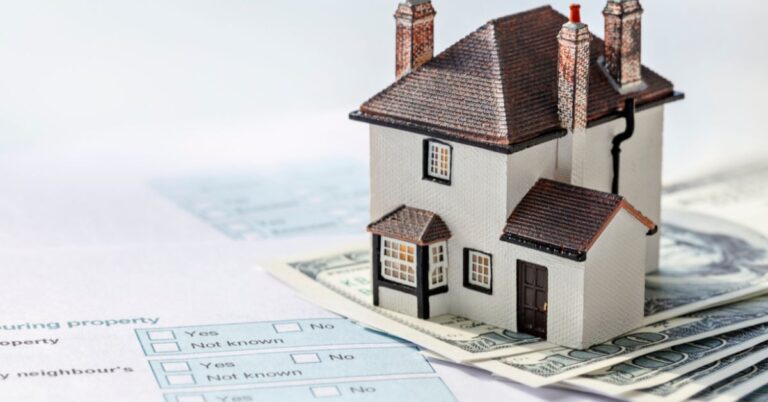
Over time, broad wealth taxes were whittled away to become the narrower property taxes we have today. These selective wealth taxes apply to the kinds of wealth that make up a large share of middle-class families’ net worth (like homes and cars), but usually exempt most of the net worth of the wealthy (like business equity, bonds, and pooled investment funds).The rationale for this pared-back approach to wealth taxation has grown weaker in recent decades…

Institute on Taxation
and Economic Policy
ITEP is a non-profit, non-partisan tax policy organization. We conduct rigorous analyses of tax and economic proposals and provide data-driven recommendations to shape equitable and sustainable tax systems.
Subscribe to ITEP Emails
Tax research and policy news in your inbox.
Promote Fair Tax Policy
Your gift to ITEP promotes tax justice. With your help, we do research that supports taxing millionaires and billionaires, taxing big corporations and raising revenue for the things our people, our communities and our planet need.
Together, we can create a country with more economic justice, more racial justice, more climate justice… and more tax justice.