
Wealth Tax
California’s Prop 40: Responses to Common Objections
• By Brian Galle, David Gamage, Darien Shankse
Proposition 40, California’s proposed billionaire tax, is a one-time 5 percent levy that addresses a significant one-time emergency, namely the cuts made to the healthcare system by the so-called “One Big Beautiful Bill Act.”

The Campaign by Former Democratic Officials to Stop Taxes on the Wealthy Is Back
• By Steve Wamhoff
A former Democratic senator from Nebraska has joined Saving America’s Family Enterprises and taken up its cause of opposing wealth taxes.
As Inequality Grows, More States Look to Tax the Rich
• By Alex Welch
From surcharges on the income of high-earners to higher taxes on second homes, here are recent steps states have taken to tax the rich.
Progressives Need a Slight Course Correction on Tax Policy
• By Steve Wamhoff
Corporate tax reforms should be the backbone of any progressive tax agenda and should be counted on to remain if other changes to our tax code are later thwarted by any of the three branches of government.

A Resilient Framework for Corporate Tax Reform
• By Steve Wamhoff
The next time Congress is serious about making the wealthiest pay their fair share in federal taxes, they will need to make three key changes to the federal corporate income tax so that it applies effectively to all the businesses that generate their income.

What Did 2025 State Tax Changes Mean for Racial and Economic Equity?
• By Brakeyshia Samms
The results are a mixed bag, with some states enacting promising policies that will improve tax equity and others going in the opposite direction.
‘Tax the Rich,’ Says … Mitt Romney?
• By Matthew Gardner
His 900-word New York Times op-ed identifies some sensible federal tax reform ideas that would create a fairer, more sustainable tax system.

The Wealth Proceeds Tax: A Simple Way for States to Tax the Wealthy
• By Sarah Austin, Carl Davis
Taxing the proceeds generated by wealth through a new Wealth Proceeds Tax is a simple way for states to raise billions in new revenue and improve the fairness of their tax systems.
How Tax Decisions in 2025 Can Advance Racial Justice
• By Brakeyshia Samms, Jon Whiten
In the coming 14 months, federal lawmakers should address longstanding issues of racism in the tax code. With a presidential election this fall and many provisions of 2017’s Trump tax law expiring at the end of 2025, the debate over tax policy and economic fairness is in full swing.
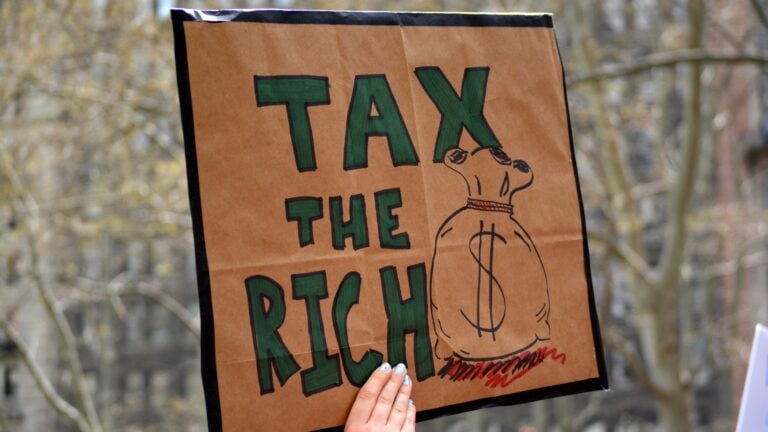
Tax the Wealthy and Reject Austerity for a More Just and Thriving Democracy
• By Amy Hanauer
Two of the last five presidents won office over the objection of the majority of the people; California, with 65 times more people, has the same voting power in the U.S Senate as Wyoming; and the U.S. Supreme Court just permitted South Carolina lawmakers to dilute Black votes in drawing districts. These obvious flaws undermine our claim to be a strong democracy. One less appreciated but similarly undemocratic trend is our extreme inequality that supercharges the power…
Our Taxes Can Set Kids Up for Success
• By Brakeyshia Samms
Every child deserves the opportunity to succeed in society – and tax policy has a huge role to play in making that happen. Better tax policy can help prepare our young children with skills to become successful and thriving adults.
Revenue-Raising Proposals in President Biden’s Fiscal Year 2025 Budget Plan
• By Steve Wamhoff
President Biden’s most recent budget plan includes proposals that would raise more than $5 trillion from high-income individuals and corporations over a decade. Like the budget plan he submitted to Congress last year, it would partly reverse the Trump tax cuts for corporations and high-income individuals, clamp down on corporate tax avoidance, and require the wealthiest individuals to pay taxes on their capital gains income just as they are required to for other types of…
Tax Proposals Expected to be in President Biden’s Budget Plan
• By Steve Wamhoff
President Biden discussed multiple tax proposals during the State of the Union address to Congress. Several of these proposals appeared in the budget plan he submitted to Congress last year, but at least two appear to be new proposals. Raise Corporate Tax Rate from 21 Percent to 28 Percent 10-Year Revenue Impact in President’s Previous […]

What Do We Mean By “The Rich” — and Does it Matter?
• By Michael Ettlinger
It doesn’t matter if someone with a family income of $800,000 per year thinks they aren’t rich because they can’t quit their jobs and retire to a luxury home on the beach in Malibu. They can call themselves what they want. The point is that they are richer than 99 percent of the population and can afford to pay more.

Everything You Need to Know About Proposals to Better Tax Billionaires
• By Steve Wamhoff
Tax policy may not be on the minds of most Americans during the final weeks of 2023, but billionaires with an eye on their own tax bills have been riveted by developments in D.C.
With the Moore vs. United States Case, the Supreme Court Could Unleash Chaos on Our Tax System
• By Steve Wamhoff
On Tuesday, the U.S. Supreme Court will begin hearing oral arguments in Moore vs. United States, which could become the most important tax case in a century. A broad ruling could destabilize our tax system, enrich many profitable corporations, and widen existing economic and racial inequalities.

America Used to Have a Wealth Tax: The Forgotten History of the General Property Tax
• By Carl Davis, Eli Byerly-Duke
Over time, broad wealth taxes were whittled away to become the narrower property taxes we have today. These selective wealth taxes apply to the kinds of wealth that make up a large share of middle-class families’ net worth (like homes and cars), but usually exempt most of the net worth of the wealthy (like business equity, bonds, and pooled investment funds).The rationale for this pared-back approach to wealth taxation has grown weaker in recent decades…
Power to the People: How Workers Can Fight Tax Inequity
• By Brakeyshia Samms
Workers of all races and ethnicities are confronting a tax code that puts them at a disadvantage relative to those with immense wealth, and people of color and women are among those most likely to be negatively impacted by this injustice.
2023’s State and Local Tax Ballot Measures: Voters to Weigh in on Property Taxes, Wealth Taxes, and More
• By Jon Whiten
Even in this slow year for candidate elections, the decisions that voters in states and cities make could strengthen or weaken revenue for needs in their communities and could change how taxes are distributed across the income spectrum. In the places where tax fairness is on the ballot, much is at stake.

Voters Could Approve Local Capital Gains Tax in Oregon
• By Kamolika Das
At nearly every turn, Oregon’s tax policies widen inequality; as a result, the top 1 percent pay less state and local taxes as a share of income than the poorest residents. Taxing capital gains at the local level is an important and exciting move in the other direction – to tax income from wealth and use it to address crucial needs.
We Can Create a Fair, Feminist Tax Code
• By Amy Hanauer
Everything! Taxing wealthy people and corporations and using the revenue for paid leave, child care, education, health care and college would transform America for girls and women of every race and family type, in every corner of this country.
Revenue-Raising Proposals in President Biden’s Fiscal Year 2024 Budget Plan
• By Steve Wamhoff
President Biden’s latest budget proposal includes trillions of dollars of new revenue that would be paid by the richest Americans, both directly through increases in personal income, Medicare and estate taxes, and indirectly through increases in corporate income taxes.
ITEP Statement: President Biden Lays Out a Bold Vision for Tax Justice in Proposed Budget
• By ITEP Staff
President Biden’s budget proposal presents a bold vision for what tax justice should look like in America. The provisions would raise substantial revenue, fund important priorities and increase tax fairness.

The Five Best Tax Ideas Coming from Governors This Year
• By Carl Davis
The word “tax” appears 97 times and counting in one recent summary of governors’ addresses to state legislators so far this year. The policy visions that governors are bringing, however, vary enormously. While there's good reason to worry about tax cuts for wealthy families and the flattening or elimination of income taxes, there are at least five great tax ideas coming directly out of governors’ offices this year.
Why the States Have a Major Role to Play If We Want Tax Justice
• By Amy Hanauer
With fears of gridlock in a divided Washington, tax justice champions are building momentum in other places where there's dire need for better tax policy: the states. We can upgrade communities across the country by making 2023 a year to win tax improvements in statehouses.

Institute on Taxation
and Economic Policy
ITEP is a non-profit, non-partisan tax policy organization. We conduct rigorous analyses of tax and economic proposals and provide data-driven recommendations to shape equitable and sustainable tax systems.
Subscribe to ITEP Emails
Tax research and policy news in your inbox.
Promote Fair Tax Policy
Your gift to ITEP promotes tax justice. With your help, we do research that supports taxing millionaires and billionaires, taxing big corporations and raising revenue for the things our people, our communities and our planet need.
Together, we can create a country with more economic justice, more racial justice, more climate justice… and more tax justice.