
Blog
175 posts
Palantir Pays Zero Federal Income Tax Despite Explosive Growth, Largely Due to Trump Tax Law
February 17, 2026 • By Matthew Gardner

Palantir reported $1.5 billion of U.S. income but paid exactly zero federal income tax in 2025. Despite explosive growth, tax breaks from the Trump tax law helped Palantir avoid paying even a dime of federal income tax on its earnings.
Trump Undermined the Constitution to Give Corporations a $10 Billion Tax Cut
February 10, 2026 • By Matthew Gardner

This unilateral corporate tax cut from the Trump administration will cost $10 billion over a decade unless it is reversed.
Four Big Tech Companies Avoid $51 Billion in Taxes in Wake of One Big Beautiful Bill Act
February 6, 2026 • By Matthew Gardner

Four of the corporations whose CEOs flanked President Trump at his 2025 inauguration ceremony have now disclosed that they collectively received $51 billion in federal tax breaks in 2025, much of that likely from the One Big Beautiful Bill Act (OBBBA).
Tesla Reported Zero Federal Income Tax on $5.7 Billion of U.S. Income in 2025
January 29, 2026 • By Matthew Gardner

Tesla enjoyed almost $5.7 billion of U.S. income in 2025 but paid $0 in federal income tax. Over the past three years, the Elon Musk-led company reported $12.5 billion of U.S. income on which its current federal tax was just $48 million.
From Congressional discussions over the so-called "One Big Beautiful Bill Act" to debates on property taxes, ITEP kept busy this year analyzing tax proposals and showing Americans across the country how tax decisions affect them.
Coca-Cola To Shareholders: $18 Billion Tax Bill? What $18 Billion Tax Bill?
October 1, 2025 • By Matthew Gardner

If Coca-Cola only pays 3% of the $18 billion tax bill it's facing, then the rest of us will have to pick up the remaining 97%.
Excessive CEO Pay Makes Inequality Worse. Shareholders and the Public Deserve to Know About Compensation Disparities
July 30, 2025 • By Matthew Gardner

Huge executive pay packages are a prime driver of income inequality. Shareholders and the public deserve to know about how CEOs are compensated, but new SEC leadership seems to think otherwise.
Americans Want to Know Which Corporations Aren’t Paying Taxes, but House Republicans Want to Keep this Information Secret
July 23, 2025 • By Matthew Gardner

The appropriations plan released by House Republicans this weekend threatens to withhold funding for an obscure but vital financial oversight board because that board now requires corporations to disclose basic information about their income tax payments (or lack thereof).
House Bill’s $164 Billion Giveaway to Multinational Corporations Puts America Last
May 27, 2025 • By Sarah Austin
The House of Representatives’ recently passed tax bill changes course on taxing multinational corporations engaged in shifting U.S. profits overseas, offering massive tax giveaways that weaken American revenues and risk sending more American corporate investment offshore.

The House of Representatives unveiled a sprawling piece of tax legislation earlier this week that would extend temporary tax changes enacted in 2017 and layer various kinds of tax cuts and increases on top. The JCT analysis makes clear that the House tax plan would be regressive, meaning it would offer larger tax cuts as a share of income to high-income taxpayers than to either middle-class or working-class families. It also makes clear that most of the tax cuts would go to families with above-average incomes.
It’s Tax Day. You’ve Paid Your Share, but the Billionaires Haven’t.
April 15, 2025 • By Amy Hanauer

You likely had most of your federal taxes deducted from your paychecks throughout the year. This is not true, however, for mega-millionaires and billionaires, some of whom are practically running our government right now.
What the Wall Street Journal Editorial Board Got Wrong About Tesla’s Tax Avoidance
April 4, 2025 • By Matthew Gardner
Tesla’s income tax avoidance is still in the news, and that’s a good thing.
Why Americans Are Right to Be Unhappy About Corporate Tax Avoidance
March 26, 2025 • By Matthew Gardner

If lawmakers wanted to reduce income inequality and racial inequality, shutting down or at least limiting corporate tax breaks would be one option to achieve that goal. Unfortunately, President Trump and the current Congress show little interest in this and may even move in the opposite direction by introducing new corporate tax breaks.
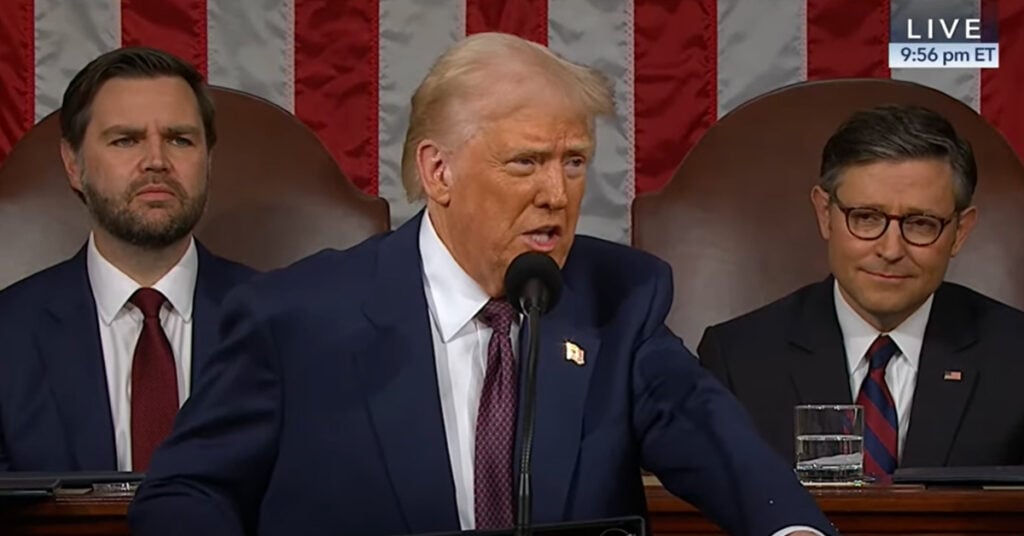
In last night’s address to Congress, President Trump spent more time insulting Americans, lying, and bragging than he did talking about taxes. But regardless of what President Trump and Elon Musk talk about most loudly and angrily, there is one clear policy that they and the corporations and billionaires that support them will try hardest […]
The Five Biggest Corporations Represented at Trump’s Inauguration Could Save $75 Billion from One Tax Break Before Congress
February 11, 2025 • By Matthew Gardner, Spandan Marasini

New financial reports indicate five of America’s biggest corporations—Alphabet, Amazon, Apple, Meta, and Tesla—could win $75 billion in tax breaks if Congress and the President satisfy demands from corporate lobbyists to reinstate a provision repealed under the 2017 Trump tax law.
Tesla Reported Zero Federal Income Tax on $2 Billion of U.S. Income in 2024
January 30, 2025 • By Matthew Gardner

Tesla reported $2.3 billion of U.S. income in 2024 but paid zero federal income tax. Over the past three years, the Elon Musk-led company reports $10.8 billion of U.S. income on which its current federal tax was just $48 million.
Billionaires and businesses have too much power in Washington. Tax revenue is needed to pay for things we all need. If we want economic justice, racial justice and climate justice, we must have tax justice.
How Tax Decisions in 2025 Can Advance Racial Justice
October 30, 2024 • By Brakeyshia Samms, Jon Whiten
In the coming 14 months, federal lawmakers should address longstanding issues of racism in the tax code. With a presidential election this fall and many provisions of 2017’s Trump tax law expiring at the end of 2025, the debate over tax policy and economic fairness is in full swing.
How Would the Harris and Trump Tax Plans Affect Different Income Groups?
October 23, 2024 • By Jon Whiten
Presidential candidates Kamala Harris and Donald Trump have put forward a wide range of different tax proposals during this year’s campaign. We have now fully analyzed the distributional impacts of the major proposals of both Vice President Harris and former President Trump in separate analyses. In all, the tax proposals announced by Harris would, on average, lead to a tax cut for all income groups except the richest 1 percent of Americans, while the proposals announced by Trump would, on average, lead to a tax increase for all income groups except the richest 5 percent of Americans.
Fifteen Companies Each Avoided More than $1 Billion in Taxes from a Single Trump Tax Cut
October 10, 2024 • By Joe Hughes, Spandan Marasini
The deduction for Foreign-Derived Intangible Income (FDII), one of the tax cuts included in former President Trump’s signature 2017 tax law, provides a lower effective tax rate on income earned from intangible assets, such as patents, trademarks, and other forms of intellectual property. Since the law went into effect in 2018, 15 corporations have separately reported more than $1 billion in tax benefits. Alphabet (the parent company of Google) reported the most, at more than $11 billion in tax breaks from 2018 to 2023. Other beneficiaries include large tech firms such as Meta, Microsoft, Intel, and Qualcomm.
SCOTUS Rejects Expansion of Trump’s Corporate Tax Cuts, Leaves Broader Tax Questions for Another Day
June 20, 2024 • By Steve Wamhoff
The Supreme Court matters, for tax fairness as for every other part of our lives. Whether or not we ever have a government that taxes billionaires as much as it taxes the rest of us will depend on how the Supreme Court rules in the future and who appoints justices to the Court.
Biden Is Right: Corporate Tax Avoidance Has Big Problems That We Can Fix
April 1, 2024 • By Jon Whiten
Sensible reforms to the corporate tax system can help both crack down on corporate tax avoidance and ensure companies that are flourishing are paying their share for the public infrastructure that forms the building blocks of their success.

President Biden discussed multiple tax proposals during the State of the Union address to Congress. Several of these proposals appeared in the budget plan he submitted to Congress last year, but at least two appear to be new proposals. Raise Corporate Tax Rate from 21 Percent to 28 Percent 10-Year Revenue Impact in President’s Previous […]
The Latest Convoluted Arguments in Favor of Rich People Not Paying Taxes
November 13, 2023 • By Steve Wamhoff
Two Senate hearings last week focused on how the richest Americans are avoiding and evading taxes in ways that ordinary Americans could hardly imagine. All the experts brought in to testify seemed to agree that the House GOP’s recent tactic of “paying for” a spending proposal by cutting IRS funding makes no sense because it […]
On Corporate Tax Avoidance, Critics Take Aim at ITEP – and Miss
October 25, 2023 • By Matthew Gardner, Steve Wamhoff

In identifying companies that avoid taxes, ITEP presented evidence that our federal corporate income tax was not working the way most Americans think it should work. The public and lawmakers paid attention, including President Biden who then made the case that this demonstrated the need for reform. As a result, Congress enacted the corporate minimum tax, to make the tax system a bit closer to what most Americans want it to be. If you look closely at this, you might just see an example of democracy working.
Blog Categories

Institute on Taxation
and Economic Policy
ITEP is a non-profit, non-partisan tax policy organization. We conduct rigorous analyses of tax and economic proposals and provide data-driven recommendations to shape equitable and sustainable tax systems.
Subscribe to ITEP Emails
Tax research and policy news in your inbox.
Promote Fair Tax Policy
Your gift to ITEP promotes tax justice. With your help, we do research that supports taxing millionaires and billionaires, taxing big corporations and raising revenue for the things our people, our communities and our planet need.
Together, we can create a country with more economic justice, more racial justice, more climate justice… and more tax justice.