
Blog
State Rundown 11/5: Election Day Put Taxes on the Ballot
• By ITEP Staff
While voters delivered an historic rebuke of the economic and tax policies of the Trump administration as affordability concerns became a flashpoint, voters also decided on major tax ballot questions that will raise and protect revenue and do more to tax the rich in Washington, California, and Colorado.
Voters Pass Ballot Measures to Raise and Protect Revenue, Tax the Rich
• By Aidan Davis, Jon Whiten
Voters in states across the country on Tuesday passed critical ballot measures to raise and protect revenue and increase tax fairness. In three of four cases, voters showed their support for taxing the rich.
State Rundown 10/8: Ballot Debates and Gas Tax Promises Accelerate as Election Day Nears
• By ITEP Staff
As the Iran War continues to cause gas prices to rise across the country, lawmakers are stepping on the accelerator instead of pumping the brakes on costly and ineffective proposals to suspend the gas tax ahead of the November election.
2026 State Tax Ballot Measures to Watch
• By Aidan Davis
This fall, voters across the country will consider a host of ballot measures that could reshape the fairness and adequacy of their states’ tax systems. Here’s some of what we’re following.
State Rundown 8/27: Tax Policy is Cool as Summer Wraps
• By ITEP Staff
With many state legislatures already adjourned, developments in tax policy have slowed.
State Rundown 6/25: Trending This Summer? New Revenue!
• By ITEP Staff
It's the first official week of summer, and while many of us are planning vacations, state lawmakers remain busy finalizing and debating tax proposals.
State Rundown 6/11: Taxing the Rich Heats Up
• By ITEP Staff
As we head into summer, many state legislatures are in the final stretches of their sessions. Rhode Island moved another step closer to joining the ranks of Washington, Maine, and Hawai’i in enacting a new high-income surcharge this year.
State Rundown 6/4: Fiscal Flowers and Weeds Bloom in June
• By ITEP Staff
A veritable superbloom of tax and budget policies occurred over these last few weeks, including both flowers worth admiring and weeds worth fighting back.
Repealing North Carolina’s Corporate Tax is an Even Worse Idea Than You Think
• By Carl Davis
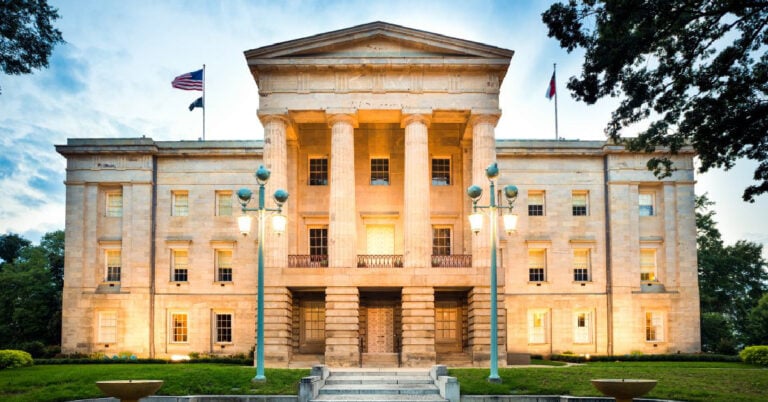
North Carolina’s corporate tax cuts aren’t an incentive for economic growth. They’re a windfall for multinational companies that happen to sell into our state, regardless of whether they’ve made any meaningful investments here or not.
State Rundown 5/14: Fund Priorities or Increase Shortfalls?
• By ITEP Staff
As many legislative sessions end, lawmakers are revealing their priorities.
State Rundown 4/23: While Some States Stop Digging, Others Move Full Steam Ahead with Anti-Affordability Agendas
• By ITEP Staff
Missouri lawmakers passed legislation that will have residents vote on a proposal at the ballot box. The ask: for them to pay more in sales taxes to offset cuts – and the possible elimination – of the state's individual income tax, which makes up nearly two-thirds of Missouri’s general fund.
State Rundown 4/16: Tax Day, a New Millionaires’ Tax and Late Blooming State Tax Action
• By ITEP Staff
Yesterday was Tax Day, and with many state legislative sessions wrapping, some tax changes are gearing up or crossing over the finish line.
North Carolina, Pushing Tax Cuts on Three Fronts, Risks a Repeat of Kansas Debacle
• By Carl Davis
Tax cuts are looming large on the horizon in North Carolina. So large, in fact, that even some traditionally anti-tax voices are starting to get nervous.
State Rundown 3/26: Sobering Revenue Projections Keep States on Their Toes
• By ITEP Staff
This week, troubling revenue projections are making headlines, with many lawmakers scrambling to determine how the tax changes at the federal level, plus price hikes driven by national policy decisions, will impact their states.
State Rundown 3/18: New Mexico Enacts Most Significant Corporate Tax Reform of the Year
• By ITEP Staff
As states lawmakers continue to weigh their linkages to the federal tax code in light of the recent federal tax law, New Mexico provides a blueprint for limiting multinational corporate tax avoidance.
In 2025, Voters Said Yes to Public Resources and Community Investments
• By Rita Jefferson
Important tax measures were on the ballot this week, and the outcomes are clear: many voters support new state and local spending to support critical services in their communities.
State Tax Action in 2025: Amid Uncertainty, Tax Cuts and New Revenue
• By Aidan Davis, Neva Butkus, Marco Guzman
Federal policy choices on tariffs, taxes, and spending cuts will be deeply felt by all states, which will have less money available to fund key priorities. This year some states raised revenue to ensure that their coffers were well-funded, some proceeded with warranted caution, and many others passed large regressive tax cuts that pile on to the massive tax cuts the wealthiest just received under the federal megabill.
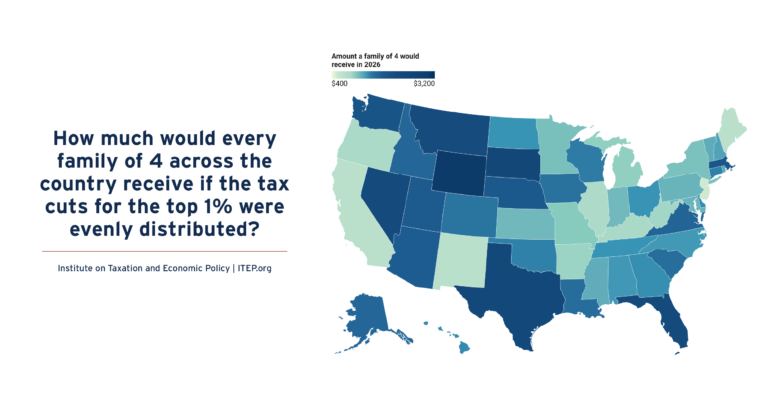
How Much Would Every Family in Every State Get if the Megabill’s Tax Cuts Given to the Rich Had Instead Been Evenly Divided?
• By Michael Ettlinger
If instead of giving $117 billion to the richest 1 percent, that money had been evenly divided among all Americans, we'd each get $343 - or nearly $1,400 for a family of four.

Trump Megabill Will Give $117 Billion in Tax Cuts to the Top 1% in 2026. How Much In Your State?
• By Michael Ettlinger
The predominant feature of the tax and spending bill working its way through Congress is a massive tax cut for the richest 1 percent — a $114 billion benefit to the wealthiest people in the country in 2026 alone.

How Much Do the Top 1% in Each State Get from the Trump Megabill?
• By Carl Davis
The Senate tax bill under debate right now would bring very large tax cuts to very high-income people. In total, the richest 1 percent would receive $114 billion in tax cuts next year alone. That would amount to nearly $61,000 for each of these affluent households.

With Fiscal Uncertainty Looming, Louisiana Senate Did the Right Thing on Tax Bills
• By Neva Butkus
If you find yourself in a hole, stop digging. This is exactly what Louisiana Senators did when they rejected two tax-cut bills that would have created a billion-dollar shortfall in the coming fiscal years.
State Rundown 6/11: States in The Eye of a Fiscal Hurricane?
• By ITEP Staff
State legislatures are enjoying a relatively quiet period right now, though it is merely a temporary calm before the storm of the federal tax and budget debate begins raging again.
North Carolina Tax Proposal Prioritizes Millionaires Over Everyone Else
• By Dylan Grundman O'Neill, Miles Trinidad
North Carolina Senators are proposing to yet again ignore the core needs of the majority of North Carolinians in favor of more income tax cuts for the wealthy few. The Senate's budget would take the personal income tax rate to 1.99 percent as soon as 2031 if certain revenue triggers are met, once again delivering billions of dollars in tax cuts mostly to the rich. And the cost of those tax cuts for North Carolina…
State Rundown 6/5: States Wrap Sessions, Some Prepare for Fiscal Uncertainty
• By ITEP Staff
States use the final hours of their legislative sessions to address deficits and preserve revenue in preparation for the times ahead.
State Rundown 5/21: Big and Not-So Beautiful Tax Cut Bills Abound in States
• By ITEP Staff
As a sprawling, regressive tax bill continues to take shape at the federal level, many states are moving forward with major tax cut proposals of their own.

Institute on Taxation
and Economic Policy
ITEP is a non-profit, non-partisan tax policy organization. We conduct rigorous analyses of tax and economic proposals and provide data-driven recommendations to shape equitable and sustainable tax systems.
Subscribe to ITEP Emails
Tax research and policy news in your inbox.
Promote Fair Tax Policy
Your gift to ITEP promotes tax justice. With your help, we do research that supports taxing millionaires and billionaires, taxing big corporations and raising revenue for the things our people, our communities and our planet need.
Together, we can create a country with more economic justice, more racial justice, more climate justice… and more tax justice.