
Publications

The Impact of Proposed New Tax Credit Restrictions for Immigrant Filers: An Updated Analysis of the DACA Recipient Population
• By Carl Davis, Erika Frankel, Emma Sifre
New Treasury Department public regulations would drastically reduce tax credit claims by DACA recipients and their families, among others. We find that 158,000 people in households with at least one DACA recipient will suffer financial harm, and that more than half of the impacted individuals are U.S. citizens.
The Impact of Proposed New Tax Credit Restrictions for Immigrant Filers: An Analysis of the DACA Recipient Population
• By Carl Davis, Erika Frankel, Emma Sifre
We find that 337,000 people in households with at least one DACA recipient will suffer financial harm, and that nearly two-thirds (66 percent) of the impacted individuals are U.S. citizens.
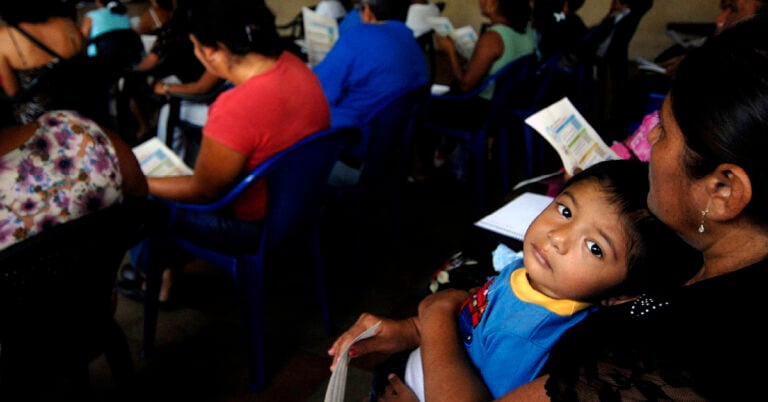
The Impact of Proposed New Tax Credit Restrictions for Immigrant Filers: An Analysis of State EITCs
• By Neva Butkus
Immigrants and their families in as many as 30 states are at risk of seeing their state tax credits such as the Earned Income Tax Credit (EITC) and Child Tax Credit (CTC) reduced unless state lawmakers act.

The Child Tax Credit Leaves Out Millions of Children in 2026. There Are Better Alternatives.
• By Joe Hughes
The 2025 Trump tax law slightly increased the Child Tax Credit in a way that benefits virtually none of the children who most need help.

House Tax Bill Would Create a Parallel, Harsher Tax Code for Immigrant Filers and their Citizen Family Members
• By Carl Davis, Sarah Austin
Immigrant tax filers face a harsher tax code than citizens in some important respects. Sweeping tax legislation recently passed by the House of Representatives would apply new or stricter limits for immigrant tax filers to 10 additional areas of the tax code.

Sharp Turn in Federal Policy Brings Significant Risks for State Tax Revenues
• By Carl Davis
Summary The new presidential administration and Congress have indicated that they intend to bring about a dramatic federal retreat in funding for health care, food assistance, education, and other services that will push more of the responsibility for providing these essential services to the states. Meeting these new obligations would be a challenging task for […]

Tax Payments by Undocumented Immigrants
• By ITEP Staff
Undocumented immigrants paid $96.7 billion in federal, state, and local taxes in 2022. Providing access to work authorization for undocumented immigrants would increase their tax contributions both because their wages would rise and because their rates of tax compliance would increase.
Improving Refundable Tax Credits by Making Them Immigrant-Inclusive
• By Emma Sifre, Marco Guzman
Undocumented immigrants who work and pay taxes but don't have a valid Social Security number for either themselves or their children are excluded from federal EITC and CTC benefits. Fortunately, several states have stepped in to ensure undocumented immigrants are not left behind by the gaps in the federal EITC and CTC. State lawmakers should continue to ensure that immigrants who are otherwise eligible for these tax credits receive them.

ITIN Filer Data Gap: How Changing Laws, Lack of Data Disaggregation Limit Inclusive Tax Policy
• By Emma Sifre
Like U.S. citizens, noncitizens who live, work, or invest in the United States must file local, state and federal taxes. But in order to file personal income taxes, they must first be issued a processing number called an Individual Taxpayer Identification Number (ITIN) by the IRS. These numbers are issued to both legal permanent residents and nonresidents who are not eligible for Social Security numbers. ITINs do not imply immigration status, nor can they be…
State & Local Tax Contributions of Young Undocumented Immigrants
• By ITEP Staff
This report specifically examines the state and local tax contributions of undocumented immigrants who are currently enrolled or immediately eligible for DACA and the fiscal implications of various policy changes. The report includes information on the national impact (Chart 1) and provides a state-by-state breakdown (Appendices 1 and 2).
Updated Tax Contributions of Young Undocumented Immigrants
• By ITEP Staff
In September 2017, US Citizenship and Immigration Services released updated enrollment data for the program Deferred Action for Childhood Arrivals (DACA). The updated data included estimates of the number of former DACA enrollees that were now legal permanent residents and those that failed to reapply or their reapplication was denied. The table below provides updated estimates of their tax contributions.
State & Local Tax Contributions of Young Undocumented Immigrants (2017)
• By Meg Wiehe, Misha Hill
This report specifically examines the state and local tax contributions of undocumented immigrants who are currently enrolled or immediately eligible for DACA and the fiscal implications of various policy changes. The report includes information on the national impact (Table 1) and provides a state-by-state breakdown (Appendix 1).
State and Local Tax Contributions of Undocumented Californians: County-by- County Data
• By ITEP Staff
Public debates in California over immigrants, specifically around undocumented immigrants, often suffer from insufficient and inaccurate information about the contributions of undocumented immigrants, particularly their tax contributions at the local and state level. The fact of the matter is undocumented immigrants living in the California pay millions of dollars each year in local taxes to the counties where they live (estimated to be more than $1.5 billion) and collectively an estimated $3 billion combined in…
Undocumented Immigrants’ State & Local Tax Contributions
• By Lisa Christensen Gee, Meg Wiehe, Misha Hill
Public debates over federal immigration reform, specifically around undocumented immigrants, often suffer from insufficient and inaccurate information about the tax contributions of undocumented immigrants, particularly at the state level. The truth is that undocumented immigrants living in the United States paybillions of dollars each year in state and local taxes. Further, these tax contributions would increase significantly if all undocumented immigrants currently living in the United States were granted a pathway to citizenship as part…
Undocumented Immigrants’ State & Local Tax Contributions (2016)
• By Lisa Christensen Gee, Meg Wiehe
This report was updated in March 2017 Read as a PDF. (Includes Full Appendix of State-by-State Data) Report Landing Page Public debates over federal immigration reform often suffer from insufficient and inaccurate information about the tax contributions of undocumented immigrants particularly at the state level. The truth is that undocumented immigrants living in the United […]
Undocumented Immigrants’ State & Local Tax Contributions (2015)
• By Matthew Gardner, Meg Wiehe
This report was updated February 2016 Read as a PDF. (Includes Full Appendix of State-by-State Data) Report Landing Page In the public debates over federal immigration reform, sufficient and accurate information about the tax contributions of undocumented immigrants is often lacking. The reality is the 11.4 million undocumented immigrants living in the United States pay billions […]
Undocumented Immigrants’ State and Local Tax Contributions (2013)
• By Matthew Gardner, Meg Wiehe
In the public debates over federal immigration reform, much has been made of the argument that undocumented immigrants would be a drain on federal, state and local government resources if granted legal status under reform. But it is also true that the 11.2 million undocumented immigrants living in the United States are already taxpayers, and that their local, state and federal tax contributions would increase under reform.

Institute on Taxation
and Economic Policy
ITEP is a non-profit, non-partisan tax policy organization. We conduct rigorous analyses of tax and economic proposals and provide data-driven recommendations to shape equitable and sustainable tax systems.
Subscribe to ITEP Emails
Tax research and policy news in your inbox.
Promote Fair Tax Policy
Your gift to ITEP promotes tax justice. With your help, we do research that supports taxing millionaires and billionaires, taxing big corporations and raising revenue for the things our people, our communities and our planet need.
Together, we can create a country with more economic justice, more racial justice, more climate justice… and more tax justice.